
Buyer Protection in eCommerce: Why Every Online Transaction Needs an Escrow Safety Net
May 26, 2026
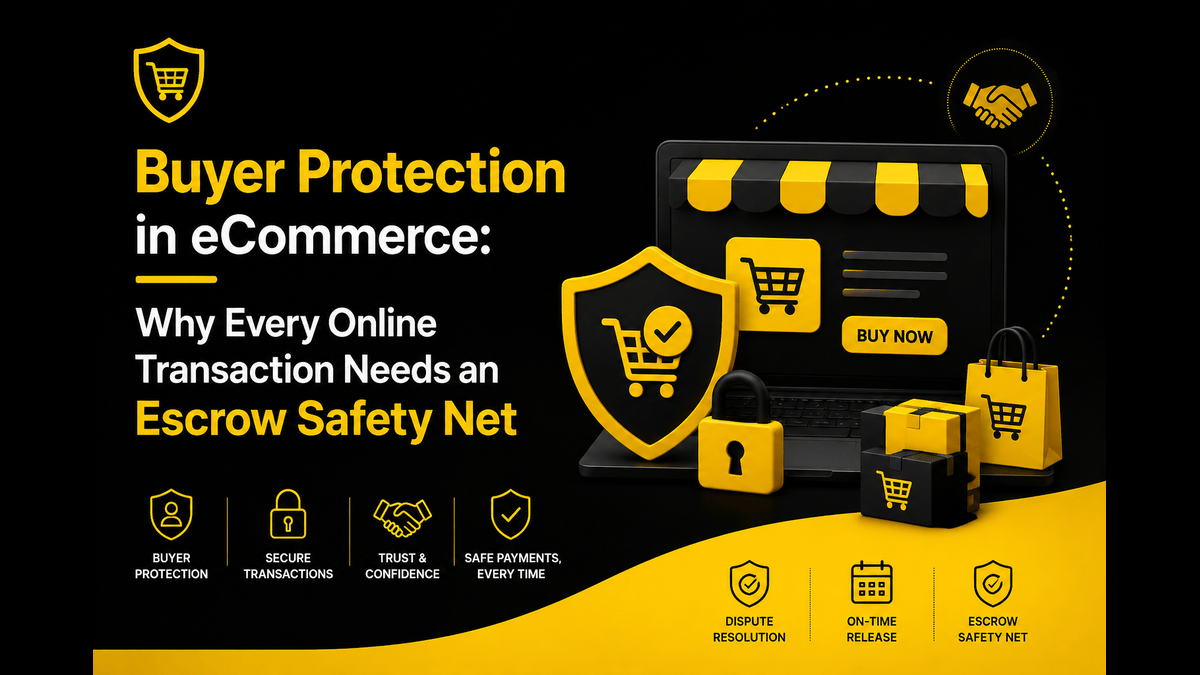
Buyer Protection in eCommerce: Why Every Online Transaction Needs an Escrow Safety Net
Buyers are the engine of every eCommerce transaction. They browse, they decide, they pay — and then they wait. They wait for confirmation, for dispatch, for delivery, for the product to match what was shown on the listing. In that waiting period, the buyer carries all the risk. The money has left their account. The seller still holds the goods. And if something goes wrong, the buyer is the one scrambling for a refund, a resolution, or a way to recover what they lost.
This is the fundamental trust problem in eCommerce, and it is not a small one. India’s eCommerce market crossed $70 billion in 2024 and is growing at over 20% annually — but that growth is happening alongside a parallel rise in online fraud, failed deliveries, misrepresented products, and seller defaults. For every transaction that completes cleanly, there are buyers who paid and received nothing, or received something entirely different from what was promised.
Buyer protection in eCommerce is not just a feature. It is a foundational requirement for trust — and trust is what makes digital commerce scale. Without it, buyers hesitate, carts are abandoned, and platforms struggle to retain the customers they spend so much to acquire.
SprintEX-Code by PaySprint introduces escrow-based buyer protection into eCommerce transactions — a mechanism that holds payment securely in a neutral account and releases it to the seller only when the buyer confirms that their order has been fulfilled as agreed. Simple in concept. Transformative in practice.
Table of Contents
1. What Does Buyer Protection Mean in eCommerce?
2. Why Is the Buyer Always at Risk in a Standard Online Transaction?
3. What Are the Most Common Ways Buyers Lose Money Online?
4. What Is Escrow and How Does It Protect the Buyer?
5. How SprintEX-Code Delivers Buyer Protection for eCommerce
6. Why SprintEX-Code Is the Right Escrow Platform for Indian eCommerce
7. Conclusion
8. Frequently Asked Questions (FAQs)
What Does Buyer Protection Mean in eCommerce?
Buyer protection is any mechanism — contractual, financial, or technological — that ensures a buyer can recover their money or receive the goods or service they paid for, even if the seller fails to deliver as promised.
In practice, buyer protection takes several forms across the eCommerce ecosystem:
• Platform-level guarantees — where the marketplace assumes liability for failed transactions and refunds the buyer from its own funds
• Chargeback mechanisms — where the buyer’s bank reverses the payment after a dispute is filed, placing the burden of proof on the seller
• Escrow-based protection — where payment is held by a neutral third party and released to the seller only when the buyer confirms fulfilment
Of these three, escrow is the only mechanism that prevents the problem rather than remedying it after the fact. Platform guarantees and chargebacks are reactive — they engage after the buyer has already lost their money and spent time and effort on a dispute. Escrow is proactive: the buyer’s funds never reach the seller until the transaction is complete.
Why Is the Buyer Always at Risk in a Standard Online Transaction?
The standard online payment flow is fundamentally asymmetric. The buyer pays first. The seller delivers later. This sequence, which seems obvious and unavoidable, is the root cause of almost every buyer protection problem in eCommerce.
Consider what happens in a typical transaction:
1. The buyer selects a product and completes payment. The money leaves their account immediately.
2. The seller receives the payment notification and is expected to dispatch the goods.
3. The buyer waits — with no guarantee of delivery, no hold on the funds, and no neutral party overseeing the transaction.
4. If the seller fails to deliver — intentionally or otherwise — the buyer must initiate a dispute through the platform, the bank, or legal channels.
This sequence places the entire burden of risk on the buyer. The seller, once paid, has little financial incentive to resolve a dispute quickly. The platform, if involved, must adjudicate a dispute it has limited visibility into. And the buyer, who did everything correctly, is left waiting.
What Are the Most Common Ways Buyers Lose Money Online?
Understanding where buyer protection fails is essential to understanding why escrow matters. The most common failure modes in eCommerce transactions are:
Non-Delivery
The seller accepts payment and never dispatches the goods. This is the most straightforward form of online fraud — and one of the most common, particularly on peer-to-peer marketplaces and social commerce platforms where seller verification is limited.
Misrepresented Products
The product received is materially different from what was listed — different specifications, lower quality, counterfeit, or damaged. The buyer paid for something they did not receive. Proving this after the fact is difficult and time-consuming.
Partial Delivery
Part of the order is delivered; the remainder is delayed indefinitely, substituted without consent, or simply not sent. Partial delivery disputes are among the hardest to resolve because the seller can claim partial fulfilment while the buyer has paid for the full order.
Seller Disappearance
The seller’s account is deactivated, the business closes, or the individual simply stops responding after receiving payment. On platforms with limited seller verification, this is a persistent risk for high-value purchases.
Platform Collapse
The eCommerce platform itself shuts down after collecting payments from buyers, leaving both buyers and sellers without recourse. This is an underappreciated risk in India’s rapidly evolving eCommerce startup ecosystem.
Digital Product and Subscription Fraud
Buyers pay for software licences, digital downloads, SaaS subscriptions, or online course access that are never delivered, revoked without refund, or fail to perform as described.
What Is Escrow and How Does It Protect the Buyer?
Escrow is a financial arrangement in which a neutral third party — the escrow agent — holds funds from one party and releases them to another only when pre-defined conditions are satisfied. In e-commerce, those conditions are the buyer’s confirmation that their order has been delivered as agreed.
Here is how escrow changes the transaction flow for the buyer:
The buyer places an order and makes payment. Instead of going directly to the seller, the funds are held in a secure escrow account managed by SprintEX-Code.
The seller is notified that payment is confirmed and secured in escrow. They have the assurance that funds exist and are committed — eliminating the risk of non-payment from their side.
The seller dispatches the goods or delivers the digital product or service.
The buyer receives and verifies the delivery against the agreed terms.
Upon the buyer’s confirmation — or after an agreed verification period — the escrow releases the funds to the seller. If there is a dispute, the funds remain in escrow until it is resolved.
This single structural change — inserting a neutral, conditional payment mechanism between buyer and seller — eliminates non-delivery fraud entirely, reduces misrepresentation disputes, and gives both parties a fair, structured process for resolution when issues arise.
How SprintEX-Code Delivers Buyer Protection for eCommerce
SprintEX-Code by PaySprint is an enterprise-grade escrow platform that brings structured, legally sound buyer protection to eCommerce transactions of every type and value. Whether the transaction is a B2C product purchase, a B2B bulk order, or a digital product delivery, SprintEX-Code provides the neutral, conditional payment infrastructure that makes escrow practical at scale.
Secure Payment Holding
Buyer payments are held in a secure, audited escrow account with 24/7 access monitoring. Funds are never accessible to the seller until the defined release conditions are met — and never accessible to anyone outside the agreed parties.
Flexible Agreement Structures
SprintEX-Code supports multi-party escrow with conditional triggers and fully customisable release terms. For eCommerce, this means release conditions can be tied to delivery confirmation, quality inspection sign-off, buyer approval within a defined window, or any verifiable milestone in the transaction.
Smart Triggered Release
Funds are released automatically upon a valid trigger event. If the buyer confirms receipt, the payment releases to the seller instantly. If the buyer raises a dispute, funds remain held until resolution. If neither party responds within the agreed window, configurable auto-release rules apply.
Physical and Cloud Escrow Options
For high-value eCommerce transactions involving software licences, digital assets, or proprietary technology, SprintEX-Code offers both cloud escrow (integrated with GitHub, GitLab, AWS, Azure, GCP) and physical escrow with tamper-proof, fire-resistant (FRFC) storage in Delhi, Mumbai, and Bengaluru.
Full Audit Trail
Every transaction event — payment deposit, seller notification, delivery confirmation, release instruction — is recorded in a complete, immutable audit trail. In the event of a dispute, both parties have access to a clear, timestamped record of every step.
Verification Services
SprintEX-Code offers tiered verification for digital product transactions — from basic checksum and hash validation to full environment replication with runtime validation — ensuring that the digital goods deposited by the seller are exactly what the buyer paid for.
SprintEX-Code’s secure code deposits and verification services are specifically designed for eCommerce platforms managing digital product transactions, SaaS licences, and software-as-a-product deliveries.
Why SprintEX-Code Is the Right Escrow Platform for Indian eCommerce
India’s eCommerce ecosystem has specific characteristics that make SprintEX-Code particularly well suited as the buyer protection infrastructure of choice.
Regulatory Alignment
SprintEX-Code is designed in alignment with RBI Master Directions on IT Framework, ISO 27001, and PCI-DSS. For Indian eCommerce platforms operating under RBI payment aggregator guidelines, SprintEX-Code’s compliance posture ensures that escrow infrastructure meets regulatory expectations.
ISO 27001 Certified Security
All data is encrypted in transit and at rest, stored in secure vaults with 24/7 monitoring, and protected by two-factor authentication and real-time audit trails. Buyers can trust that their payment is not just held — it is protected to enterprise security standards.
Physical and Cloud Storage in India
SprintEX-Code’s physical escrow facilities in Delhi, Mumbai, and Bengaluru, combined with cloud escrow on AWS, Azure, and GCP, give Indian eCommerce platforms the flexibility to choose the escrow model that fits their transaction type and risk profile.
Automated CI/CD Integration for Digital Products
For eCommerce platforms selling software, SaaS products, or digital assets, SprintEX-Code’s automated deposit via CI/CD pipelines ensures that the digital product held in escrow is always the current, verified version — without manual intervention.
Multi-Party Escrow Architecture
SprintEX-Code supports tri-party and multi-party escrow structures with controlled access — enabling complex eCommerce arrangements involving buyers, sellers, platforms, and financiers to be managed within a single, auditable escrow framework.
Conclusion
The buyer is the one who makes eCommerce possible. Every transaction begins with a buyer deciding to trust — to hand over money before they have received what they paid for. That act of trust deserves a mechanism that protects it.
Buyer protection in eCommerce has historically been reactive — chargebacks after fraud, refunds after failed deliveries, platform guarantees that cost the marketplace money and take time to resolve. Escrow changes the model from reactive to proactive: the buyer’s money is secured before the transaction begins, held neutrally while it progresses, and released to the seller only when the buyer has confirmed that what was promised has been delivered.
SprintEX-Code brings this model to Indian eCommerce — with the security, compliance, and flexibility to work across every transaction type, every platform structure, and every risk profile. For buyers, it means never paying for something they do not receive. For sellers, it means never dispatching without payment assurance. For platforms, it means fewer disputes and stronger buyer trust.
eCommerce grows when buyers trust it. SprintEX-Code is the infrastructure that makes that trust rational.
Frequently Asked Questions (FAQs)
Q: What is buyer protection in eCommerce?
Buyer protection in eCommerce is any mechanism that ensures a buyer can recover their money or receive the goods or service they paid for if the seller fails to deliver as agreed. Escrow is the most effective form of buyer protection because it prevents the problem rather than remedying it after the fact — the buyer’s payment is held by a neutral third party and released only when delivery is confirmed.
Q: How does escrow protect the buyer in an online transaction?
Escrow holds the buyer’s payment in a secure, neutral account. The seller receives the funds only after the buyer confirms that the order has been fulfilled as agreed. If the seller fails to deliver, the buyer’s funds remain in escrow and are returned. If there is a dispute, the funds remain held until it is resolved — neither party can access them unilaterally.
Q: What is SprintEX-Code and how does it protect buyers?
SprintEX-Code by PaySprint is an enterprise-grade escrow platform that holds buyer payments securely and releases them to sellers only upon confirmed delivery or an agreed trigger event. It supports both physical and cloud escrow, flexible release conditions, multi-party arrangements, and full audit trails — providing buyer protection for every type of eCommerce transaction.
Q: Is SprintEX-Code suitable for digital product and software purchases?
Yes. SprintEX-Code is specifically designed for digital product transactions including software licences, SaaS subscriptions, and digital asset purchases. Its source code escrow capability ensures that the digital product is preserved and accessible to the buyer even if the vendor ceases operations or stops supporting the product.
Related Posts
What is E-Banking? Meaning, Types, Benefits & How It Works in India.
E-banking is the digital way of accessing banking services through mobile apps, websites, ATMs, and biometric systems. It enables secure, fast, and branchless financial transactions anytime and anywhere in India.
Read More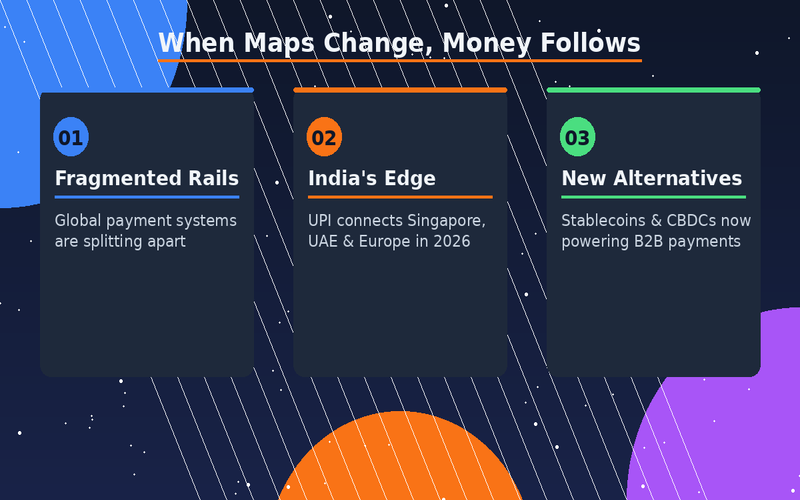
When Maps Change, Money Follows: How Geopolitics Is Rewiring B2B Payments in 2026
Payments are no longer just a plumbing problem — they're a geopolitical one. Explore how Indian B2B businesses can navigate a fragmented, fast-changing global payment landscape
Read More
What Happens Inside an Escrow Release Event? A Step-by-Step Breakdown for Businesses
A complete breakdown of escrow release events—covering triggers, validation, vendor response, and access to source code—helping businesses ensure continuity and minimize vendor risk.
Read MoreReady to Protect Your Core Systems?
Join enterprises that trust SprintEX-Code to safeguard their mission-critical software. Get started with a consultation to discuss your specific escrow requirements.