
5 Most Dangerous B2B Payment Traps How Escrow Kills Them
May 12, 2026
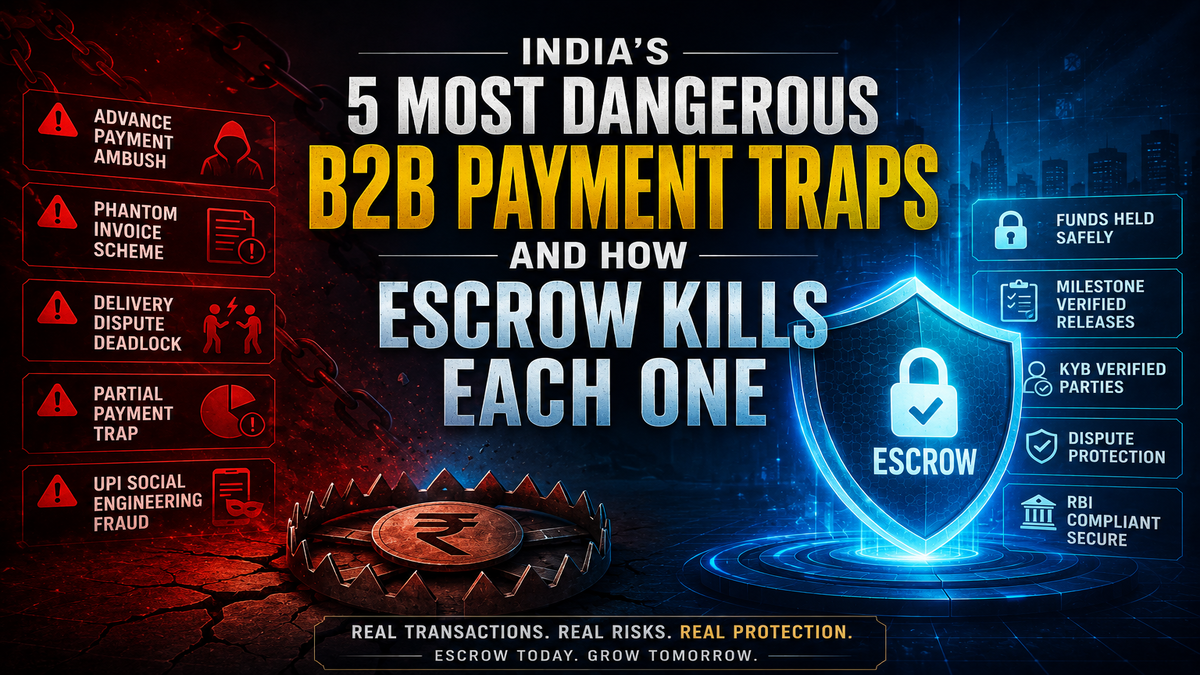
5 Most Dangerous B2B Payment Traps & How Escrow Kills Them
Payment Trap in Indian B2B transactions is costing businesses thousands of crores every year - not through hackers, but through routine transfers that silently go wrong. Here’s what every operator should know before the next high-value payment.
Table of Content:
The Problem Nobody Talks About
The 5 Dangerous B2B Payment Traps
How Escrow Works as a Transaction Shield
Types of Escrow Protection on SprintEscrow
Why This Matters for India's B2B Economy
The Problem Nobody Talks About
"Rohan had been running his textile import business for six years. He had never lost a rupee to fraud - until the Tuesday he wired 2.4 lakh to a new supplier in Surat, and the number stopped ringing."
This isn't a rare story. Across India, thousands of SME founders, procurement heads, and platform operators walk into these same traps every single week. The payments are real, the suppliers look legitimate, and the contracts feel solid - until they aren't.
According to data from the Ministry of MSME and RBI fraud monitoring reports, B2B payment defaults and disputes account for a significant share of working capital stress among small and mid-sized businesses. The tragedy is that most of these losses are entirely preventable.
The five traps below are structural vulnerabilities baked into how Indian B2B commerce operates. Understanding them — and knowing how escrow infrastructure eliminates each one - is no longer optional. It's the cost of doing business safely at scale.
The 5 Dangerous B2B Payment Traps
Each trap exploits a different moment in the transaction lifecycle. Together, they reveal a systemic gap: Indian B2B commerce moves money before trust is established. Here's exactly how that plays out.
How Escrow Works as a Transaction Shield
SprintEXcrow operates on a simple but powerful principle: money moves only when trust is established. The platform sits between the buyer and seller as a verified neutral layer — holding funds, enforcing conditions, and releasing payments automatically when predefined milestones are met.
"An invoice is a claim. Escrow ensures payment only follows proof. Power imbalances disappear when the buyer's payment is already in a vault."
The platform is built on five principles:
• Access: Available to any verified business.
• Affordability: No hidden fees.
• Transparency: Every condition visible to both parties.
• Competition: Opens markets by removing trust barriers.
• Regulation: Fully RBI-compliant infrastructure.
Types of Escrow Protection on SprintEscrow
Why This Matters for India's B2B Economy
India's MSME sector employs over 11 crore people and contributes nearly 30% of GDP. Yet payment defaults, fraud, and disputes drain working capital from the very businesses that drive employment and growth. When a small supplier loses 3 lakh to a partial payment trap, it doesn't just hurt that business - it ripples across their employees, their raw material vendors, and their local community.
Escrow infrastructure isn't a luxury product for large enterprises. It's the trust layer that lets a first-generation B2B entrepreneur in Rajkot do business with a buyer in Bengaluru — safely, on equal terms, without needing a lawyer or a credit history.
SprintEXcrow is built for exactly this India: the one that's growing fast, transacting digitally, and demanding financial infrastructure that keeps up.
Conclusion
All five traps share the same vulnerability: money moves before trust is established. Advance fraud, phantom invoicing, delivery disputes, partial payment abuse, and UPI social engineering are not isolated incidents - they are symptoms of a B2B payment system that was never designed with protection in mind.
SprintEXcrow exists to close that gap. By locking funds in verified escrow, enforcing release conditions automatically, and verifying every counterparty before a single rupee moves, the platform transforms risky transactions into protected ones.
The future of Indian B2B isn't faster payments. It's safer ones.
Frequently Asked Questions (FAQs)
Q1. What is B2B payment fraud in simple terms?
B2B payment fraud happens when a business loses money in a commercial transaction due to deception — from a supplier not delivering, a fake invoice, or a fraudster impersonating a vendor.
Q2. How does escrow protect my business from advance payment fraud?
Escrow holds the buyer's payment in a neutral account. The seller only receives the funds once pre-agreed delivery conditions are verified - so there's no incentive to take money and disappear.
Q3. Is SprintEXcrow RBI-compliant?
Yes. SprintEXcrow is built on fully RBI-compliant infrastructure, ensuring every transaction meets India's regulatory standards for payment security and escrow operations.
Q4. Which businesses benefit most from escrow?
SMEs, B2B marketplaces, logistics companies, real estate operators, and any business dealing with new trading partners or high-value single transactions benefit most significantly.
Q5. How quickly can I integrate SprintEXcrow into my platform?
SprintEXcrow offers a developer-ready API that platform operators can integrate in under 3 hours. Sign up, get KYB-verified, and your first escrow transaction can go live the same day.
Q6. Who benefits most from escrow services in India?
Economically vulnerable businesses — small suppliers, first-time exporters, rural B2B operators, and women-owned MSMEs — benefit most from the protection and trust infrastructure that escrow provides.
Related Posts
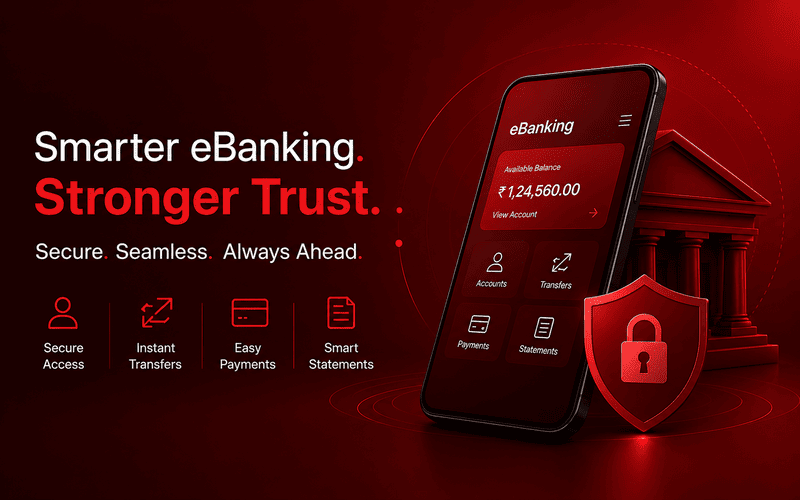
What is E-Banking? Meaning, Types, Benefits & How It Works in India.
E-banking is the digital way of accessing banking services through mobile apps, websites, ATMs, and biometric systems. It enables secure, fast, and branchless financial transactions anytime and anywhere in India.
Read More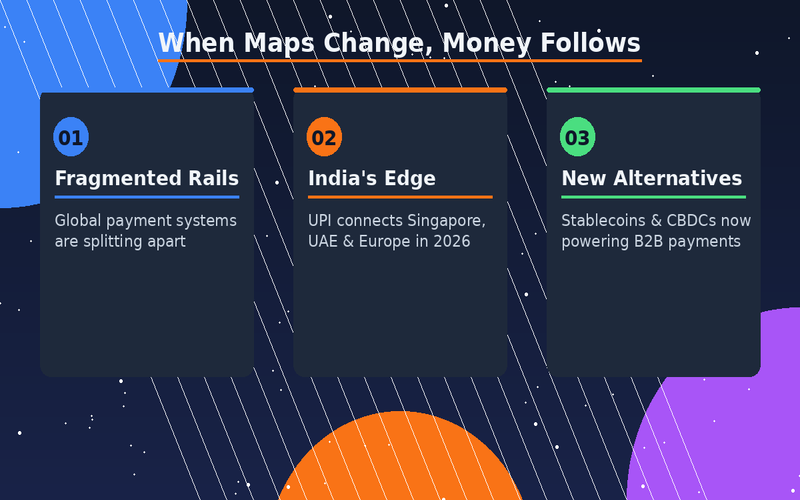
When Maps Change, Money Follows: How Geopolitics Is Rewiring B2B Payments in 2026
Payments are no longer just a plumbing problem — they're a geopolitical one. Explore how Indian B2B businesses can navigate a fragmented, fast-changing global payment landscape
Read More
What Happens Inside an Escrow Release Event? A Step-by-Step Breakdown for Businesses
A complete breakdown of escrow release events—covering triggers, validation, vendor response, and access to source code—helping businesses ensure continuity and minimize vendor risk.
Read MoreReady to Protect Your Core Systems?
Join enterprises that trust SprintEX-Code to safeguard their mission-critical software. Get started with a consultation to discuss your specific escrow requirements.