
Escrow is the Safety Net Your Software Never Had
May 15, 2026
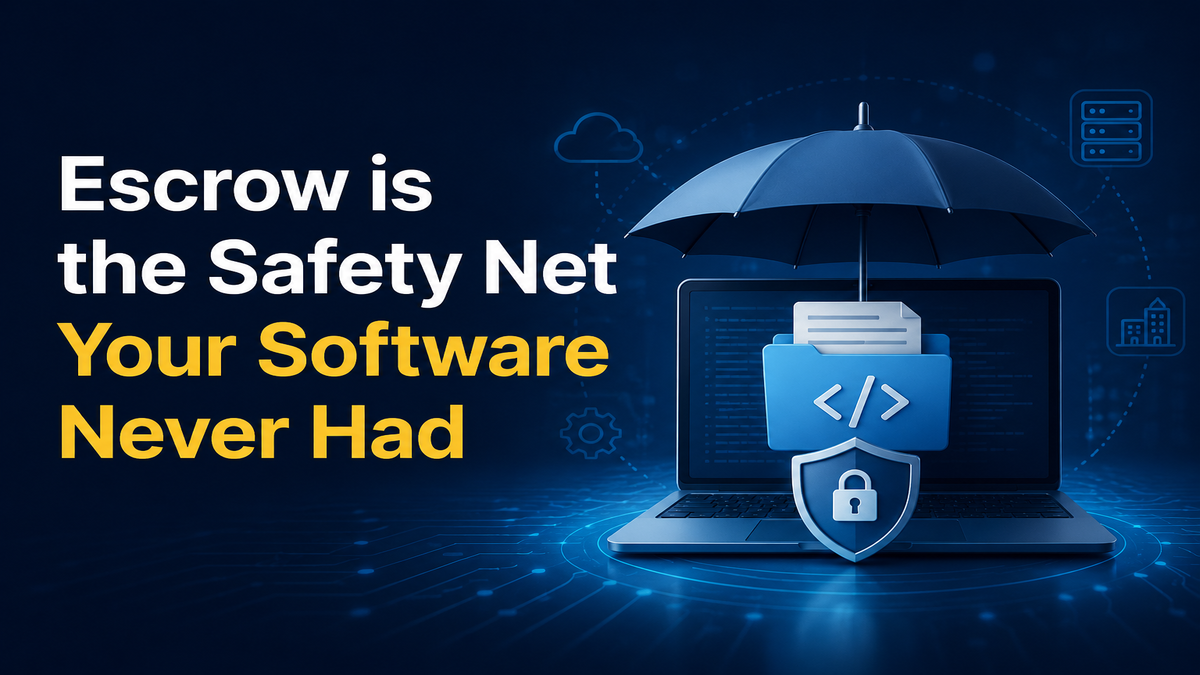
Escrow is the Safety Net Your Software Never Had
Escrow is not just about protecting money - it is about protecting continuity when everything depends on trust. Think about the software your business relies on every single day — your payments platform, inventory system, HR tool, CRM, or reporting dashboard. Now ask yourself: if the company behind any of these tools shut down tomorrow, what would remain in your hands? No ownership. No guaranteed access. No backup plan — because you were never purchasing the software itself, only the right to use it. And access can disappear. PaySprint Escrow exists for this exact risk — the one businesses rarely plan for, yet unknowingly carry in almost every software agreement they sign.
Table of Contents
1. The Quiet Risk in Every SaaS Contract
2. What Is Software Escrow?
3. Why This Is a Business Survival Issue — Not an IT One
4. The 4 Ways Businesses Lose Software Access
5. How Paysprint Escrow Works
6. Software Escrow in the Indian Context
7. Software Escrow Checklist
The Quiet Risk in Every SaaS Contract
Buying a software licence is not owning something. It is renting access. When the lease ends - through insolvency, acquisition, a product pivot, or a pricing dispute - the keys go back to the people who actually own the code.
For the vast majority of Indian businesses, the source code lives entirely with the development team or the company that built the product. If that relationship ends badly or suddenly, the source code disappears with it.
The Scale of the Risk
What Is Software Escrow?
Software escrow is a legally binding three-party arrangement. The software provider deposits their source code and build documentation with Paysprint Escrow - a neutral custodian. If a defined trigger event occurs, Paysprint releases those materials directly to you, so your business can continue operating independently.
It is not a vault. It is not insurance. It is a continuity guarantee - the right to keep running the software your operations depend on, even if the company that built it no longer can.
Why This Is a Business Survival Issue - Not an IT One
Most businesses treat software risk as a technology problem. It is a revenue problem.
When a critical platform goes dark without warning, the cascade is immediate: operations freeze, teams scramble, customers are affected, and the clock starts on an expensive emergency migration.
The businesses that recover fastest are the ones that already had access to the underlying code and a plan to use it.
A single day of operational downtime from software failure can cost more than an entire year of software escrow with Paysprint.
The 4 Ways Businesses Lose Software Access
1. The Provider Shuts Down
Startup mortality is real. When funding dries up, servers go dark — sometimes with 30 days' notice, sometimes with fewer. Without escrow, there is no legal mechanism to retrieve code from a company that no longer exists.
2. The Platform Gets Acquired
Acquisitions feel like someone else's good news until a product roadmap decision removes the tool your operations are built around. Products get merged, rebranded, or retired — typically within 18 months of an acquisition.
3. The Product Is Discontinued
Even profitable companies kill products. Feature sets get consolidated, older modules phased out. If you have no escrow access to the underlying code, you are starting a migration from scratch on someone else's timeline.
4. The Relationship Breaks Down
Contractual disputes, pricing disagreements, and non-renewals can all result in access being suspended. An SLA covers performance during a working relationship — not continuity when it ends.
How Paysprint Escrow Works
The process has four clear steps:
Software Escrow in the Indian Context
India's SaaS adoption is accelerating faster than most businesses are assessing the risk behind it. Growth-stage platforms get funded, scale, and collapse on compressed timelines. Consolidation in tech means the product you integrated deeply last year may look completely different two years from now.
Regulatory Alignment
For regulated businesses, this is not just an operational concern. RBI's IT risk framework requires financial institutions to maintain continuity planning that accounts for third-party technology dependencies. Paysprint Escrow agreements are structured to satisfy internal audit and compliance requirements — not just legal ones.
For Software Companies
If you are a software provider, offering escrow through Paysprint is a trust signal that closes enterprise deals. Large clients in BFSI, healthcare, and public sector now routinely require it as a condition of contract.
Software Escrow Checklist for Indian Businesses
• Critical software dependencies mapped and documented
• Escrow agreement in place for each mission-critical platform
• Release triggers clearly defined and legally reviewed
• Deposit verified by Paysprint — not just submitted by the provider
• Escrow deposit updated with each major software release
• Internal team aware of escrow terms and release process
• Business continuity plan includes software failure scenarios
• Compliance requirements (RBI, SEBI, DPDPA) reflected in escrow terms
• Escrow reviewed at every major contract renewal
• Providers assessed for financial stability at onboarding
Build Protection Before You Need It
The businesses that navigate disruption are not always the biggest or best-funded. They are the ones that planned ahead. Software escrow is not an IT task — it is a strategic decision about whether your operations can survive the decisions of companies you do not control.
Paysprint Escrow works with businesses at every stage — at contract renewal, during procurement reviews, or after a risk audit surfaces gaps. We assess your exposure and recommend an escrow structure that fits your actual situation, not a templated product.
Contact Paysprint Escrow today. Because the software running your business deserves the same protection you give everything else you cannot afford to lose.
Frequently Asked Questions
Q. Is software escrow only relevant for large enterprises?
Not at all. Small and mid-sized businesses are often more exposed to software disruption because they have fewer resources to absorb it. Paysprint Escrow offers plans scaled to businesses of every size — the protection is the same regardless of headcount.
Q. What is the difference between an SLA and a software escrow agreement?
An SLA is a performance commitment made by a provider that is still operating — it covers uptime, response times, and service credits. A software escrow agreement activates when the relationship itself breaks down: insolvency, acquisition, discontinuation, or material breach. They cover entirely different scenarios.
Q. What happens if our software provider refuses to participate in escrow?
A provider's resistance to escrow without clear explanation is itself a signal worth examining. Many stable, client-confident providers readily agree because it strengthens client trust. Paysprint Escrow can guide your team through the negotiation — framing it in a way that protects the relationship while securing your interests.
Q. How often does the escrow deposit need to be updated?
Every major release or significant update should trigger a new deposit. Paysprint Escrow supports scheduled deposit cycles tied to the provider's release cadence — ensuring your escrow always reflects the version of the software your operations actually depend on.
Related Posts
What is E-Banking? Meaning, Types, Benefits & How It Works in India.
E-banking is the digital way of accessing banking services through mobile apps, websites, ATMs, and biometric systems. It enables secure, fast, and branchless financial transactions anytime and anywhere in India.
Read More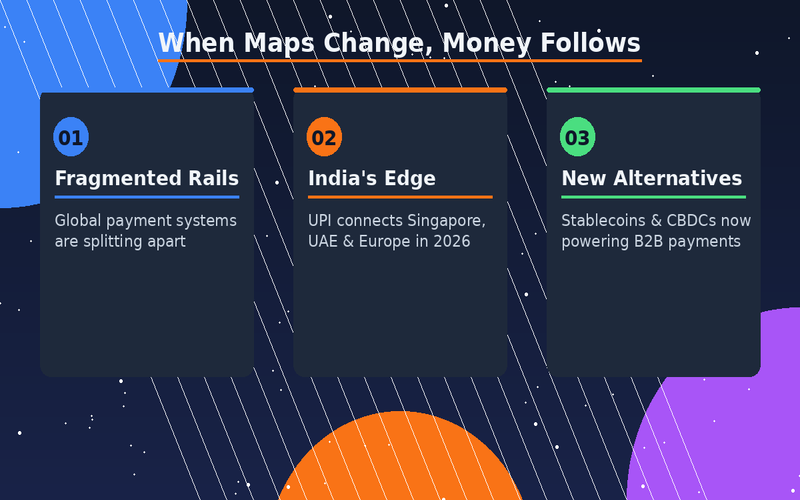
When Maps Change, Money Follows: How Geopolitics Is Rewiring B2B Payments in 2026
Payments are no longer just a plumbing problem — they're a geopolitical one. Explore how Indian B2B businesses can navigate a fragmented, fast-changing global payment landscape
Read More
What Happens Inside an Escrow Release Event? A Step-by-Step Breakdown for Businesses
A complete breakdown of escrow release events—covering triggers, validation, vendor response, and access to source code—helping businesses ensure continuity and minimize vendor risk.
Read MoreReady to Protect Your Core Systems?
Join enterprises that trust SprintEX-Code to safeguard their mission-critical software. Get started with a consultation to discuss your specific escrow requirements.