
Compliance Is Not Optional: How Indian Enterprises Are Securing Software Before the Regulator Comes Knocking
May 20, 2026
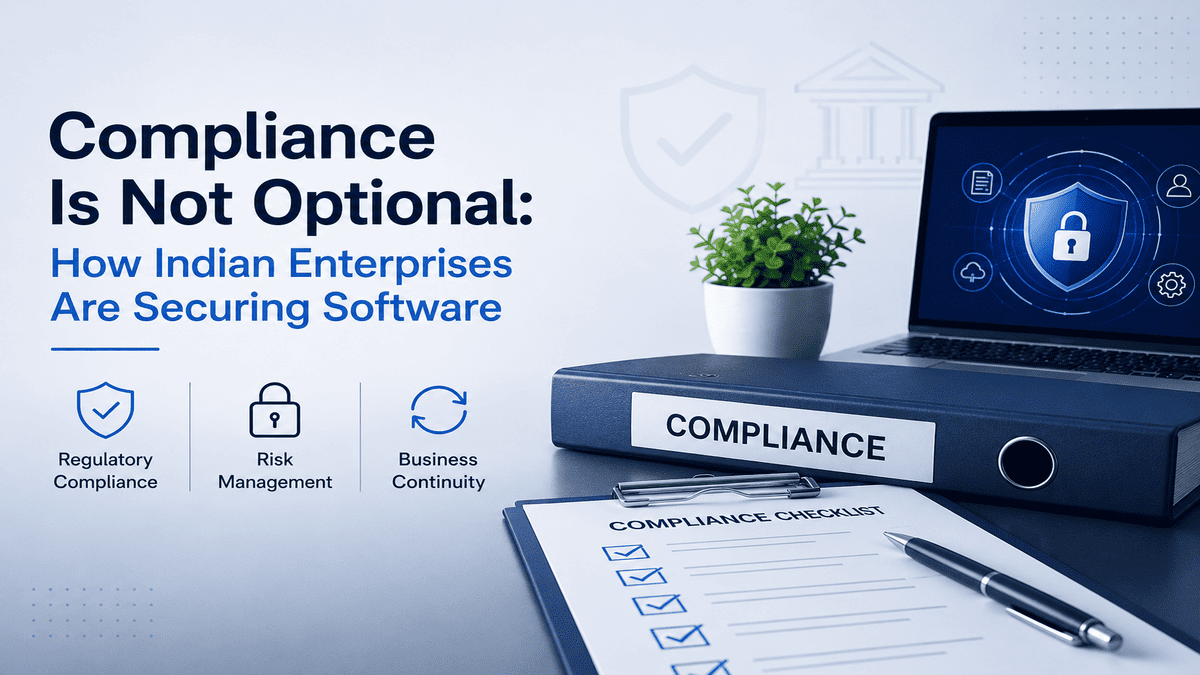
Compliance Is Not Optional: How Indian Enterprises Are Securing Software
Compliance in India is no longer just a legal concern — it is now a boardroom priority. With stricter regulations from RBI, SEBI, and CERT-In, businesses are under growing pressure to manage operational, cybersecurity, and third-party risks.One critical question remains: what happens if your software vendor fails, gets acquired, or stops support?This is where software escrow becomes essential, ensuring business continuity and compliance. That is exactly what SprintExCode is built to deliver.
Table of Contents
• The Compliance Landscape Tightening Around Indian Enterprises
• Why Vendor Dependency Is Now a Compliance Risk
• What Is Software Escrow — and How Does It Address Compliance?
• How SprintEXCode Helps You Stay Compliant
• Regulatory Frameworks SprintEXCode Aligns With
• Who Needs Software Escrow for Compliance?
• Cloud Escrow vs Physical Escrow: A Compliance Lens
• How SprintEXCode Works: 3 Steps to Compliance-Ready Escrow
• Key Platform Features
• Conclusion
• Frequently Asked Questions (FAQs)
Why the Compliance Landscape Is Tightening for Indian Enterprises
India’s regulatory environment has undergone a significant transformation over the last three years. Across sectors, regulators are no longer issuing guidance — they are issuing directives, with timelines, audit requirements, and penalties for non-compliance.
Reserve Bank of India (RBI)
The RBI’s Master Directions on Information Technology Governance, Risk, Controls and Assurance Practices mandate that regulated entities — banks, NBFCs, payment aggregators, and others — must have documented third-party risk management frameworks. This includes identifying critical IT vendors and ensuring business continuity if those vendors fail. Software escrow is a direct, audit-ready response to this requirement.
SEBI
Market infrastructure institutions and registered intermediaries under SEBI are required to demonstrate operational resilience. This means having plans and protections in place for scenarios where key technology vendors are disrupted — not just internal systems, but the licensed software they depend on.
CERT-In
CERT-In’s 2022 directives introduced mandatory incident reporting timelines and cybersecurity audit requirements for a wide range of entities. Organisations that cannot demonstrate control over their critical software environments — including third-party applications — are exposed to compliance gaps.
ISO 27001 and PCI-DSS
For enterprises seeking ISO 27001 certification or PCI-DSS compliance, third-party software risk management is an explicit requirement. Auditors look for evidence that critical software assets are protected against vendor failure — and software escrow is one of the clearest forms of that evidence.
Why Vendor Dependency Is Now a Compliance Risk
Most compliance conversations focus on what your organisation does internally: your data handling, your access controls, your incident response plans. But regulators have widened the lens. Third-party risk — specifically, the risk that a software vendor you depend on fails to deliver — is now firmly within scope.
Consider the following scenarios that compliance teams are now expected to have answers for:
• Your core banking or ERP vendor is acquired by a foreign company and discontinues the Indian product line
• A SaaS provider you rely on for regulatory reporting goes insolvent and shuts down without notice
• A critical software update introduces a defect, and the vendor is unresponsive or unreachable
• Your IT vendor’s key personnel leave, and institutional knowledge of your implementation is lost
In each of these scenarios, the compliance question is identical: can your organisation continue to operate, and can you demonstrate that you had a plan in place? Without software escrow, the honest answer is usually no.
What Is Software Escrow — and How Does It Address Compliance?
Software escrow is a legally structured arrangement in which a neutral third party — the escrow agent — holds the source code, data assets, and related materials of a software product on behalf of both the vendor and the licensee. The agreement defines specific release conditions under which those assets are handed over to the licensee for independent use. From a compliance standpoint, software escrow delivers several things that regulators and auditors actively look for:
Documented Third-Party Risk Mitigation
An executed escrow agreement is tangible, audit-ready evidence that your organisation has assessed vendor dependency risk and taken a formal step to mitigate it. This is precisely what RBI IT framework audits and ISO 27001 assessments expect to see.
Business Continuity Assurance
Escrow ensures that if a vendor ceases operations, your organisation retains the ability to access and operate critical software. This directly satisfies business continuity planning (BCP) requirements across regulatory frameworks.
Data Sovereignty
For regulated entities, knowing where critical software assets are stored and who controls access to them is a compliance requirement in itself. SprintEXCode’s India-based storage — with facilities in Delhi, Mumbai, and Bengaluru — ensures that your escrow assets remain within Indian jurisdiction.
How SprintEXCode Helps You Stay Compliant
SprintEXCode is India’s leading software escrow platform, purpose-built for the compliance and risk management needs of Indian enterprises. The platform provides a structured, legally sound, and auditable escrow framework that satisfies regulatory requirements across sectors.
For Compliance and Risk Teams
• Provides audit-ready documentation of third-party vendor risk mitigation
• Delivers clear, contractually defined release triggers covering insolvency, SLA breach, vendor default, and legal directives
• Generates end-to-end audit trails covering deposit history, version changes, and access events
• Supports multi-party escrow structures for complex vendor arrangements
For IT and Procurement Teams
• Integrates directly with vendor development pipelines — no manual deposit process
• Supports both cloud-based and physical escrow models depending on regulatory and operational needs
• Provides real-time alerts and milestone monitoring via the EaaS dashboard
For Legal Teams
• Legally structured tri-party escrow agreements aligned with Indian contract law
• Clearly defined release conditions that are enforceable and unambiguous
• Independent verification of all deposits
Regulatory Frameworks SprintEXCode Aligns With
SprintEXCode is designed in adherence to the major regulatory and cybersecurity frameworks relevant to Indian enterprises:
• RBI Master Directions on IT Governance, Risk, Controls and Assurance Practices — directly addresses third-party vendor dependency and business continuity requirements
• ISO 27001 — SprintEXCode is ISO 27001 certified, with security controls covering encryption, access management, and audit trails
• PCI-DSS — actively working toward PCI-DSS compliance for payment and fintech sector clients
• CERT-In Empanelment — the platform undergoes Vulnerability Assessment and Penetration Testing (VAPT) by a CERT-In empaneled auditor
• SEBI Operational Resilience Requirements — escrow agreements provide a formal business continuity mechanism for market infrastructure entities
Who Needs Software Escrow for Compliance?
Software escrow for compliance is relevant across a wider range of Indian enterprises than most organisations realise. If your business depends on third-party software for any of the following functions, a compliance-driven escrow arrangement is worth immediate consideration:
Banking and Financial Services (BFSI)
RBI-regulated entities — banks, NBFCs, payment aggregators, and insurance companies — face the most direct compliance mandate for vendor risk management. Any licensed software used for core banking, payment processing, loan origination, or regulatory reporting falls within scope.
Fintech and Payment Companies
Fintech companies operating under RBI Payment Aggregator guidelines or seeking NBFC licences are expected to demonstrate robust IT risk management. Software escrow for critical vendor platforms is an increasingly common audit requirement.
Pharmaceuticals and Healthcare
Pharma companies subject to CDSCO, FDA, or international GMP compliance frameworks must demonstrate control over manufacturing execution systems and quality management software. Vendor failure without an escrow arrangement creates both operational and regulatory exposure.
Public Sector and Government
PSUs and government entities procuring enterprise software are increasingly including escrow clauses in their RFPs and contracts, driven by guidance from NIC, MeitY, and sector-specific regulators. SprintEXCode’s physical escrow facilities in Delhi, Mumbai, and Bengaluru are well-suited to sovereign data storage requirements.
SaaS-Dependent Enterprises Across Sectors
Any enterprise relying on SaaS platforms for ERP, CRM, HRMS, or supply chain management faces the same fundamental risk — and the same compliance expectation — as regulated entities. ISO 27001 and SOC 2 audit processes increasingly flag unmitigated vendor dependency as a control gap.
Cloud Escrow vs Physical Escrow: A Compliance Lens
Cloud Escrow Model
SprintEXCode’s Cloud Escrow Model integrates directly with the vendor’s existing repositories — GitHub, GitLab, Bitbucket, AWS, and GCP — with automated, continuously version-tracked deposits. For most SaaS and cloud-native software environments, this model provides the most accurate and up-to-date escrow coverage.From a compliance standpoint, cloud escrow delivers real-time audit trails, automated deposit verification, and a clear chain of custody — all of which satisfy the documentation requirements of RBI IT framework audits and ISO 27001 assessments.
Physical Escrow Model
For regulated entities with specific data sovereignty requirements — or for software with on-premise components that cannot be deposited digitally — SprintEXCode’s Physical Escrow Model stores source code and data assets in tamper-proof, fire-resistant (FRFC) physical lockers at high-security facilities in Delhi, Mumbai, and Bengaluru. Physical escrow is particularly relevant for public sector entities, defence-adjacent organisations, and BFSI institutions where regulators expect air-gapped or geographically sovereign storage of critical assets.
How SprintEXCode Works: 3 Steps to Compliance-Ready Escrow
1. Draft the Escrow Agreement: A legally structured tri-party agreement is prepared, clearly defining the software assets to be deposited, the release conditions, and the rights of each party. This document is your primary audit-ready evidence of vendor risk mitigation.
2. Secure the Deposit: The vendor deposits the source code and related assets on the SprintEXCode platform — via automated cloud integration or physical deposit. All deposits are independently verified and version-tracked.
3. Ongoing Monitoring and Release Management: The escrow is maintained continuously, with real-time alerts, milestone tracking, and full audit trails accessible via the SprintEXCode dashboard. In the event of a valid trigger, release is executed in accordance with the agreed terms.
Key Platform Features
• ISO 27001 Certified Platform with end-to-end encryption in transit and at rest
• VAPT by CERT-In Empaneled Auditor — independently assessed for security vulnerabilities
• Automated CI/CD Integration with GitHub, GitLab, Bitbucket, AWS, GCP and private repositories
• Smart Release Triggers — automated upon vendor default, insolvency, SLA breach, or legal directive
• End-to-End Audit Trails — full deposit history, version changes, and access events via secure dashboard
• Multi-Party Escrow Architecture — supports tri-party and multi-party setups with granular access controls
• Physical Vaults in Delhi, Mumbai & Bengaluru — FRFC tamper-proof storage for sovereign data requirements
• Escrow as a Service (EaaS) — milestone monitoring, real-time alerts, and master control panel
• Independent Deposit Verification — all deposits verified by an independent party before confirmation
Conclusion
Compliance in India is accelerating. The RBI, SEBI, CERT-In, and sector-specific regulators are not slowing down — and the organisations that treat compliance as a reactive exercise are already falling behind.Software escrow is one of the clearest, most direct responses available to the vendor dependency risk that sits at the heart of IT compliance mandates. It is audit-ready, legally structured, and operationally meaningful — not a box to be ticked, but a mechanism that actually protects your business when a vendor fails. SprintEXCode gives Indian enterprises the platform to implement software escrow in a way that is fully aligned with the regulatory frameworks they operate under — with the certifications, the physical infrastructure, and the legal framework to stand up to scrutiny. Compliance is not optional. But with the right partner, it does not have to be complicated either.
Frequently Asked Questions (FAQs)
Q: Is software escrow a compliance requirement under RBI guidelines?
The RBI’s Master Directions on IT Governance require regulated entities to have formal third-party risk management frameworks, including plans for vendor failure scenarios. Software escrow is a direct, audit-ready mechanism to satisfy this requirement. While escrow is not explicitly mandated by name, it is the most widely accepted structured response to the vendor dependency risk the RBI expects regulated entities to mitigate.
Q: Which sectors in India most urgently need software escrow for compliance?
BFSI entities regulated by the RBI and SEBI face the most immediate compliance pressure. However, pharma companies under GMP frameworks, public sector entities following MeitY and NIC guidelines, and any enterprise seeking ISO 27001 or PCI-DSS certification will find software escrow directly relevant to their compliance obligations.
Q: How does SprintEXCode support ISO 27001 compliance?
SprintExCode is itself ISO 27001 certified, which means the platform’s security controls — encryption, access management, audit trails, and physical storage security — are independently assessed and verified. For client organisations, having an escrow arrangement with a certified provider is evidence of due diligence in third-party risk management, which is a control requirement under ISO 27001.
Q: What is the difference between a software escrow agreement and a standard software licence agreement?
A software licence agreement governs your right to use a software product. A software escrow agreement governs what happens to your access to the source code and digital assets if the vendor can no longer support the product. The two agreements serve different purposes — and for compliance, you need both.
Related Posts
What is E-Banking? Meaning, Types, Benefits & How It Works in India.
E-banking is the digital way of accessing banking services through mobile apps, websites, ATMs, and biometric systems. It enables secure, fast, and branchless financial transactions anytime and anywhere in India.
Read More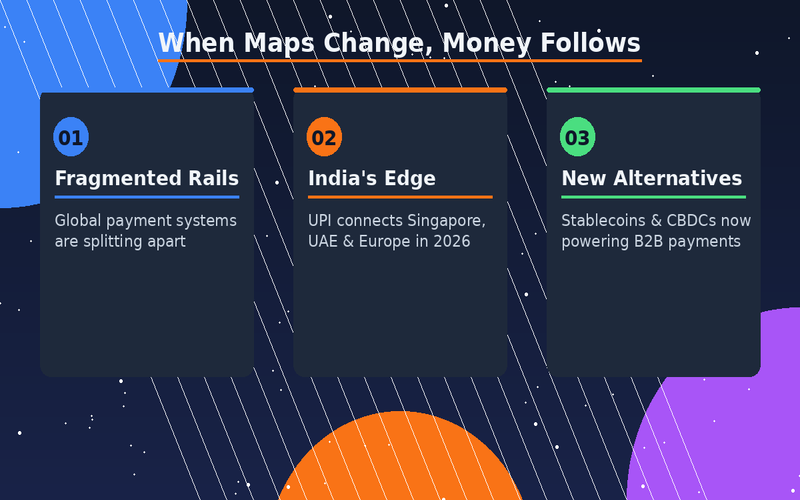
When Maps Change, Money Follows: How Geopolitics Is Rewiring B2B Payments in 2026
Payments are no longer just a plumbing problem — they're a geopolitical one. Explore how Indian B2B businesses can navigate a fragmented, fast-changing global payment landscape
Read More
What Happens Inside an Escrow Release Event? A Step-by-Step Breakdown for Businesses
A complete breakdown of escrow release events—covering triggers, validation, vendor response, and access to source code—helping businesses ensure continuity and minimize vendor risk.
Read MoreReady to Protect Your Core Systems?
Join enterprises that trust SprintEX-Code to safeguard their mission-critical software. Get started with a consultation to discuss your specific escrow requirements.