
RBI Software Continuity Compliance for NBFCs Using Escrow Frameworks
Apr 07, 2026

RBI Software Continuity Compliance for NBFCs Using Verified Escrow
The Reserve Bank of India expects NBFCs to ensure continuity of critical software systems—even when those systems are outsourced. SprintEX-Code helps NBFCs meet this expectation by providing a structured source code escrow framework that reduces vendor dependency and strengthens recoverability during failure scenarios. This page explains how that alignment works in practice.
Table of Contents
Why Software Continuity Is a Regulatory Expectation
What Gap Do NBFCs Face in Managing Continuity?
How SprintEX-Code Operationalizes Escrow
How SprintEX-Code Aligns with RBI’s Continuity Expectations
When Does SprintEX-Code Become Relevant?
How SprintEX-Code Differs from Basic Escrow
Summary Table
Conclusion
Frequently Asked Questions (FAQs)
Why Software Continuity Is a Regulatory Expectation
RBI’s IT governance and outsourcing frameworks emphasize that accountability remains with the regulated entity. Even when software is developed, hosted, or maintained by third parties, the NBFC must demonstrate operational control and continuity readiness.
Regulators ultimately assess one core question:
Can the NBFC continue operating if the vendor fails?
SprintEX-Code is designed to support a defensible answer to that question.
For a deeper regulatory foundation, see our pillar article on RBI software continuity expectations.
What Gap Do NBFCs Face in Managing Continuity?
Many NBFCs depend heavily on third-party vendors for loan management systems, customer servicing platforms, compliance infrastructure, and reporting tools.
While contracts and SLAs define responsibilities, they do not guarantee technical access if a vendor becomes insolvent or stops support.
This creates structural exposure:
Dependency on a single technology provider
Limited control during vendor failure
Delays in restoring or transitioning systems
Understanding the fundamentals of escrow clarifies this risk (internal link to “What Is Source Code Escrow?”).
SprintEX-Code exists to address this gap.
How SprintEX-Code Operationalizes Escrow
SprintEX-Code, offered by PaySprint, is structured specifically for regulated financial environments.
It supports NBFCs through:
Secure and periodic source code deposits
Clearly defined trigger-based release mechanisms
Neutral third-party custody
Audit-aligned documentation and governance controls
Rather than functioning as passive code storage, SprintEX-Code is designed to make continuity demonstrable and verifiable.
How SprintEX-Code Aligns with RBI’s Continuity Expectations
While RBI does not mandate a specific escrow product, it consistently emphasizes outcomes such as:
Operational resilience
Third-party risk management
Business continuity planning
Recoverability of critical systems
SprintEX-Code aligns with these outcomes by ensuring access to core software does not depend entirely on the ongoing viability of a vendor.
In supervisory contexts, this strengthens an NBFC’s ability to demonstrate structured continuity planning rather than reliance on contractual language alone.
When Does SprintEX-Code Become Relevant?
SprintEX-Code becomes critical in scenarios such as:
Vendor insolvency or shutdown
Prolonged support disruption
Breach of maintenance obligations
Strategic vendor exit
Under predefined trigger conditions, NBFCs gain structured access to deposited source code, enabling recovery or transition without operational paralysis.
The objective is not vendor distrust—it is controlled risk management.
How SprintEX-Code Differs from Basic Escrow Arrangements
Traditional escrow models often focus solely on custody. SprintEX-Code emphasizes operational readiness within regulated frameworks.
Key differences include:
Focus on usability, not just storage
Defined release logic aligned with continuity needs
Structured documentation for audit defensibility
Governance alignment suitable for financial institutions
The emphasis is not on marketing continuity—but on proving recoverability under stress.
Summary: RBI Expectation vs SprintEX-Code Alignment
RBI Expectation | Regulatory Risk if Ignored | How SprintEX-Code Supports Alignment |
Ensure continuity of critical outsourced systems | Service disruption, audit findings | Structured escrow with defined release triggers |
Maintain control over outsourced technology | Loss of governance visibility | Reduces single-vendor dependency |
Demonstrate recoverability during supervision | Inability to restore systems in time | Provides fallback access to source code |
Manage third-party technology risk | Over-reliance on vendor viability | Structured continuity mechanism |
Preserve regulatory reporting capability | Delays in compliance filings | Enables controlled recovery of core systems |
Conclusion
The Reserve Bank of India expects NBFCs to ensure continuity of critical software systems—even when those systems are outsourced.
Contracts and SLAs define obligations, but they do not provide operational control during vendor failure. Structured escrow frameworks such as SprintEX-Code reduce vendor dependency by guaranteeing access under predefined conditions.
In a software-driven financial ecosystem, continuity planning is not optional. It is a core element of governance and risk management.
Frequently Asked Questions (FAQs)
How does SprintEX-Code help NBFCs meet RBI software continuity expectations?
SprintEX-Code provides a structured escrow framework that ensures NBFCs can access and recover critical software if a vendor fails, supporting regulatory expectations around operational resilience.
Is SprintEX-Code mandatory under RBI regulations?
No. RBI does not mandate specific products. However, it expects NBFCs to demonstrate effective continuity and control over outsourced software—outcomes SprintEX-Code is designed to support.
How is SprintEX-Code different from basic source code escrow?
Unlike basic escrow focused on storage, SprintEX-Code emphasizes trigger-based access, audit alignment, and operational readiness suitable for regulated financial institutions.
When does an NBFC gain access to source code under SprintEX-Code?
Access is granted under predefined trigger events such as vendor insolvency, prolonged support failure, or breach of maintenance obligations.
Can contracts and SLAs replace SprintEX-Code?
No. Contracts define legal rights, but they do not guarantee technical access during vendor failure. SprintEX-Code addresses operational continuity.
Which NBFCs should consider SprintEX-Code?
NBFCs that rely on third-party vendors for critical systems such as lending, servicing, or reporting should consider structured escrow to reduce dependency risk and strengthen continuity readiness.
Related Posts

What is E-Banking? Meaning, Types, Benefits & How It Works in India.
E-banking is the digital way of accessing banking services through mobile apps, websites, ATMs, and biometric systems. It enables secure, fast, and branchless financial transactions anytime and anywhere in India.
Read More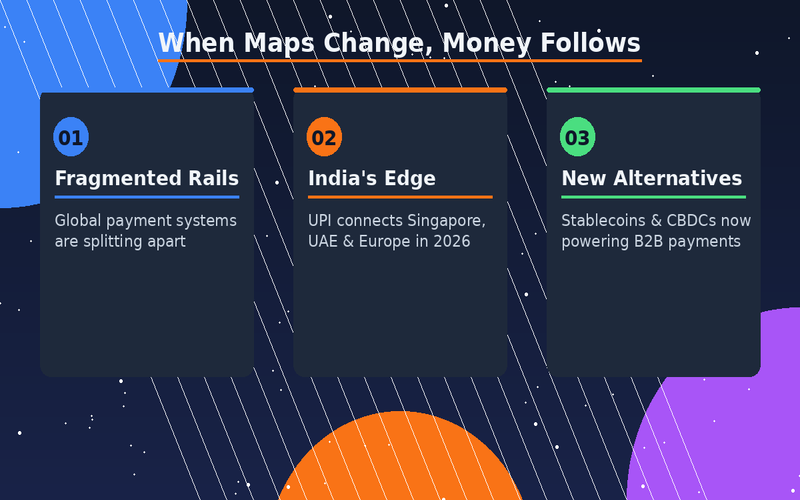
When Maps Change, Money Follows: How Geopolitics Is Rewiring B2B Payments in 2026
Payments are no longer just a plumbing problem — they're a geopolitical one. Explore how Indian B2B businesses can navigate a fragmented, fast-changing global payment landscape
Read More
What Happens Inside an Escrow Release Event? A Step-by-Step Breakdown for Businesses
A complete breakdown of escrow release events—covering triggers, validation, vendor response, and access to source code—helping businesses ensure continuity and minimize vendor risk.
Read MoreReady to Protect Your Core Systems?
Join enterprises that trust SprintEX-Code to safeguard their mission-critical software. Get started with a consultation to discuss your specific escrow requirements.