
RBI Software Continuity Compliance for NBFCs | SprintEX-Code
Mar 30, 2026
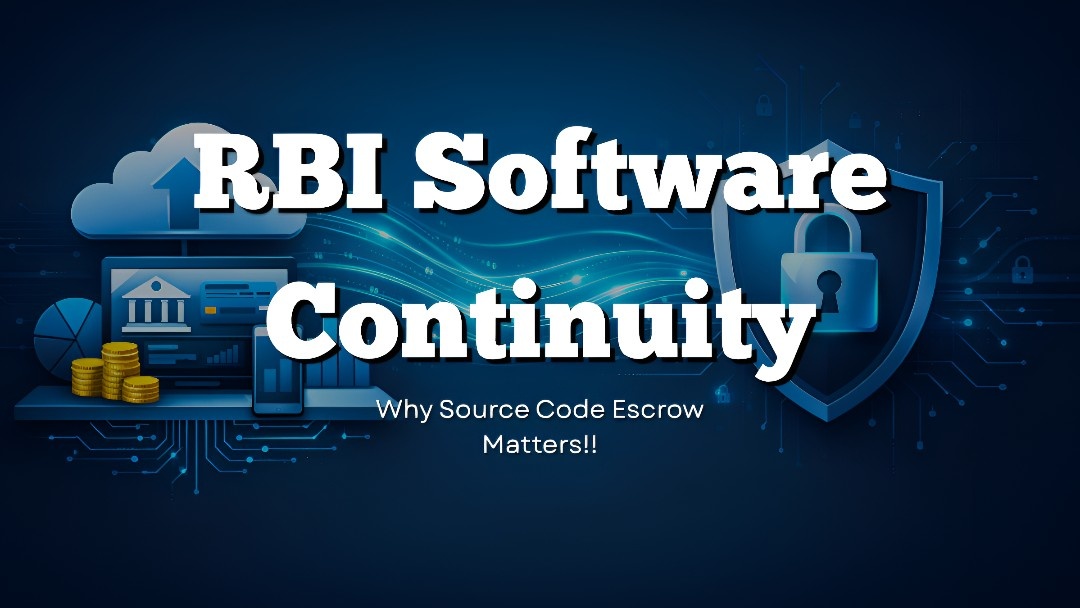
RBI Software Continuity Requirements for NBFCs and the Role of Verified Escrow
The Reserve Bank of India (RBI) expects Non-Banking Financial Companies (NBFCs) to ensure uninterrupted operation of their critical software systems—even when those systems are developed, hosted, or maintained by third-party technology vendors.
This expectation exists because outsourcing technology does not outsource regulatory responsibility.
Source code escrow matters because it directly supports software continuity and recoverability when vendor dependency becomes a regulatory risk.
Table of Contents
1. What does RBI mean by Software Continuity
2. Why RBI Holds NBFCs Accountable for Vendor-Owned Systems
3. What Is the Real Risk When a Software Vendor Fails?
4. How Source Code Escrow Supports RBI’s Continuity Expectations
5. Why Contracts and SLAs Alone Are Not Sufficient
6. How RBI Assesses Regulatory Readiness for Outsourced Software
7. Where SprintEX-Code Fits into RBI-Aligned Continuity Planning
8. Conclusion
9. Frequently Asked Questions (FAQs)
What RBI Means by Software Continuity
Software continuity refers to an NBFC’s ability to access, maintain, and restore critical applications without disruption, regardless of vendor circumstances.
These applications typically include:
Loan origination systems
Loan management and servicing platforms
Customer and transaction databases
Regulatory and financial reporting tools
From a regulatory standpoint, continuity is not about who owns or builds the software.
It is about whether the NBFC can continue operations if something goes wrong.
Why RBI Holds NBFCs Accountable for Vendor-Owned Systems
RBI’s IT governance and outsourcing guidelines are built around a clear principle:
Accountability cannot be outsourced.
Even when software is:
Developed by a third party
Hosted on vendor infrastructure
Maintained under an SLA
…the NBFC remains fully responsible for operational stability, data integrity, and regulatory compliance.
If a vendor becomes insolvent, shuts down, or stops supporting a system, RBI does not treat this as a vendor failure. It is evaluated as a governance and risk management failure within the NBFC.
What Is the Real Risk When a Software Vendor Fails?
Vendor failure is often misunderstood as a temporary outage.
The actual risk is loss of control over the software itself.
Without access to source code, an NBFC may face:
Inability to fix bugs or security issues
No practical path to migrate or rebuild the system
Delays in regulatory reporting and customer servicing
Contracts and SLAs provide legal remedies, but they do not restore operations when technical access is unavailable.
How Source Code Escrow Supports RBI’s Continuity Expectations
Source code escrow is a structured mechanism in which an application’s source code is deposited with an independent third party and released under predefined trigger conditions.
In practice, escrow supports RBI-aligned continuity by ensuring:
Guaranteed access to source code if a vendor fails
Reduced dependency on a single technology provider
Faster system recovery during prolonged disruptions
While RBI does not mandate escrow by name, these outcomes align directly with its focus on:
Operational resilience
Recoverability
Effective vendor risk management
Why Contracts and SLAs Alone Are Not Sufficient
Most NBFCs rely on:
Contracts
Service-level agreements (SLAs)
Exit and termination clauses
These instruments define obligations, but they do not guarantee technical access when a vendor fails unexpectedly.
Regulatory continuity is assessed in real time.
RBI’s concern is whether operations can continue—not whether protections exist on paper.
How RBI Assesses Regulatory Readiness for Outsourced Software
During supervisory reviews, RBI typically evaluates whether NBFCs have realistic continuity arrangements for outsourced technology. This includes assessing dependency concentration, fallback mechanisms, and the ability to recover systems without prolonged disruption.
NBFCs that cannot demonstrate practical recoverability face higher regulatory scrutiny, especially as software becomes central to financial operations.
Where SprintEX-Code Fits into RBI-Aligned Continuity Planning
Modern escrow solutions such as SprintEX-Code by PaySprint are designed to address continuity from both regulatory and operational perspectives.
Instead of treating escrow as a static legal deposit, SprintEX-Code focuses on:
Verified and usable code deposits
Clearly defined trigger conditions
Audit-aligned controls and documentation
This approach makes software continuity measurable and defensible, rather than theoretical.
| RBI Expectation | Regulatory Risk if Ignored | How Source Code Escrow Helps |
| Ensure operational continuity of critical systems | Service disruption, audit findings, supervisory action | Guarantees access to source code during vendor failure |
| Maintain control over outsourced technology | Loss of governance visibility | Reduces single-vendor dependency |
| Demonstrate recoverability during inspections | Inability to restore systems in defined timeframes | Enables structured recovery under predefined triggers |
| Manage third-party technology risk | Over-reliance on external providers | Provides fallback access to core software assets |
| Maintain regulatory reporting capability | Delays in compliance filings | Supports continuity of reporting systems |
Conclusion
RBI does not assess the trustworthiness of software vendors.
It assesses whether an NBFC can continue operating if a vendor fails.
Source code escrow converts vendor dependency into a managed operational risk by ensuring access and recoverability under defined conditions. In a software-driven financial system, continuity is not a technical consideration—it is a core governance responsibility.
Frequently Asked Questions (FAQs)
What is source code escrow in simple terms?
Source code escrow is a legal arrangement where software source code is held by a neutral third party and released to the NBFC if the vendor fails to maintain or support the application.
Why does RBI expect NBFCs to have source code access or escrow arrangements?
RBI’s IT governance framework requires NBFCs to secure access to critical application source code to ensure continuity and operational resilience if a vendor defaults.
Is source code escrow legally required in India for financial institutions?
Yes. Under the RBI’s Master Directions on IT risk and outsourcing, financial institutions must either acquire source code ownership or implement escrow arrangements for critical systems.
What events typically trigger source code release from escrow?
Common triggers include vendor insolvency, cessation of support, contract breach, or inability to fulfil maintenance obligations.
Does source code escrow support compliance beyond RBI?
Yes. Escrow arrangements also support broader regulatory expectations from bodies such as SEBI and IRDAI regarding operational resilience.
How often should escrow deposits be updated?
Source code deposits should be updated after every major release or system change to ensure the escrowed version remains current and usable.
Related Posts
What is E-Banking? Meaning, Types, Benefits & How It Works in India.
E-banking is the digital way of accessing banking services through mobile apps, websites, ATMs, and biometric systems. It enables secure, fast, and branchless financial transactions anytime and anywhere in India.
Read More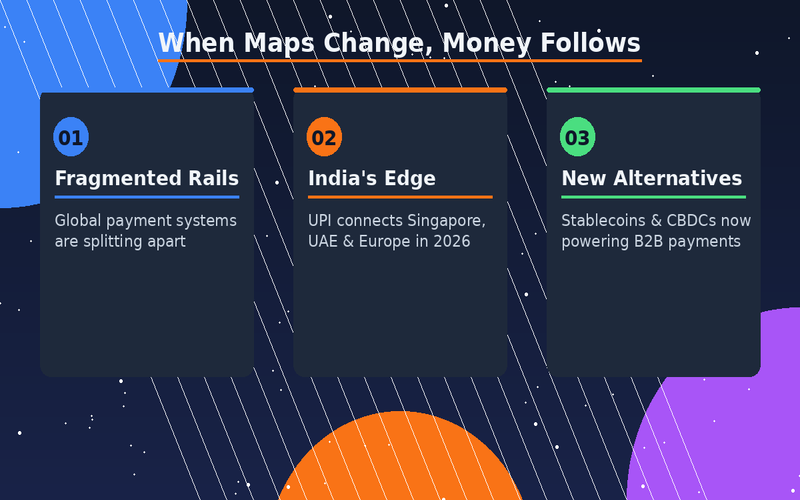
When Maps Change, Money Follows: How Geopolitics Is Rewiring B2B Payments in 2026
Payments are no longer just a plumbing problem — they're a geopolitical one. Explore how Indian B2B businesses can navigate a fragmented, fast-changing global payment landscape
Read More
What Happens Inside an Escrow Release Event? A Step-by-Step Breakdown for Businesses
A complete breakdown of escrow release events—covering triggers, validation, vendor response, and access to source code—helping businesses ensure continuity and minimize vendor risk.
Read MoreReady to Protect Your Core Systems?
Join enterprises that trust SprintEX-Code to safeguard their mission-critical software. Get started with a consultation to discuss your specific escrow requirements.