
Best AI Contract Management Software in 2026: Features, Benefits & How to Choose
Sep 30, 2026
Best AI Contract Management Software in 2026: Features, Benefits & How to Choose
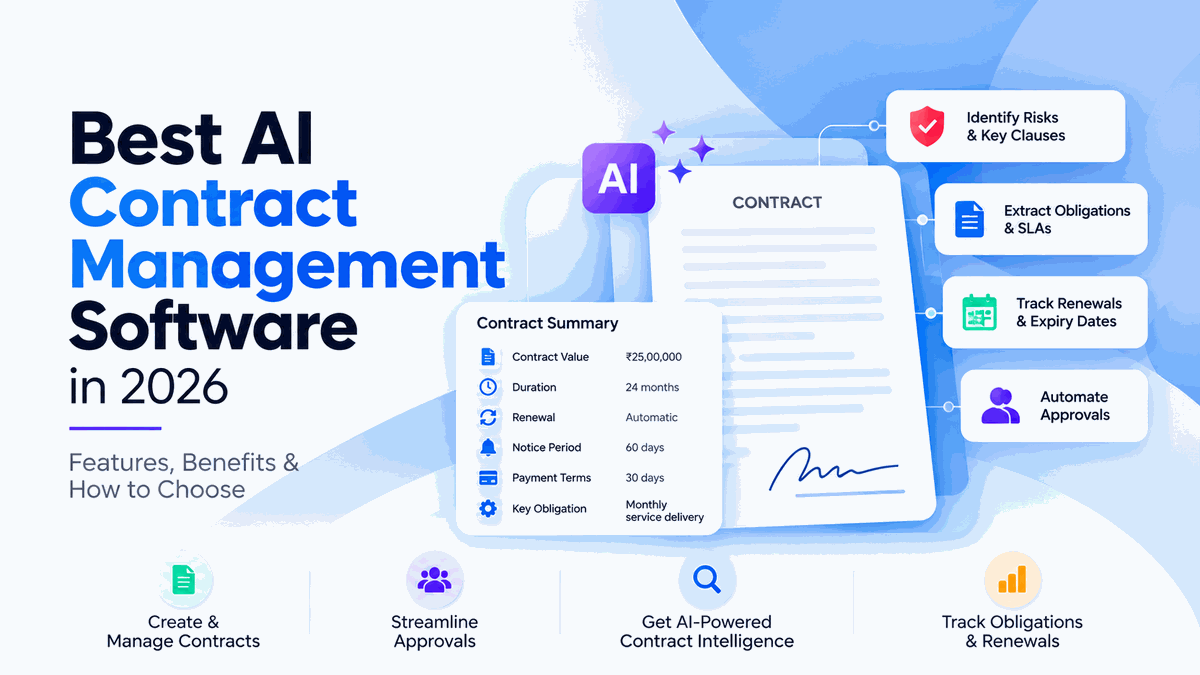
Best AI contract management software in 2026 should help businesses manage the complete contract lifecycle while using artificial intelligence to identify clauses, obligations, risks, renewal dates, and important contractual information.
A strong AI contract management platform should bring contract creation, approvals, signing, storage, obligation tracking, renewals, and AI-powered contract intelligence into one connected system.
SprintContractX is designed to help businesses do exactly that. It combines contract lifecycle management with AI-powered risk and clause intelligence, obligation and SLA extraction, drafting and redlining support, approval workflows, renewal tracking, eSign and centralised contract visibility.
Instead of treating contracts as documents that disappear into folders after signing, SprintContractX helps organisations turn them into searchable, trackable and actionable business information.
Table of Contents
What Is AI Contract Management Software?
Why Do Businesses Need AI Contract Management Software in 2026?
How Does AI Contract Management Software Work?
What Are the Benefits of AI Contract Management Software?
What Features Should the Best AI Contract Management Software Have?
Traditional Contract Management vs AI Contract Management
Conclusion
Frequently Asked Questions
What Is AI Contract Management Software?
AI contract management software is a digital platform that uses artificial intelligence to help businesses create, review, approve, sign, store, analyse and monitor contracts throughout their lifecycle.
Traditional contract management systems primarily helped organisations store documents and maintain basic contract records.
AI-powered contract management takes this further by helping businesses understand what their contracts actually contain.
AI can help identify information such as:
Contract obligations
Important clauses
Renewal and expiry dates
SLA commitments
Payment terms
Potential contractual risks
Termination conditions
Approval requirements
Important milestones
Missing or unusual provisions
This can reduce the need for teams to manually open and review every agreement whenever they need a specific piece of information.
Why Do Businesses Need AI Contract Management Software in 2026?
Businesses are managing more agreements across customers, vendors, partners, employees and service providers.
As contract volumes increase, spreadsheets, emails and shared folders become harder to manage.
How Does AI Contract Management Software Work?
AI contract management software combines traditional contract lifecycle management with artificial intelligence.
The system can analyse contract documents, identify relevant information and connect that intelligence with workflows such as approvals, renewals and obligation management.
Here are some of the most important AI use cases.
1. AI Contract Review
Reviewing contracts manually can take significant time.
AI can help identify important information such as:
Liability provisions
Renewal terms
Payment conditions
Termination clauses
Contract obligations
SLA commitments
Non-standard language
Important dates
This allows teams to focus their attention on sections that require closer review.
AI should support human decision-making rather than completely replace legal judgement.
2. AI Risk and Clause Intelligence
Important contractual risks are often hidden inside lengthy documents.
AI-powered clause intelligence can help identify, classify and surface important provisions so teams can understand what different agreements contain.
This can help organisations locate:
Unusual clauses
Missing provisions
Commercial commitments
Risk-related language
Renewal terms
Termination provisions
Specific contractual conditions
Instead of reading every contract from beginning to end, teams can reach the relevant information faster.
3. Obligation and SLA Extraction
Contract management does not end when the contract is signed.
Agreements may contain obligations related to:
Deliverables
Payments
Reporting
Compliance
Service levels
Performance
Renewals
Milestones
Notice periods
AI can help extract these obligations and make them easier to track.
This is particularly valuable because important commitments can otherwise remain hidden inside signed documents until they are missed.
4. AI Contract Summarisation
Long agreements can be difficult for non-legal teams to understand quickly.
AI can help produce concise summaries highlighting important contractual information.
For example:
Contract duration: 24 months
Renewal: Automatic
Notice period: 60 days
Payment cycle: 30 days
Expiry date: 31 December 2026
Key obligation: Monthly service delivery
This helps business stakeholders understand contracts without manually reading every page.
5. Intelligent Contract Search
AI can make contract repositories easier to search.
Instead of remembering filenames or folder locations, users can search for information such as:
Contracts expiring this quarter
Agreements containing auto-renewal clauses
Contracts with specific payment terms
Agreements containing certain obligations
Contracts requiring action
Contracts assigned to a particular business unit
This makes contractual information easier to access across the organisation.
6. AI-Assisted Drafting
AI can also support the contract creation process.
Teams can use existing templates, approved language and contract structures to create agreements more efficiently.
This can help organisations improve consistency while reducing repetitive drafting work.
7. AI-Assisted Redlining
Contract negotiation frequently involves multiple rounds of edits.
AI-assisted redlining can help users review changes, understand deviations and work through contract revisions more efficiently.
Human review should remain part of important legal and commercial decisions.
What Are the Benefits of AI Contract Management Software?
The biggest benefit of AI contract management software is not simply automation.
It is better visibility into contracts and the business commitments contained inside them.
Faster Contract Processes
Automation can reduce repetitive work across drafting, review, approvals, signing and contract tracking.
Better Contract Visibility
Teams can see:
Where contracts are stored
What stage they are in
Who needs to take action
Which agreements are expiring
Which obligations need attention
This helps reduce dependency on spreadsheets and manual follow-ups.
Improved Renewal Management
Missing contract renewals or notice periods can create unnecessary cost and risk.
Automated alerts can help teams stay ahead of important dates.
Stronger Obligation Tracking
Businesses can monitor commitments made inside contracts rather than relying on individual employees to remember them.
Reduced Manual Contract Review
AI can help surface important clauses and contract information faster, reducing the amount of repetitive review required.
Better Cross-Functional Collaboration
Contracts often involve more than legal teams.
Finance, procurement, sales, operations and management may all need access to contractual information.
A central platform makes collaboration easier.
More Actionable Contract Data
Instead of treating contracts as static PDFs, AI contract management software helps organisations turn contractual information into structured business intelligence.
What Features Should the Best AI Contract Management Software Have?
Businesses should evaluate software based on how well it improves their actual contract process.
Here are the capabilities that matter most.
Centralised Contract Repository
Contracts should be stored in one secure and searchable environment.
A strong repository should reduce dependence on:
Emails
Shared folders
Local devices
Spreadsheets
Individual employees
Users should be able to quickly find the right agreement and understand its status.
AI Contract Intelligence
The platform should help users understand contracts, not merely store them.
Look for AI capabilities related to:
Clause intelligence
Risk identification
Obligation extraction
SLA extraction
Important dates
Contract summaries
Searchable contract information
Automated Approval Workflows
Contracts may require approval from multiple teams.
For example:
Business Team ? Finance ? Legal ? Management ? Signature
Automated workflows help route agreements to the correct stakeholders while reducing manual follow-ups.
Obligation Management
A good contract management platform should help organisations track what they have agreed to deliver.
That includes:
Obligations
Due dates
SLAs
Milestones
Responsible stakeholders
Contract commitments
Renewal and Expiry Management
The software should provide visibility into:
Contract expiry
Renewal dates
Notice periods
Upcoming milestones
Required actions
This helps businesses avoid discovering important deadlines too late.
Contract Version Control
Multiple versions of an agreement can quickly create confusion.
The system should provide visibility into:
Current version
Previous versions
Changes
Approval history
Contract activity
eSign
Contract signing should connect naturally with the contract workflow.
Integrated digital signing helps reduce unnecessary movement between separate platforms.
Alerts and Notifications
The platform should proactively notify users when action is required.
Useful alerts include:
Upcoming renewals
Expiry deadlines
Pending approvals
SLA deadlines
Contract obligations
Required actions
Advanced Contract Search
A contract repository is only useful when employees can find what they need.
Search should allow teams to quickly locate agreements and important contractual information.
Role-Based Access
Contracts frequently contain sensitive commercial information.
Businesses should control which users can:
View contracts
Edit documents
Approve agreements
Manage workflows
Access confidential information
Traditional Contract Management vs AI Contract Management
The difference is straightforward:
Traditional contract management helps businesses store contracts.
AI contract management helps businesses understand, monitor and act on them.
Conclusion
The best AI contract management software in 2026 should do more than digitise contracts or provide another place to store documents.
It should help businesses understand what their contracts contain, what actions are required and which agreements need attention.
That means bringing together:
Contract creation
Review
Approvals
Signing
Contract storage
AI-powered intelligence
Clause and risk identification
Obligation tracking
SLA management
Renewals
Search
Lifecycle visibility
The real shift is from contract storage to contract intelligence.
When important agreements are scattered across emails, spreadsheets and folders, businesses lose visibility into obligations, renewals, approvals and contractual commitments.
SprintContractX helps bring those processes together within one AI-powered contract lifecycle management platform.
By combining contract workflows with AI-powered risk and clause intelligence, obligation and SLA extraction, drafting and redlining support, approval management, renewal tracking and centralised visibility, SprintContractX helps organisations make contracts easier to manage throughout their lifecycle.
Ultimately, the goal of AI contract management should be simple:
Make every contract easier to find, understand, track and act on.
Turn Your Contracts Into Actionable Business Intelligence
Move beyond scattered contracts, manual tracking and approval chasing.
Discover how SprintContractX can help you manage contracts, approvals, obligations, renewals and AI-powered contract intelligence from one connected platform.
Book a SprintContractX Demo ?
Frequently Asked Questions
What is the best AI contract management software in 2026?
The best AI contract management software should combine AI-powered contract intelligence with contract lifecycle management capabilities such as drafting, approvals, obligation tracking, renewal management, contract search and secure document management.
SprintContractX brings these capabilities together within an AI-powered contract lifecycle management platform.
What is AI contract management software?
AI contract management software uses artificial intelligence to help organisations create, review, analyse, organise and monitor contracts throughout their lifecycle.
It can help identify clauses, obligations, important dates, SLAs, contractual risks and other information contained inside agreements.
How does AI improve contract management?
AI can reduce repetitive work by helping teams identify important clauses, extract obligations, summarise contracts, locate relevant information and surface important contractual dates.
Can AI review contracts?
Yes.
AI can help analyse contract content and identify important terms or clauses requiring attention.
However, important legal interpretations and decisions should still involve appropriate human review.
Can AI extract obligations from contracts?
Yes.
AI contract management software can help identify contractual obligations, SLAs, deadlines and other commitments contained within agreements.
SprintContractX supports obligation and SLA intelligence as part of its contract management capabilities.
Can AI help track contract renewals?
Yes.
Contract management software can track expiry dates, renewal periods and notice deadlines and help notify teams before action is required.
What is the difference between CLM and AI contract management?
Contract Lifecycle Management, or CLM, manages contracts throughout stages such as creation, negotiation, approval, signing, storage and renewal.
AI contract management adds artificial intelligence to help businesses understand and analyse the information contained inside those contracts.
SprintContractX combines contract lifecycle management with AI-powered contract intelligence.
Can AI replace lawyers in contract management?
No.
AI can help reduce repetitive work and surface relevant contract information faster, but legal interpretation, negotiation and important commercial decisions still require human judgement.
What features should AI contract management software include?
Important features include:
AI contract intelligence
Clause identification
Risk identification
Obligation management
SLA tracking
Approval workflows
Renewal management
Contract repository
Contract search
Version control
eSign
Role-based access
The right feature set depends on the organisation's contracting process.
Who needs AI contract management software?
AI contract management software can be useful for organisations managing significant numbers of customer, vendor, supplier, partner or enterprise agreements.
Legal, finance, procurement, sales and operations teams can all benefit from improved contract visibility.
Related Posts
What is E-Banking? Meaning, Types, Benefits & How It Works in India.
E-banking is the digital way of accessing banking services through mobile apps, websites, ATMs, and biometric systems. It enables secure, fast, and branchless financial transactions anytime and anywhere in India.
Read More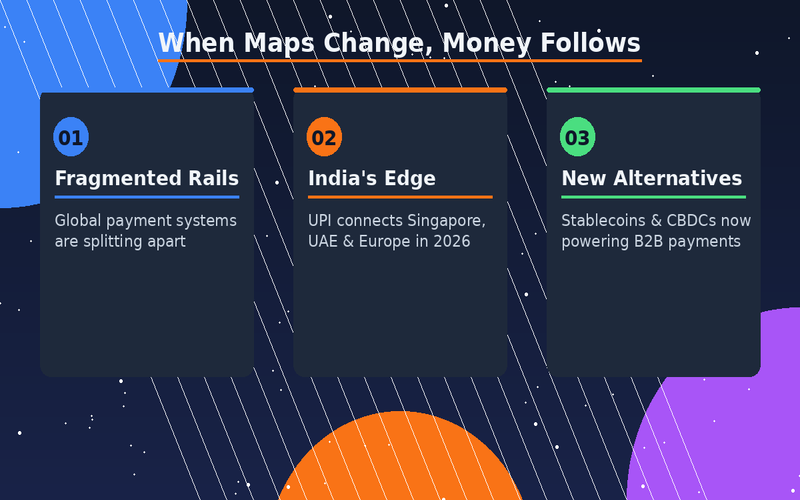
When Maps Change, Money Follows: How Geopolitics Is Rewiring B2B Payments in 2026
Payments are no longer just a plumbing problem — they're a geopolitical one. Explore how Indian B2B businesses can navigate a fragmented, fast-changing global payment landscape
Read More
What Happens Inside an Escrow Release Event? A Step-by-Step Breakdown for Businesses
A complete breakdown of escrow release events—covering triggers, validation, vendor response, and access to source code—helping businesses ensure continuity and minimize vendor risk.
Read MoreReady to Protect Your Core Systems?
Join enterprises that trust SprintEX-Code to safeguard their mission-critical software. Get started with a consultation to discuss your specific escrow requirements.