
Why Contract Automation Is Essential for Modern Businesses
Jun 03, 2026
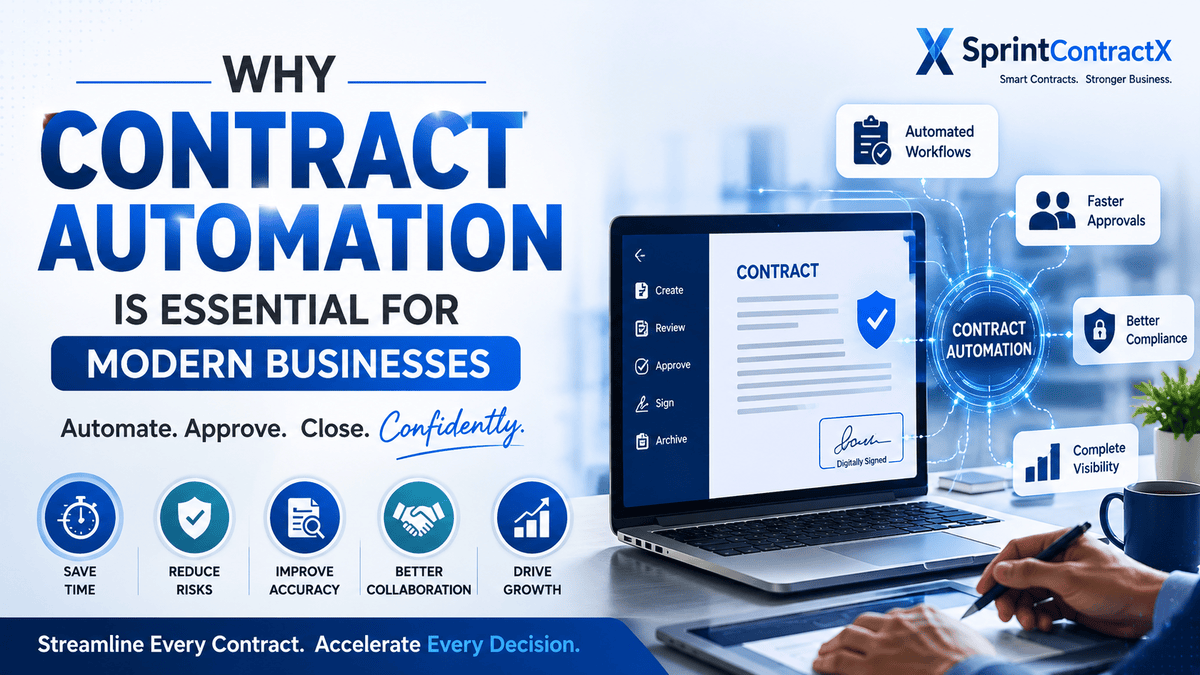
Why Contract Automation Is Essential for Modern Businesses
Contract automation is no longer an efficiency upgrade reserved for large enterprises with dedicated legal operations teams. It is the operational baseline that every modern business — regardless of size, sector, or geography — needs to manage agreements without exposing itself to delays, disputes, and compliance failures that manual contracting makes inevitable.
Every time a sales team waits three weeks for legal to approve a customer agreement, revenue is deferred. Every time a procurement contract auto-renews on unfavourable terms because no one flagged the renewal window, margin is lost. Every time a vendor agreement lapses unnoticed, operational continuity is at risk. These are not edge-case failures — they are the predictable, recurring outcomes of managing contracts manually in an environment that has long since outpaced manual processes.
The problem is structural. Contracts in modern businesses are created by legal, negotiated by sales or procurement, approved by finance, signed by operations, monitored by compliance, and renewed by whoever happens to remember. Each handoff is a gap. Each gap is a risk. And in most businesses today, those gaps are managed through email threads, shared drives, and spreadsheets that were never designed for contract governance.
SprintContractX by PaySprint introduces an AI-powered contract lifecycle management platform that replaces every one of those manual gaps with an automated, governed, and auditable process — from the moment a contract request is raised to the moment it is renewed or retired.
Table of Contents
1. What Is Contract Automation and Why Does It Matter?
2. Why Are Manual Contract Processes Failing Modern Businesses?
3. What Does a Contract Automation Platform Actually Do?
4. How Does SprintContractX Automate the Full Contract Lifecycle?
5. Which Business Teams Benefit Most from Contract Automation?
6. Where Does Contract Automation Deliver the Biggest ROI?
7. Why Is SprintContractX the Right Contract Automation Platform for Your Business?
8. Conclusion
9. Frequently Asked Questions (FAQs)
What Is Contract Automation and Why Does It Matter?
Contract automation is the use of software and artificial intelligence to streamline, standardise, and govern every stage of the contract lifecycle — replacing manual drafting, chasing, approval routing, and tracking with a system-driven process that operates consistently at any volume.
The distinction between contract automation and simple digital storage is critical. Storing contracts in a shared drive or a document management system does not automate anything — it just digitises the filing cabinet. True contract automation means:
• AI generates compliant first drafts using approved templates and clause libraries — in seconds, not hours
• Approval workflows route contracts automatically based on value, risk, geography, or contract type — without manual coordination
• E-signatures are integrated — agreements are executed inside the platform without switching tools
• Obligations, milestones, and renewal windows are tracked proactively — with alerts to the right owners before deadlines are breached
• Every event is logged in an immutable audit trail — every version, every approval, every signature
• Analytics surface cycle times, bottlenecks, and risk exposure across the entire contract portfolio
Contract automation matters because the cost of not having it — in time, money, compliance exposure, and missed revenue — compounds with every contract the business manages. And modern businesses manage more contracts than they realise.
Why Are Manual Contract Processes Failing Modern Businesses?
Understanding where manual contract management fails is the foundation for understanding why automation addresses it so directly.
How Much Time Is Lost in Contract Drafting and Approval?
Manual contract drafting starts from scratch or from inconsistent templates — producing non-standard language, missing clauses, and version confusion that legal teams then spend hours correcting. Approval routing happens through email, creating queues that are invisible to everyone except the person waiting. A contract that should take two days takes two weeks — and nobody in the business can tell you why.
What Happens When Renewal Deadlines Are Missed?
Business contracts carry renewal windows. Miss the window — and auto-renewal locks the business into another term at the existing rate, or lapse leaves a critical vendor relationship without a governing agreement. In a manual environment, renewal tracking depends entirely on whoever set up the reminder. When they leave the organisation, the reminder goes with them.
Why Does Non-Standard Contract Language Create Legal Risk?
Without a controlled clause library and AI-assisted review, every new contract iteration introduces language variation. Over time, a business's contract portfolio becomes a collection of inconsistent terms, conflicting definitions, and non-standard obligations — each one a potential liability in a dispute, each one a problem to unpick when the business needs to understand what it has actually agreed to.
Where Does Contract Fraud and Compliance Exposure Enter?
Manual contract processes create audit gaps that regulators, acquirers, and auditors consistently find problematic. Without a complete, timestamped record of every version, approval, and execution event, the business cannot demonstrate compliance — even when it was, in fact, compliant. The absence of evidence is treated as evidence of absence.
What Does Contract Chaos Cost in Revenue?
For sales teams, every day a customer agreement spends in an approval queue is a day revenue is not recognised. For procurement, every delayed vendor contract is delayed operational capability. Contract bottlenecks are revenue bottlenecks — and in competitive markets, the business that closes agreements faster wins the deal.
What Does a Contract Automation Platform Actually Do?
A contract automation platform manages every stage of the contract lifecycle inside a single, governed system — replacing the fragmented mix of email, shared drives, and manual follow-up that most businesses currently use.
Applied to a modern business, a contract automation platform works as follows:
• A contract request is raised through a structured digital form — capturing all key details without chasing information across departments or waiting for a legal intake meeting
• The platform generates a compliant first draft using AI-powered templates and pre-approved clause libraries — with smart suggestions that adapt to contract type, risk level, and counterparty
• The draft enters an automated approval workflow routed by contract value, risk tier, geography, or contract type — with real-time status visible to every stakeholder
• Approved contracts are executed via integrated, legally binding e-signatures — with the final version locked against post-signature modification
• Post-signature, the platform monitors every obligation, milestone, and renewal window — sending proactive alerts to the right owner before any deadline is breached
• All contracts are stored in a centralised, searchable repository — retrievable instantly by metadata, clause, date, party, or owner
• Live dashboards and exportable reports track cycle times, approval rates, and risk exposure across the entire portfolio
This single architecture converts contract management from a reactive, error-prone exercise into a proactive, governed process — with the speed, compliance, and visibility that modern businesses need to scale.
How Does SprintContractX Automate the Full Contract Lifecycle?
SprintContractX by PaySprint is an enterprise-grade AI contract automation platform that provides the technical, legal, and operational infrastructure for end-to-end lifecycle management. For businesses managing high volumes of agreements across legal, procurement, sales, and HR, the platform delivers:
AI Contract Drafting and Authoring — How Fast Can Contracts Be Generated?
SprintContractX's AI drafting engine generates compliant first drafts in seconds using pre-approved clause libraries and smart clause suggestions that adapt automatically to contract type, region, and risk level. Guided fallbacks ensure every draft stays policy-compliant from line one — without requiring legal review of every iteration.
Intelligent Approval Workflows — How Are Bottlenecks Eliminated?
SprintContractX automates multi-level approval routing based on contract value, risk tier, geography, and contract type. Policy-driven routing removes manual coordination entirely — the right approver receives the right contract at the right stage, automatically. Real-time status tracking ensures no agreement disappears into an inbox queue with no visibility for anyone waiting on it.
Integrated E-Signature — How Is Execution Secured?
Contracts are sent, signed, and locked inside SprintContractX — with legally binding e-signatures and a complete audit trail for every execution event. Auto-lock on the final version prevents any post-signature modification — ensuring document integrity from execution through the full contract term.
Obligation and Renewal Management — How Are Deadlines Never Missed?
AI-triggered alerts notify the right contract owners of upcoming milestones, notice periods, and renewal windows — well before deadlines are breached. Obligation dashboards give legal, procurement, and operations teams a live view of every active commitment across the organisation's contract portfolio, without manual tracking or calendar reminders.
Centralised Contract Repository — How Is Every Contract Found Instantly?
Every contract is stored in a fully searchable, centralised repository — retrievable by metadata, clause, date, counterparty, or owner in seconds. Role-based access controls ensure sensitive agreements are accessible only to authorised users, with every access event logged.
Real-Time Analytics — How Does Data Drive Contract Decisions?
SprintContractX's live dashboards track contract cycle times, approval rates, and risk exposure across the entire portfolio. Procurement teams monitor vendor performance against SLA commitments. Legal teams identify non-standard clause proliferation. Leadership has real-time visibility into contract status across every department and business unit.
Which Business Teams Benefit Most from Contract Automation?
Contract automation is not a benefit for one department at the expense of another. SprintContractX restructures the contract process in a way that delivers measurable value to every team that touches an agreement.
How Does Contract Automation Help Legal Teams?
Legal teams' core need is control over language, process, and the audit record — without being the bottleneck every other department complains about. SprintContractX delivers this through a controlled clause library, AI-assisted review that flags non-standard language before it becomes a liability, traceable approval workflows, and an immutable audit trail that makes every contract defensible.
How Does Contract Automation Accelerate Sales Teams?
For sales, every contract cycle day is a revenue cycle day. SprintContractX's automated drafting and approval workflows compress what used to take weeks into days — giving sales teams the speed to close agreements faster without sacrificing legal oversight or compliance. Integrated e-signature means counterparties can execute inside the platform without switching tools or printing documents.
How Does Contract Automation Transform Procurement?
Procurement teams managing vendor contracts, SLAs, and supplier agreements benefit from automated renewal alerts, centrally tracked obligations, and standardised terms that eliminate the renegotiation risk created by non-standard language. SprintContractX's ERP integration maps contract obligations directly to financial commitments — reducing manual reconciliation and improving budget accuracy.
How Does Contract Automation Support HR and Finance?
HR teams managing employment contracts, consulting agreements, and policy documents benefit from standardised drafting, automated approvals, and an auditable record of every engagement. Finance teams gain visibility into contractual financial commitments across the organisation — including payment milestones, penalty triggers, and renewal cost implications — integrated directly with existing ERP systems.
Where Does Contract Automation Deliver the Biggest ROI?
How Does Automation Reduce Contract Cycle Times?
SprintContractX reduces contract cycle times by up to 50 percent compared to manual processes — through automated drafting, policy-driven approval routing, and integrated e-signature that eliminate every manual handoff. For a business closing dozens of agreements a month, that compression translates directly into faster revenue recognition, faster vendor onboarding, and faster operational deployment.
How Does Automation Eliminate Compliance and Audit Risk?
Compliance risk in contract management is concentrated at two points: non-standard language that creates obligations the business did not intend to accept, and missing audit evidence that makes it impossible to demonstrate what was agreed, when, and by whom. SprintContractX addresses both — through AI clause control that prevents language drift, and an immutable audit trail that produces complete documentary evidence for any review.
How Does Automation Protect Against Missed Renewals and Auto-Escalations?
Missed renewals and unnoticed auto-escalations are among the most common — and most avoidable — contract costs in business. SprintContractX's proactive renewal alerts and obligation dashboards ensure no deadline is breached because no one was tracking it. Every contract owner is notified well before the renewal window closes, with full visibility into the terms up for renewal.
How Does Automation Scale With Business Growth?
Manual contract management does not scale. Every new contract is another agreement to track, another renewal to remember, another approval to chase. SprintContractX scales with the business — handling high-volume, concurrent contract management across legal, procurement, sales, and HR without proportional increases in headcount or manual effort.
Why Is SprintContractX the Right Contract Automation Platform for Your Business?
What Makes SprintContractX Different from Other CLM Platforms?
SprintContractX is built as a complete, end-to-end contract automation platform — not a patchwork of disconnected tools for drafting, signing, and storage. It combines AI drafting, intelligent approval workflows, integrated e-signatures, obligation tracking, and a centralised repository in a single intuitive interface. Most teams go live within weeks, not months — with pre-built workflow templates and guided onboarding that deliver measurable value before the quarter ends.
How Secure Is SprintContractX for Enterprise Use?
SprintContractX features enterprise-grade encryption, granular role-based access controls, and complete audit logs that protect every contract at rest and in transit. Every action — version change, approval, signature, and amendment — is logged with a complete, timestamped record. The platform is built to meet compliance requirements across banking, healthcare, manufacturing, and other regulated sectors.
How Does SprintContractX Integrate With Existing Business Systems?
SprintContractX's API-first architecture integrates with CRM, ERP, and HRM systems — ensuring contracts stay in sync with the financial and operational data they govern. For businesses with existing technology stacks, SprintContractX adds a contract intelligence layer without requiring a separate interface or a disruptive implementation.
What Types of Contracts Can SprintContractX Manage?
SprintContractX handles all contract types — vendor agreements, NDAs, MSAs, DPAs, SLAs, employment contracts, service agreements, distribution contracts, and more — across legal, procurement, sales, HR, and finance functions. Purpose-built sector templates are available out of the box for high-compliance industries.
How Does AI Continuously Improve Contract Outcomes?
SprintContractX's AI learns continuously — improving template accuracy and clause recommendations with every contract processed. Intelligent clause analysis flags non-standard language before it creates risk. Predictive obligation tracking proactively alerts teams before deadlines are breached. The platform becomes more precise and more aligned with the organisation's contracting environment over time.
Conclusion
Contract automation is not a luxury for large enterprises. It is the operational infrastructure every modern business needs to manage agreements without the delays, errors, and compliance failures that manual contracting makes inevitable.
The business that automates its contracts closes deals faster, manages vendors more effectively, stays audit-ready without heroic effort, and scales its contract operations without proportional increases in legal headcount. The business that does not automates nothing — it just delegates the same manual risks to the next person in the chain.
SprintContractX converts contract management from the most fragmented administrative process in business into its most reliable one — with AI-powered drafting, intelligent approval workflows, integrated e-signature, proactive obligation tracking, and the audit architecture that modern businesses require to operate with confidence.
For legal, procurement, sales, and operations teams, it is the platform that makes contract management scalable, defensible, and fast.
Frequently Asked Questions (FAQs)
Q: What is contract automation and how is it different from document management?
Contract automation uses AI and workflow software to govern every stage of the contract lifecycle — from drafting and approval through execution, obligation monitoring, and renewal. Document management simply stores files. SprintContractX is a contract automation platform: it generates drafts, routes approvals, executes e-signatures, tracks obligations, and alerts owners to renewals — all within a single governed system, not just a digital filing cabinet.
Q: How quickly can SprintContractX be implemented?
Most teams go live within weeks. SprintContractX is designed for fast deployment with pre-built workflow templates, guided onboarding, and a dedicated implementation team. Businesses see measurable value — faster cycle times, reduced manual effort, improved compliance visibility — before the quarter ends, without disrupting existing operations.
Q: Can SprintContractX handle high-volume contract management across multiple departments?
Yes. SprintContractX is built for enterprise-scale volume and integrates via API with CRM, ERP, and HRM systems. Automated drafting, approval routing, and renewal alerts are designed to manage large concurrent contract portfolios across legal, procurement, sales, and HR — without manual intervention at each stage. Early performance indicators show contract cycle time reductions of up to 50 percent compared to manual processes.
Q: Is SprintContractX suitable for regulated industries with strict compliance requirements?
Absolutely. SprintContractX features enterprise-grade encryption, role-based access controls, and complete audit logs built to support compliance requirements across banking, healthcare, manufacturing, and other regulated sectors. Granular access controls, immutable audit trails, and clause standardisation give regulated businesses the governance architecture their contracts require — from first draft to final renewal.
Related Posts
What is E-Banking? Meaning, Types, Benefits & How It Works in India.
E-banking is the digital way of accessing banking services through mobile apps, websites, ATMs, and biometric systems. It enables secure, fast, and branchless financial transactions anytime and anywhere in India.
Read More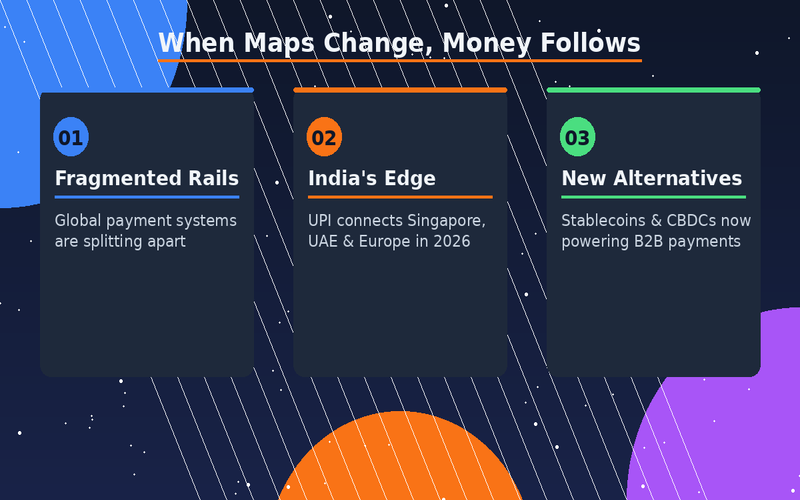
When Maps Change, Money Follows: How Geopolitics Is Rewiring B2B Payments in 2026
Payments are no longer just a plumbing problem — they're a geopolitical one. Explore how Indian B2B businesses can navigate a fragmented, fast-changing global payment landscape
Read More
What Happens Inside an Escrow Release Event? A Step-by-Step Breakdown for Businesses
A complete breakdown of escrow release events—covering triggers, validation, vendor response, and access to source code—helping businesses ensure continuity and minimize vendor risk.
Read MoreReady to Protect Your Core Systems?
Join enterprises that trust SprintEX-Code to safeguard their mission-critical software. Get started with a consultation to discuss your specific escrow requirements.