
Vendor Contract Management: Why Your Business Cannot Afford to Get It Wrong
May 22, 2026
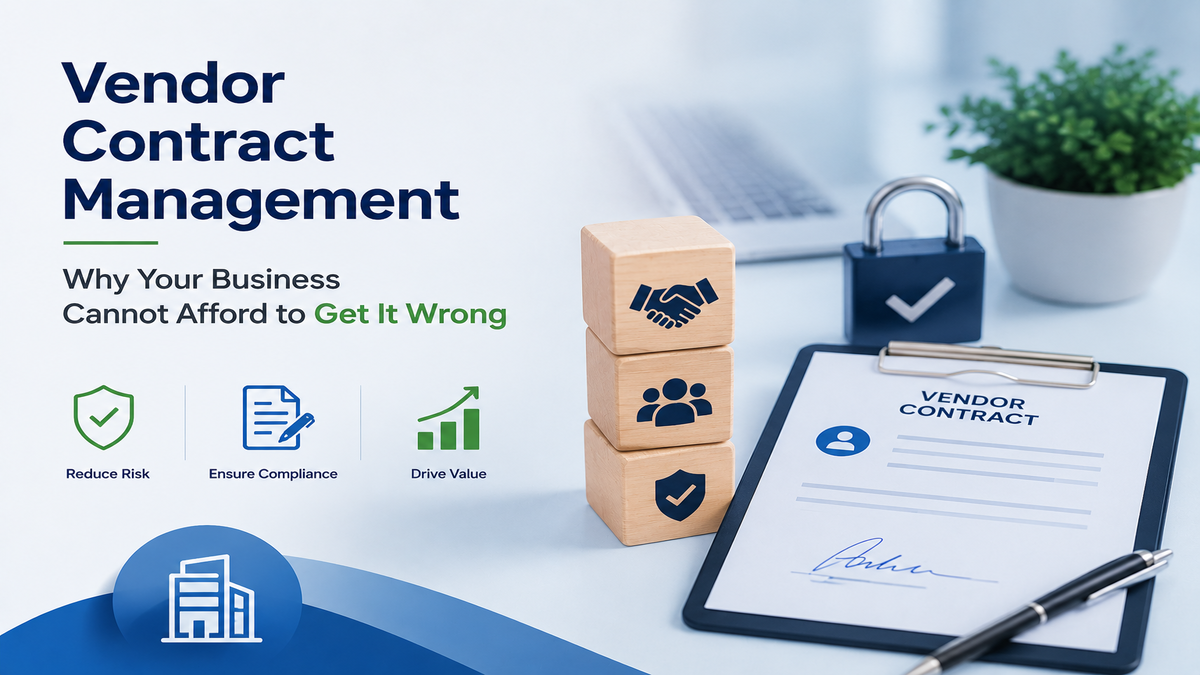
Vendor Contract Management: Why Your Business Cannot Afford to Get It Wrong
Vendor contract management is the backbone of every sustainable business relationship. Whether you are negotiating with insurance payers, locking in SLA terms with technology suppliers, or formalising agreements with service providers — the contracts you sign, track, and renew define the financial health and legal standing of your organisation.
The numbers tell a stark story: companies lose up to 9% of annual revenue due to poor contract management, according to industry research. In a business environment where every rupee of margin matters, that is a number no CFO, procurement head, or legal team can ignore.
Table of Contents
1. What Is Vendor Contract Management?
2. Why Does Vendor Contract Management Fail in Most Organisations?
3. What Should Every Vendor Contract Include?
4. How Does Vendor Contract Management Affect Financial Returns and Compliance?
5. What Are the Best Practices for Managing Vendor Contracts?
6. Conclusion
7. FAQs
What Is Vendor Contract Management?
Vendor contract management is the end-to-end process of creating, negotiating, executing, monitoring, and renewing agreements with third-party suppliers and service providers. It brings together procurement, legal, finance, and operations teams to ensure that every vendor relationship is governed by clear terms — and that those terms are actively enforced throughout the life of the agreement.
At its core, vendor contract management answers four questions for every agreement your business holds:
• What did we agree to — and with whom?
• Are both parties meeting their obligations?
• What are the financial and compliance implications if they are not?
• When does this agreement need to be reviewed, renegotiated, or renewed?
Vendor contract management vs. vendor management: While these terms are often used interchangeably, they are distinct. Vendor management covers the full supplier relationship — from selection and onboarding to ongoing performance evaluation. Vendor contract management is a subset: it focuses specifically on the agreements that govern those relationships. The contracts are the legal and financial architecture; vendor management is the day-to-day operation built on top of it.
Why Does Vendor Contract Management Fail in Most Organisations?
The majority of businesses acknowledge that their vendor contract process is broken — yet continue to rely on the same fragmented, manual approaches that caused the problem in the first place. Understanding where vendor contract management fails is the first step toward fixing it.
Is your contract data scattered across too many systems?
One of the most common failure points is the absence of a single source of truth. Contracts live in email inboxes, shared drives, physical filing cabinets, and individual desktop folders. When a renewal date approaches, the wrong version gets picked up. When a dispute arises, no one can locate the signed agreement quickly.
Are missed renewal deadlines costing you more than you realise?
Auto-renewal clauses are the silent budget killers of vendor management. When no one is actively monitoring contract expiry dates, agreements roll over automatically — often at unfavourable rates or with terms that no longer reflect current business needs. A single missed renewal on a multi-year technology contract can lock your business into years of sub-optimal pricing.
This is where most vendor contract processes fall apart. Post-signature, the contract gets filed and forgotten — until a renewal date arrives, a milestone is missed, or a vendor fails to deliver. Active obligation tracking, with automated alerts for milestones, payment dates, SLA review windows, and renewal deadlines, keeps both parties accountable throughout the agreement term.
What Should Every Vendor Contract Include?
A well-structured vendor contract is the single most important risk management tool in your procurement toolkit. The following elements are non-negotiable in any vendor agreement worth signing.
Are Your Service Level Agreements Specific Enough to Be Enforceable?
SLAs must go beyond vague commitments like 'best efforts.' They should specify measurable performance metrics — uptime percentages, response times, resolution windows, delivery timelines — along with the remedies (financial or otherwise) that apply when those metrics are not met.
Do Your Payment Terms Reflect the True Cost of Late or Non-Performance?
Payment terms should cover not just when and how the vendor gets paid, but also the financial consequences of non-delivery. Penalty clauses, holdback provisions, and milestone-linked payments protect the buying organisation and create the right incentive structure for the vendor.
Are Your Data Protection and Confidentiality Clauses Compliant With Current Regulations?
In an era of increasing data regulation — from India's Digital Personal Data Protection Act to global frameworks like GDPR — every vendor contract that involves data sharing must include explicit data protection obligations, breach notification timelines, and sub-processor restrictions.
Does Your Contract Include a Clear Exit Strategy?
Termination rights, notice periods, transition assistance obligations, and IP reversion clauses are often afterthoughts — until the relationship breaks down. A well-drafted exit clause protects the business whether the termination is for cause, convenience, or force majeure.
How Does Vendor Contract Management Affect Financial Returns and Compliance?
The connection between vendor contract management and financial performance is direct and measurable. Yet most organisations treat it as a legal or administrative function rather than a commercial one.
Are Poorly Managed Vendor Contracts Eroding Your Margins?
Revenue leakage from vendor contracts takes many forms: overpayments due to missed volume discount thresholds, invoices processed against expired or superseded agreements, unclaimed SLA credits, and auto-renewals at rates that were negotiated years ago under different market conditions. Each of these is avoidable — with the right visibility into contract terms and performance data.
Is Regulatory Compliance a Contractual Obligation Your Team Is Actively Managing?
For organisations in regulated sectors — BFSI, healthcare, pharma, manufacturing — vendor contracts are not just commercial documents. They are compliance instruments. Audit trails, obligation tracking, data processing agreements, and third-party risk assessments all flow from the vendor contract. A missed compliance obligation in a vendor agreement can trigger regulatory action, not just a commercial dispute.
What Are the Best Practices for Managing Vendor Contracts?
Drawing from industry benchmarks and the operational realities of organisations that have scaled their vendor contract processes successfully, these are the practices that separate high-performing procurement teams from the rest.
Are You Building a Centralised, Searchable Contract Repository?
Every vendor contract — executed, in-negotiation, expired — should live in one place, with consistent metadata tagging and full-text search. The ability to retrieve any agreement in seconds is not a luxury; it is a baseline requirement for any organisation managing more than a handful of vendor relationships.
Are Standard Templates Protecting You From Off-Policy Language?
A controlled library of pre-approved contract templates and fallback clauses is the most effective way to reduce legal review time and prevent non-standard risk from entering your vendor portfolio. Templates should be tiered by contract value and risk level, with clear deviation protocols for exceptions.
Is Your Approval Process Calibrated to Contract Risk — Not Just Contract Value?
Not every vendor contract needs the same level of scrutiny. A policy-based approval framework routes contracts to the right reviewers based on value, vendor risk rating, data sensitivity, and contract type — keeping the process proportionate and fast without compromising governance.
Are You Tracking Vendor Performance Against Contracted SLAs?
The contract does not end at signature. Ongoing SLA monitoring, with periodic performance reviews against the agreed metrics, gives procurement teams the data they need to have informed conversations at renewal time — and the evidence they need if a dispute arises.
Are You Conducting Regular Contract Audits?
A periodic review of your vendor contract portfolio — ideally quarterly — surfaces agreements that are underperforming, approaching renewal, or carrying elevated risk. Regular audits turn vendor contract management from a reactive function into a proactive commercial strategy.
Conclusion
Vendor contract management is not a back-office administrative task. It is a strategic commercial function — one that directly affects your revenue, your compliance standing, and the quality of every supplier relationship your business depends on.
The organisations that get it right are not those with the largest legal teams or the most complex processes. They are the ones that have invested in a structured, automated, and centralised approach to managing vendor agreements — from the first request to the final renewal.
Whether you are negotiating reimbursement terms with insurance payers, managing SLAs with technology vendors, or formalising agreements with service providers, the contract is always the foundation. And SprintContractX is built to make that foundation unshakeable.
Ready to transform how your organisation manages vendor contracts? Explore SprintContractX at paysprint.in/contractx.html or book a free demo with the PaySprint solutions team today.
Frequently Asked Questions (FAQs)
Q. What is vendor contract management?
Vendor contract management is the end-to-end process of creating, negotiating, executing, monitoring, and renewing agreements with third-party vendors. It encompasses everything from the initial contract request and drafting through to obligation tracking, SLA monitoring, and renewal management — with the goal of reducing risk, controlling costs, and maintaining regulatory compliance.
Q. Why is vendor contract management important for financial returns?
Poor vendor contract management leads directly to revenue leakage — through missed SLA credits, overpayments on expired rate cards, unfavourable auto-renewals, and compliance penalties. Organisations with structured vendor contract processes consistently achieve better pricing outcomes at renewal, fewer payment disputes, and lower legal costs over the contract lifecycle.
Q. What is the difference between vendor management and vendor contract management?
Vendor management covers the full supplier relationship — from selection, onboarding, and performance monitoring to relationship governance. Vendor contract management is a subset focused specifically on the agreements that govern those relationships: drafting, approval, execution, obligation tracking, and renewal. Both are necessary; the contract is the legal and commercial backbone of the vendor relationship.
Q. How does SprintContractX help with vendor contract management?
SprintContractX by PaySprint is an end-to-end contract lifecycle management platform that handles every stage of the vendor contract process — from structured intake and template-driven drafting, through policy-based approval workflows and integrated e-signature, to automated obligation tracking and renewal alerts. It is designed for teams that need speed and governance without the complexity of legacy CLM systems.
Related Posts
What is E-Banking? Meaning, Types, Benefits & How It Works in India.
E-banking is the digital way of accessing banking services through mobile apps, websites, ATMs, and biometric systems. It enables secure, fast, and branchless financial transactions anytime and anywhere in India.
Read More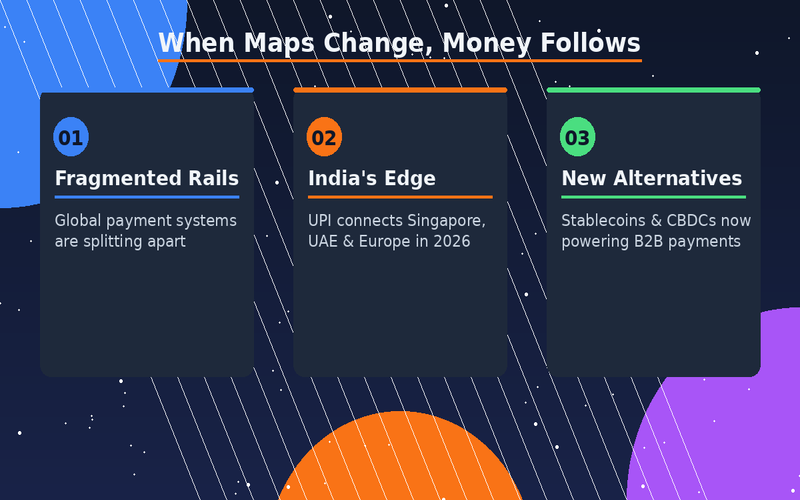
When Maps Change, Money Follows: How Geopolitics Is Rewiring B2B Payments in 2026
Payments are no longer just a plumbing problem — they're a geopolitical one. Explore how Indian B2B businesses can navigate a fragmented, fast-changing global payment landscape
Read More
What Happens Inside an Escrow Release Event? A Step-by-Step Breakdown for Businesses
A complete breakdown of escrow release events—covering triggers, validation, vendor response, and access to source code—helping businesses ensure continuity and minimize vendor risk.
Read MoreReady to Protect Your Core Systems?
Join enterprises that trust SprintEX-Code to safeguard their mission-critical software. Get started with a consultation to discuss your specific escrow requirements.