
SaaS Vendor Risk Management: Risks, Challenges, and Best Practices
Jul 27, 2026
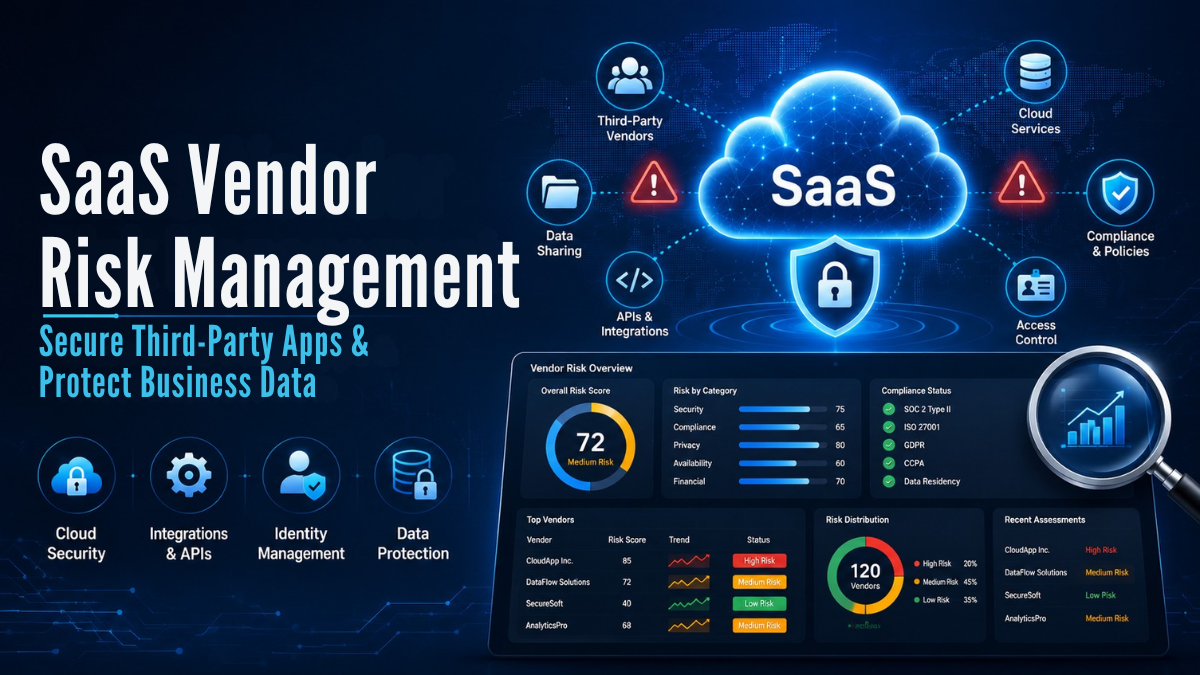
SaaS Vendor Risk Management: Risks, Challenges, and Best Practices
SaaS vendor risk management has become essential as companies rely on more third-party SaaS tools than ever before. This guide breaks down the key risks SaaS vendors introduce, the common challenges organizations face in managing them, and the best practices for building a strong, continuous vendor risk management program.
Table of Contents
What Is SaaS Vendor Risk Management?
Why SaaS Vendor Risk Management Matters
Key Risks of SaaS Vendors
Common Challenges in Managing SaaS Vendor Risk
Best Practices for SaaS Vendor Risk Management
Frequently Asked Questions
Key Takeaway
Conclusion
What Is SaaS Vendor Risk Management?
SaaS Vendor Risk Management (VRM) is the ongoing process of identifying, assessing, monitoring, and mitigating the security, compliance, financial, and operational risks associated with using third-party Software-as-a-Service (SaaS) applications. It covers the full vendor lifecycle — from due diligence before onboarding, to continuous monitoring during the relationship, to secure offboarding when a contract ends.
Also read: Understanding Escrow services
Why SaaS Vendor Risk Management Matters
The average company now uses hundreds of SaaS applications, many adopted without formal IT review ("shadow IT"). Each connected app is a potential entry point for a breach, a compliance gap, or a business disruption. Because SaaS vendors often hold sensitive data or have deep integrations into core systems, a single vendor failure can cascade into a major incident for the business that relies on them.
Read more: Escrow money
Key Risks of SaaS Vendors
1. Data Security and Breach Risk
Vendors store, process, or transmit company and customer data. A breach at the vendor becomes a breach for every customer relying on that vendor.
2. Compliance and Regulatory Risk
Vendors must meet standards relevant to your industry (GDPR, HIPAA, SOC 2, ISO 27001, PCI DSS). Non-compliant vendors can expose you to fines and legal liability, even if the fault lies with the vendor.
3. Fourth-Party (Subcontractor) Risk
Most SaaS vendors rely on their own subcontractors and cloud infrastructure providers. Risk doesn't stop at the vendor — it extends to everyone in their supply chain.
4. Business Continuity and Availability Risk
Outages, service degradation, or vendor bankruptcy can halt operations that depend on that SaaS tool.
5. Data Privacy and Ownership Risk
Ambiguous contract terms around data ownership, retention, and deletion can create legal exposure, especially at contract termination.
6. Concentration Risk
Relying heavily on one vendor (or one vendor's subprocessors) for a critical function creates a single point of failure.
7. Access and Identity Risk
Poorly managed permissions, weak authentication, or excessive vendor access to internal systems increase the attack surface.
Common Challenges in Managing SaaS Vendor Risk
Vendor sprawl: Hundreds of SaaS tools, often onboarded by individual teams without central visibility.
Lack of standardized assessment: Inconsistent questionnaires and criteria make it hard to compare vendor risk apples-to-apples.
Limited resources: Security and procurement teams are often understaffed relative to the number of vendors they must review.
Point-in-time assessments: A vendor reviewed as "low risk" at onboarding can change dramatically over a year — new subprocessors, new breaches, new ownership.
Poor cross-team coordination: Legal, security, procurement, and IT often assess risk in silos instead of a unified workflow.
Contract gaps: Missing clauses on breach notification, audit rights, or data deletion leave companies exposed.
Best Practices for SaaS Vendor Risk Management
1. Build a Centralized Vendor Inventory
Maintain a single source of truth listing every SaaS vendor, the data it accesses, its business owner, and its criticality tier.
2. Tier Vendors by Risk
Not every vendor needs the same scrutiny. Classify vendors (e.g., Critical, High, Medium, Low) based on data sensitivity, system access, and business impact, and scale due diligence accordingly.
3. Conduct Structured Due Diligence Before Onboarding
Use standardized questionnaires (e.g., SIG, CAIQ) and request evidence such as SOC 2 reports, penetration test summaries, and security certifications before signing a contract.
4. Negotiate Strong Contractual Protections
Include clauses covering breach notification timelines, audit rights, data ownership, data deletion/return upon termination, and subprocessor disclosure.
5. Monitor Continuously, Not Just Annually
Use continuous monitoring tools or threat intelligence feeds to catch new vendor breaches, certification lapses, or negative news between formal review cycles.
6. Manage Access with Least Privilege
Grant vendors and their integrations only the access they need, review permissions regularly, and revoke access immediately at offboarding.
7. Track Fourth-Party Risk
Require vendors to disclose their own critical subprocessors and assess whether those introduce additional risk.
8. Assign Clear Ownership
Every vendor should have a named internal owner accountable for its risk posture, renewal reviews, and incident response coordination.
9. Plan for Vendor Failure
Maintain contingency plans — alternate vendors, data export procedures, or manual workarounds — for critical SaaS tools.
10. Automate Where Possible
Use vendor risk management platforms to automate questionnaire distribution, evidence collection, risk scoring, and renewal reminders, reducing manual overhead as vendor count grows.
Read more: SprintEX-Code
Conclusion
SaaS vendor risk isn't going away — it's growing alongside SaaS adoption itself. The businesses that stay resilient are the ones that treat vendor risk management as a continuous discipline, not a one-time checklist, catching issues early and responding fast when they arise.
Frequently Asked Questions
What is the difference between third-party risk management and vendor risk management?
Third-party risk management (TPRM) is the broader discipline covering all external parties (vendors, partners, contractors). Vendor risk management is a subset of TPRM focused specifically on suppliers and vendors, including SaaS providers.
How often should you reassess SaaS vendor risk?
Critical vendors should be reassessed at least annually, with continuous monitoring in between. Lower-risk vendors can be reviewed every one to two years or upon contract renewal.
What is fourth-party risk in SaaS vendor management?
Fourth-party risk refers to the risk introduced by your vendor's own vendors and subcontractors — for example, the cloud provider or payment processor your SaaS vendor relies on.
What frameworks are commonly used to assess SaaS vendor security?
Common frameworks and evidence types include SOC 2 Type II reports, ISO 27001 certification, the Standardized Information Gathering (SIG) questionnaire, and the CSA Consensus Assessments Initiative Questionnaire (CAIQ).
Who should own vendor risk management in an organization?
Ownership is typically shared: security teams assess technical risk, legal/procurement negotiate contracts, and a designated business owner tracks day-to-day vendor performance — often coordinated through a formal vendor risk management program or platform
Related Posts
What is E-Banking? Meaning, Types, Benefits & How It Works in India.
E-banking is the digital way of accessing banking services through mobile apps, websites, ATMs, and biometric systems. It enables secure, fast, and branchless financial transactions anytime and anywhere in India.
Read More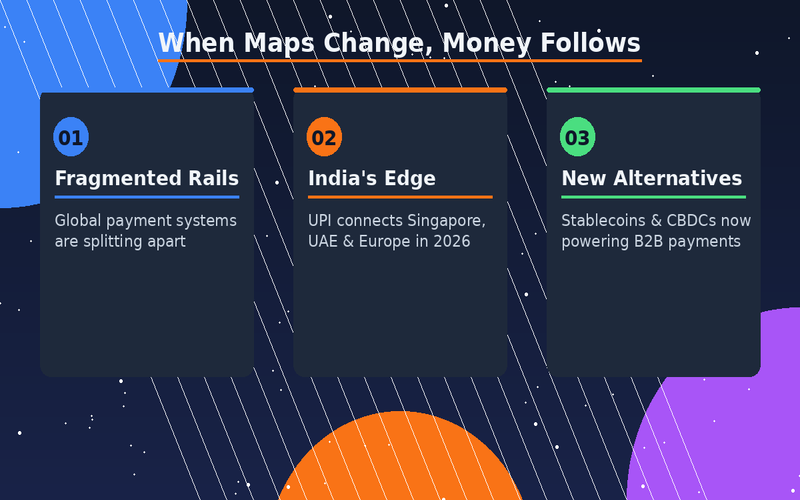
When Maps Change, Money Follows: How Geopolitics Is Rewiring B2B Payments in 2026
Payments are no longer just a plumbing problem — they're a geopolitical one. Explore how Indian B2B businesses can navigate a fragmented, fast-changing global payment landscape
Read More
What Happens Inside an Escrow Release Event? A Step-by-Step Breakdown for Businesses
A complete breakdown of escrow release events—covering triggers, validation, vendor response, and access to source code—helping businesses ensure continuity and minimize vendor risk.
Read MoreReady to Protect Your Core Systems?
Join enterprises that trust SprintEX-Code to safeguard their mission-critical software. Get started with a consultation to discuss your specific escrow requirements.