
SprintEX-Code: India’s Digital Source Code Escrow Platform
Apr 21, 2026
SprintEX-Code: India’s Digital Source Code Escrow Platform
Source code is what forms the very foundation of any fintech firm, and loss of access to the same can cause the entire organization to collapse within seconds. For Indian banks, NBFCs, and financial institutions using third-party software, source code escrow is not just a good idea but a necessity in the wake of the new RBI guidelines for IT governance. The SprintEX-Code from PaySprint is India’s only customized source code escrow service for fintech firms.
Table of content
1. What Is SprintEX-Code?
2. The Problem EX-Code Solves
3. How EX-Code Works
4. What Powers the Source Code Escrow Platform
5. The Verification Framework
6. Two Types of Source Code Escrow
7. Integrations and Technology
8. Who Should Use SprintEX-Code?
9. What EX-Code Does Not Do
What Is SprintEX-Code?
It is a Smarter Way to Protect Source Code. SprintEX-code is a Digital Escrow Platform from PaySprint, which facilitates the safe keeping, validation, and conditional release of software source code and other assets.
While other escrow providers may regard this as a file cabinet function, SprintEX-Code is a workflow engine designed specifically for contemporary fintech requirements.
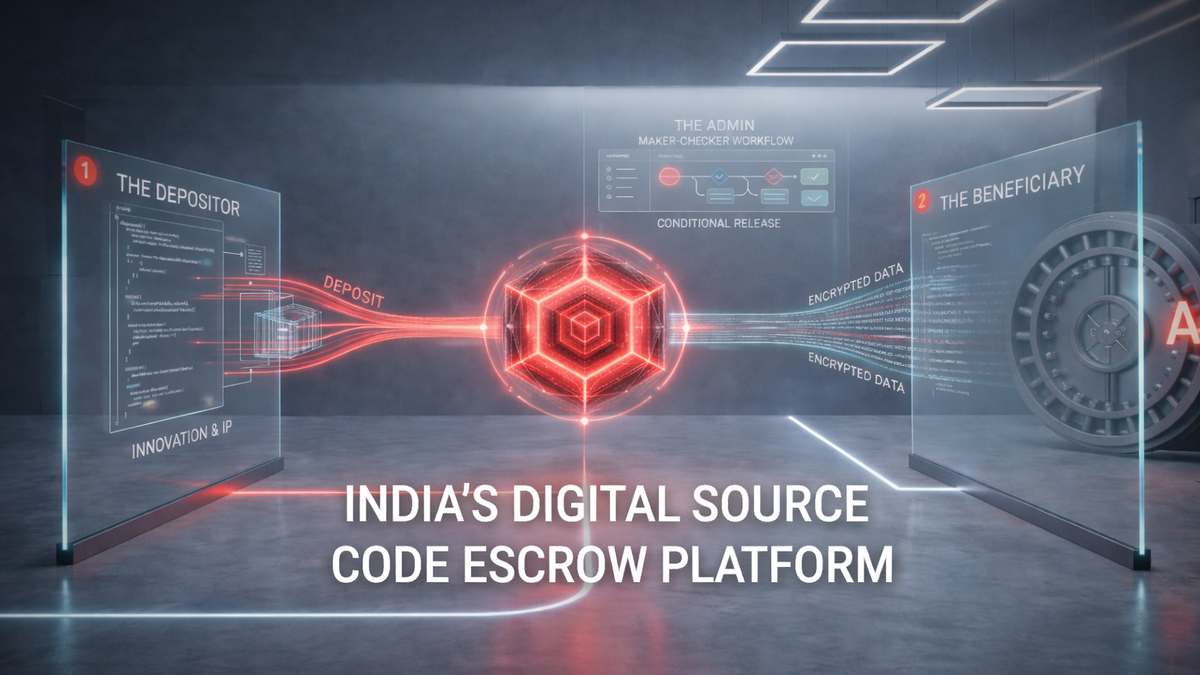
This product functions as a bridge among three main entities:
The Depositor - the software/fintech provider making the deposits
The Beneficiary - the organization (bank, NBFC, enterprise) using the software
The Admin - the impartial escrow agent running the Maker-Checker workflow
On occurrence of any pre-defined trigger event (such as vendor bankruptcy, service default, or major breach of agreement), the Beneficiary makes the release request and is able to access the source code securely through the system. Before that happens, the code base stays safely encrypted, available only to authorized individuals.
Paysprint SprintEX-Code provides all aspects of the full life cycle management of agreements, Know Your Customer On-boarding, source code deposit, validation, audit, and release in one single system.
How PaySprint is solving one of India’s most overlooked fintech risks?
The source code is the fuel that powers your fintech stack – and the Indian financial industry relies completely on fintech software built by external vendors for essential functions such as core banking, loans, NACH, and online lending. What will happen in case the vendors vanish into thin air?
Operational Breakdown
The absence of access to the source code makes it impossible for organizations to independently perform maintenance, upgrades, and migration of a vendor’s failed system. Business operations come to a standstill.
Regulatory Exposure
The RBI’s Master Direction on Information Technology Governance, Risk, Controls and Assurance Practices mandates that regulated entities either obtain the source code of critical applications from vendors directly, or establish a formal software escrow arrangement. Non-compliance carries penalties, reputational damage, and risk to operating licenses.
Emergency Migration Costs
It is more expensive by a factor of three to five compared to a preplanned transfer, and it takes months rather than days to complete.
Data and IP at Risk
Insolvency of the vendor may lead to the exposure of institutional data and configuration details during bankruptcy proceedings. Safeguarding the source code is essentially safeguarding the institution’s complete digital environment.
How EX-Code Works
Every SprintEX-Code source code escrow involves a well-regulated process starting from inception to delivery:
1. Lead and Agreement
Onboard starts by visiting the SprintEX-Code site or through direct contact, referral or inquiry. A tri-party escrow agreement is put in place and signed by the Depositor, Beneficiary, and Admin.
2. Admin Onboarding and KYC
KYC documents are gathered: the service agreement, COI/AOA/MOA, GST certificate, Company PAN, Board resolution/authority letter, and Photo ID and PAN of Directors/Authorised Signatories. Both Depositor and Beneficiary get onboarded in the system by the Admin.
3. Depositor Review and Code Deposit
The Depositor logs in, views the agreement, enters whitelisted IPs, and makes deposits, either manually (as a ZIP file) or automatically via integration with GitHub/Bitbucket accounts. A V-Basic verification report is generated instantly after the deposit.
4. L2 Verification Upload
Admin uploads V-Build verification report: This is a combination of automated and manual build check to establish that the source code can be built properly and works well. Email notification is sent to the Beneficiary.
5. Beneficiary Review
Beneficiary logs in, views the agreement, deposit document, and V-Build and V-Basic reports; accepts all the details and uploads his/her own whitelisted IPs
6. Escrow Activation
After mutual approval from both sides, the escrow account becomes operational. An activation certificate in digital form is provided for each side and may be used in regulatory and board submissions. Every code update will trigger the issuance of new verification reports.
7. Continuous Deposit and Monitoring
The Depositor keeps sending code updates until the end of the escrow period. Each time, the process will result in a new verification report and an email sent to the Beneficiary.
8. Release on Trigger
In case of event triggering, a request for code release will be submitted by the Beneficiary. Maker Admin approves the request and Checker Admin confirms. The code will be downloaded with a restricted IP address and password.
What Powers the Source Code Escrow Platform
The SprintEX-Code system is made up of six specially designed modules:
Admin Module
Dashboards, escrow creation, and user management, approvals, audit trails, staff management, verification report uploading, and releases using Maker-Checker approach.
Depositor Module:
Dashboards, agreement reviews and approval, code deposits manually or automatically through Github/Bitbucket integration, IP whitelisting, certificates, audit reports, renewals, and exit from escrows.
Beneficiary Module:
Dashboards, agreement reviews, verification reports (V-Basic and V-Build), release requests, IP whitelisting, certificates, audit reports, renewals, and exit from escrows.
Verification Module:
Automatic verification reports on code inventory (V-Basic) and Hybrid Build & compile checks (V-Build) followed by V-Functional reports.
Release & Renewal Module:
Conditional and multi-triggered release process utilizing Maker-Checker approach with agreement renewal capabilities.
Audit Trails:
Full record-keeping of all escrow activities including deposit and verification reports, completely reportable for examination purposes.
The Verification Framework
Among the main advantages of EX-Code is its multi-level verification process. While other escrows may offer only basic inventory verification at best, EX-Code introduces three different levels of verification:
V-Basic – Inventory Verification
This is automatically generated on each code deposit. Verifies that all codes have been successfully received and properly inventoried. A V-Basic Report is generated and given to the Beneficiary as evidence that the deposit is made.
V-Build – Build and Compilation check
This is a mixed automated and manual verification method where the deposited source codes are compiled separately to verify they build properly. This is another factor that makes EX-Code different than file storage – not only do you store the codes but also verify their functionality.
V-Functional – Functional testing
It is an additional layer of verification which is necessary when higher level of code verification is needed.
Why does this matter? A source code deposit without verification is like a fire extinguisher without a pressure check. You do not know if it works until you need it — and by then it is too late. EX-Code’s verification reports give Beneficiaries documented, auditable proof that the escrow would function in an actual emergency
Two Types of Source Code Escrow, One Unified Platform
Software / SaaS Escrow
For banks that use software solutions hosted either by third parties or in the cloud. Software source code, databases, deployment scripts, and configurations are provided in electronic form. Deliveries occur as encrypted and restricted by IP address file downloads.
Physical / Hardware Escrow
For banks with proprietary hardware built into the vendor solution – ATMs with unique software or hardware security modules (HSMs). Hardware components are stored in the same escrow model as electronic deposits.
Integrations and Technology
EX-Code is built keeping in mind today’s world of software development, and it fits well into the processes and applications that you are already familiar with.
Code Pull/Fetch: GitHub and Bitbucket (real-time)
Code Repository: AWS, Azure (real-time); Google Cloud Platform in the future
Future Integrations: AWS CodeCommit, Azure Repos, Google Cloud Source Repositories, GitLab
GitHub/Bitbucket integration works exceptionally well because with it, you have continuous escrow deposit, whereby every time the software developers work on a project, they leave the newest copy of the code on the platform instead of just once.
Who Should Use SprintEX-Code for Source Code Protection?
SprintEX-Code applies to all organisations that have a significant reliance on third-party software solutions for critical functions:
Banking and Non-Banking Financial Companies (NBFCs)
Organisations which leverage third-party software for their core banking activities, loan generation, NACH processing, collections, or online lending. These would include institutions bound by RBI guidelines for IT governance.
Corporates & Enterprises
Businesses that rely on mission-critical software solutions built by vendors in situations where software continuity and intellectual property protection are essential considerations.
Fintech Providers & Software as a Service (SAAS)
Source code deposit by Fintech providers and SAAS vendors with a trusted escrow agent demonstrates institutional maturity and addresses a procurement hurdle faced by many enterprises.
What EX-Code Does Not Do
Scope clarity plays an important role in making EX-Code reliable because:
The system does not use automated decision-making systems; any release trigger is assessed manually by the Admin Maker and the Checker.
Third-party KYC APIs are not used because the KYC process occurs offline and provides necessary flexibility for various types of entities.
Platform launch is tied to pre-agreement execution.
Conclusion:
Source Code Escrow Is No Longer Optional! The IT Governance Directions from RBI mandate the use of source code escrow for all banks, NBFCs, and payment entities, while the danger of vendor failure makes it necessary from a business standpoint.
The issue is not whether you will do it, but when. With SprintEX-Code from PaySprint, banks, NBFCs, and fintech vendors can access a comprehensive source code escrow solution that is completely digitized and compliant with regulatory requirements.
In a world where vendor failure is highly possible, source code escrow is the safety net every institution needs to have in place before it is needed.
Frequently Asked Questions (FAQs)
Source Code Escrow & Why It Is Important For Indian Banks?
A third-party stores source code, ensuring banks maintain access during vendor failure or disruption.
Does the RBI mandate the source code escrow?
Yes, RBI requires regulated entities to secure source code or establish formal escrow arrangements.
What Is PaySprint and What Does EX-Code Offer?
PaySprint provides fintech infrastructure; EX-code offers RBI-compliant digital source code escrow solutions.
How is EX-Code different from storing code on a shared drive?
Unlike shared drives, EX-Code ensures legal compliance, encryption, verification, and conditional release mechanisms.
What are the verification options on SprintEX-Code?
Three levels: V-Basic (inventory), V-Build (compilation), and V-Functional (testing) ensure code reliability.
Can EX-Code integrate with GitHub or Bitbucket?
Yes, it integrates for continuous automatic deposits, keeping the latest source code always escrowed.
Which regulation in 2026 covers source code escrow?
RBI’s 2023 IT Governance Master Direction mandates escrow or source code ownership for regulated entities.
Can fintechs sell solutions with EX-Code included?
Yes, escrow inclusion builds trust, improves credibility, and removes enterprise adoption barriers.
What triggers source code release in EX-Code?
Triggers include vendor failure, breach, or disruption, with release approved via Maker-Checker process.
Related Posts
What is E-Banking? Meaning, Types, Benefits & How It Works in India.
E-banking is the digital way of accessing banking services through mobile apps, websites, ATMs, and biometric systems. It enables secure, fast, and branchless financial transactions anytime and anywhere in India.
Read More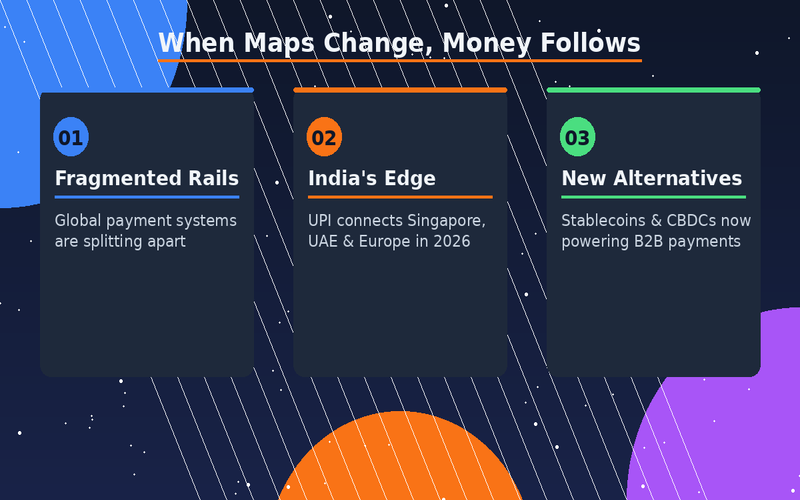
When Maps Change, Money Follows: How Geopolitics Is Rewiring B2B Payments in 2026
Payments are no longer just a plumbing problem — they're a geopolitical one. Explore how Indian B2B businesses can navigate a fragmented, fast-changing global payment landscape
Read More
What Happens Inside an Escrow Release Event? A Step-by-Step Breakdown for Businesses
A complete breakdown of escrow release events—covering triggers, validation, vendor response, and access to source code—helping businesses ensure continuity and minimize vendor risk.
Read MoreReady to Protect Your Core Systems?
Join enterprises that trust SprintEX-Code to safeguard their mission-critical software. Get started with a consultation to discuss your specific escrow requirements.