
How Escrow Helps MSMEs Secure Payments and Build Trust in Business Transactions
Jun 02, 2026
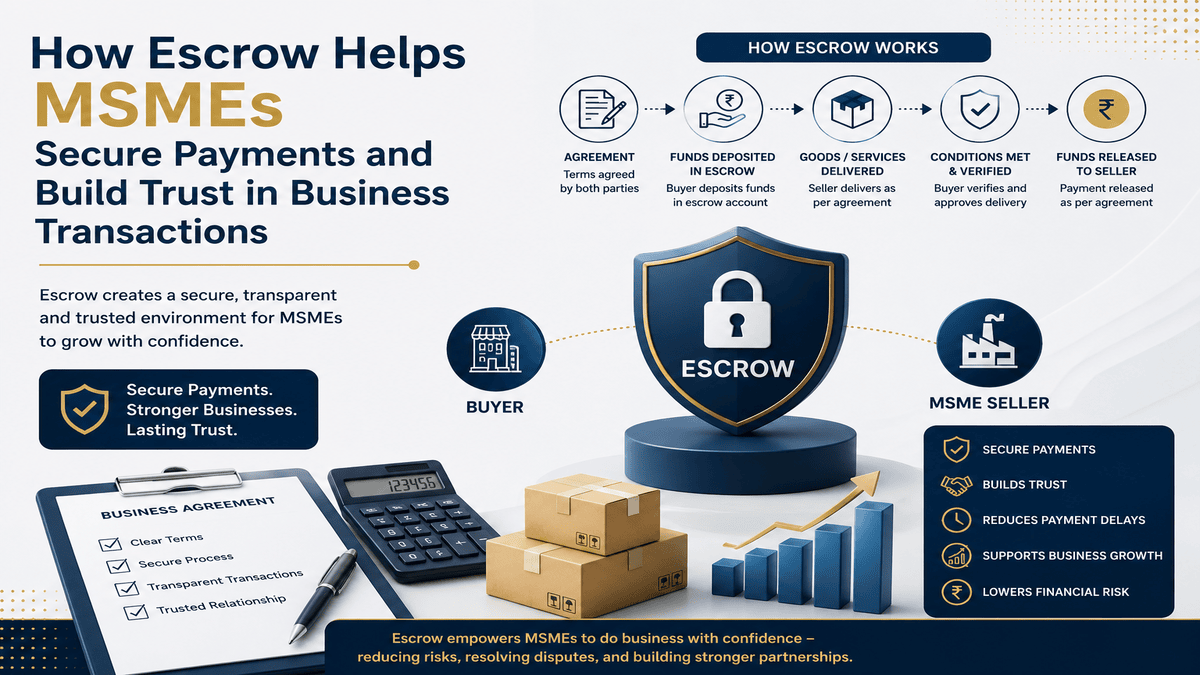
How Escrow Helps MSMEs Secure Payments and Build Trust in Business Transactions
Micro, Small, and Medium Enterprises (MSMEs) form the backbone of India's economy. They contribute significantly to employment generation, innovation, exports, and industrial growth. Despite their importance, MSMEs often face one challenge that can threaten their growth and stability: payment uncertainty.
This is where escrow services are transforming the way MSMEs conduct business. By introducing a neutral third party that securely holds funds until agreed conditions are fulfilled, escrow creates trust, transparency, and financial security for all parties involved.
Table of Contents
Why Payment Risks Affect MSMEs the Most
What Is an Escrow Service?
How Escrow Works in MSME Transactions
Key Business Challenges Escrow Solves
Benefits of Escrow for MSMEs
Industries Where MSMEs Can Use Escrow
Why Escrow Is Becoming Essential for Growing Businesses
Conclusion
Frequently Asked Questions (FAQs)
Why Payment Risks Affect MSMEs the Most
For many MSMEs, a single delayed payment can disrupt operations. Businesses depend on timely cash flow to pay suppliers, employees, rent, logistics partners, and other operational expenses.
Common challenges include:
Buyers delaying payments after receiving goods or services
Sellers demanding large advance payments before starting work
Disputes regarding quality, quantity, or project completion
Cross-city or cross-border transactions involving unknown parties
Lack of confidence when entering high-value contracts
These risks often force MSMEs to either reject valuable business opportunities or operate under significant financial uncertainty.
What Is an Escrow Service?
An escrow service is a secure payment arrangement where a neutral third party holds funds on behalf of two transacting parties until predefined conditions are met.
Instead of paying directly to the seller, the buyer deposits funds into an escrow account. The money remains secure until both parties fulfill their contractual obligations. Once the agreed conditions are verified, the funds are released to the seller.
This creates a balanced and transparent transaction environment where neither party carries excessive risk.
How Escrow Works in MSME Transactions
The escrow process is simple yet highly effective:
Step 1: Agreement Creation
The buyer and seller agree on transaction terms, payment amount, delivery requirements, and release conditions.
Step 2: Fund Deposit
The buyer deposits the agreed amount into the escrow account.
Step 3: Service or Product Delivery
The seller proceeds with the delivery of goods, services, or project milestones.
Step 4: Verification
The buyer verifies that the agreed conditions have been met.
Step 5: Fund Release
The escrow provider releases the payment to the seller according to the agreement.
If a dispute arises, the funds remain protected while the issue is resolved.
Key Business Challenges Escrow Solves
Advance Payment Risks
Many MSMEs require advance payments to begin production or service delivery. Buyers may hesitate to release funds without assurance of performance.
Escrow protects both sides by securing the money while ensuring it is released only when agreed milestones are achieved.
Payment Delays
Late payments remain one of the biggest challenges for small businesses. Escrow ensures funds are already committed before work begins, reducing uncertainty and improving cash flow visibility.
Trust Deficit Between New Partners
When working with a new customer, supplier, or vendor, trust can take time to establish. Escrow creates confidence by ensuring neither party is dependent solely on promises.
Contract Disputes
Disagreements regarding delivery timelines, product quality, or project completion can lead to lengthy disputes. Escrow provides predefined release conditions that reduce ambiguity and improve accountability.
High-Value Transactions
For large orders or strategic projects, the financial risk is much higher. Escrow offers protection that allows businesses to pursue bigger opportunities with confidence.
Benefits of Escrow for MSMEs
Improved Cash Flow Predictability
Knowing that funds have already been secured helps businesses plan production, staffing, procurement, and inventory management more effectively.
Enhanced Business Credibility
Using escrow demonstrates professionalism and commitment to transparent business practices, helping MSMEs build stronger relationships with clients and partners.
Faster Deal Closures
Many transactions stall because one party fears financial risk. Escrow removes that concern, allowing negotiations and contract execution to move faster.
Reduced Financial Losses
Escrow significantly lowers the risk of fraud, non-payment, or advance payment misuse.
Better Customer Relationships
A secure payment structure creates confidence and reduces disputes, leading to stronger long-term partnerships.
Industries Where MSMEs Can Use Escrow
Escrow is valuable across multiple sectors, including:
Manufacturing
For bulk orders, custom production, and supplier agreements.
Information Technology
For software development projects, digital services, and milestone-based contracts.
E-commerce
For marketplace transactions involving high-value products and third-party sellers.
Construction and Infrastructure
For project-based contracts with multiple payment milestones.
Professional Services
For consulting, marketing, design, and business advisory engagements.
Export and Import Businesses
For international trade transactions where trust and payment security are critical.
Why Escrow Is Becoming Essential for Growing Businesses
As MSMEs expand into new markets, work with larger clients, and manage more complex contracts, financial risks naturally increase.
Traditional payment models often rely heavily on trust, legal remedies, or lengthy recovery processes after problems occur. Escrow changes this approach by preventing disputes before they become costly.
By ensuring that payments are secured, conditions are clearly defined, and transactions are monitored transparently, escrow enables MSMEs to focus on growth rather than payment uncertainty.
Businesses that adopt secure transaction frameworks today are better positioned to build sustainable partnerships, win larger contracts, and compete confidently in an increasingly digital economy.
Conclusion
MSMEs drive innovation, employment, and economic growth, but their success often depends on maintaining healthy cash flow and secure business relationships.
Escrow services provide a practical solution to some of the most common challenges faced by small and medium enterprises. By protecting payments, reducing disputes, and building trust between buyers and sellers, escrow creates a safer environment for business growth.
For MSMEs looking to expand confidently, enter new markets, or secure high-value transactions, escrow is no longer just an optional safeguard—it is becoming a strategic business necessity.
Frequently Asked Questions (FAQs)
Q. How does escrow protect MSMEs from payment delays?
Escrow secures funds before work begins. Once agreed conditions are fulfilled and verified, payments are released according to the contract, reducing uncertainty and delays.
Q. Can escrow be used for service-based businesses?
Yes. Escrow is widely used for consulting, software development, marketing, design, and other service contracts where milestone-based payments are common.
Q. Is escrow suitable for small-value transactions?
Yes. While escrow is particularly beneficial for high-value transactions, it can also be used for smaller deals where payment security and trust are important.
Q. What happens if there is a dispute during the transaction?
The funds remain safely held in escrow until the dispute is resolved according to the agreed process, ensuring that neither party gains an unfair financial advantage.
Related Posts
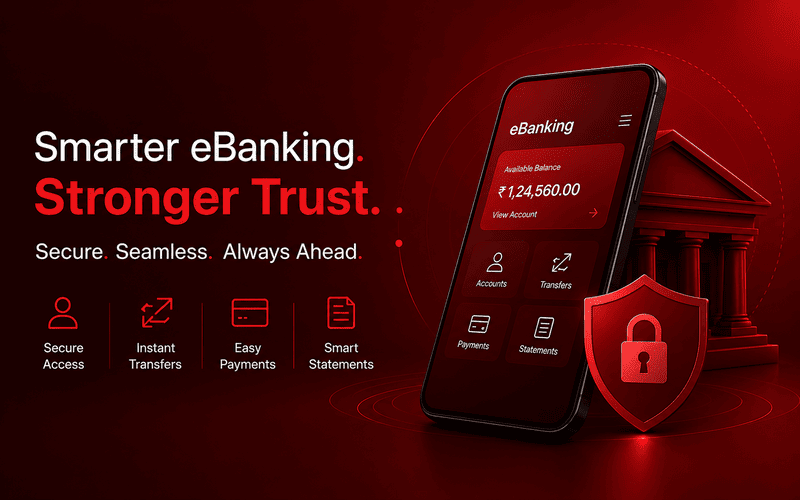
What is E-Banking? Meaning, Types, Benefits & How It Works in India.
E-banking is the digital way of accessing banking services through mobile apps, websites, ATMs, and biometric systems. It enables secure, fast, and branchless financial transactions anytime and anywhere in India.
Read More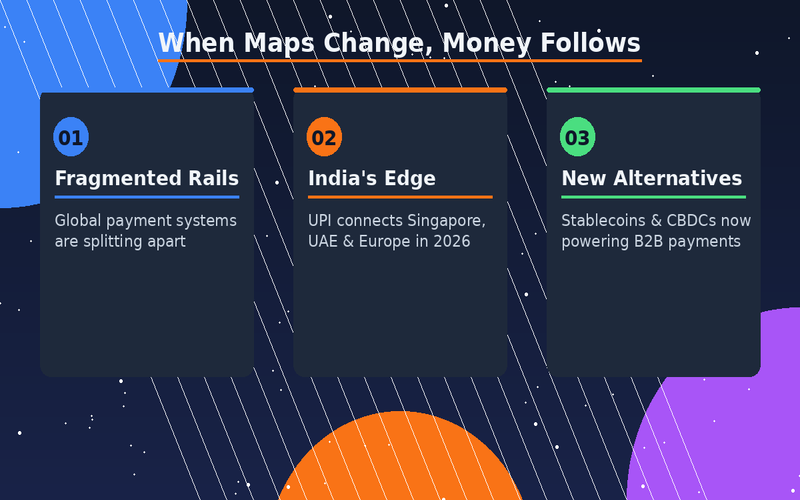
When Maps Change, Money Follows: How Geopolitics Is Rewiring B2B Payments in 2026
Payments are no longer just a plumbing problem — they're a geopolitical one. Explore how Indian B2B businesses can navigate a fragmented, fast-changing global payment landscape
Read More
What Happens Inside an Escrow Release Event? A Step-by-Step Breakdown for Businesses
A complete breakdown of escrow release events—covering triggers, validation, vendor response, and access to source code—helping businesses ensure continuity and minimize vendor risk.
Read MoreReady to Protect Your Core Systems?
Join enterprises that trust SprintEX-Code to safeguard their mission-critical software. Get started with a consultation to discuss your specific escrow requirements.