
Healthcare Contract Management: How to Optimise Agreements for Better Compliance and Revenue
May 21, 2026
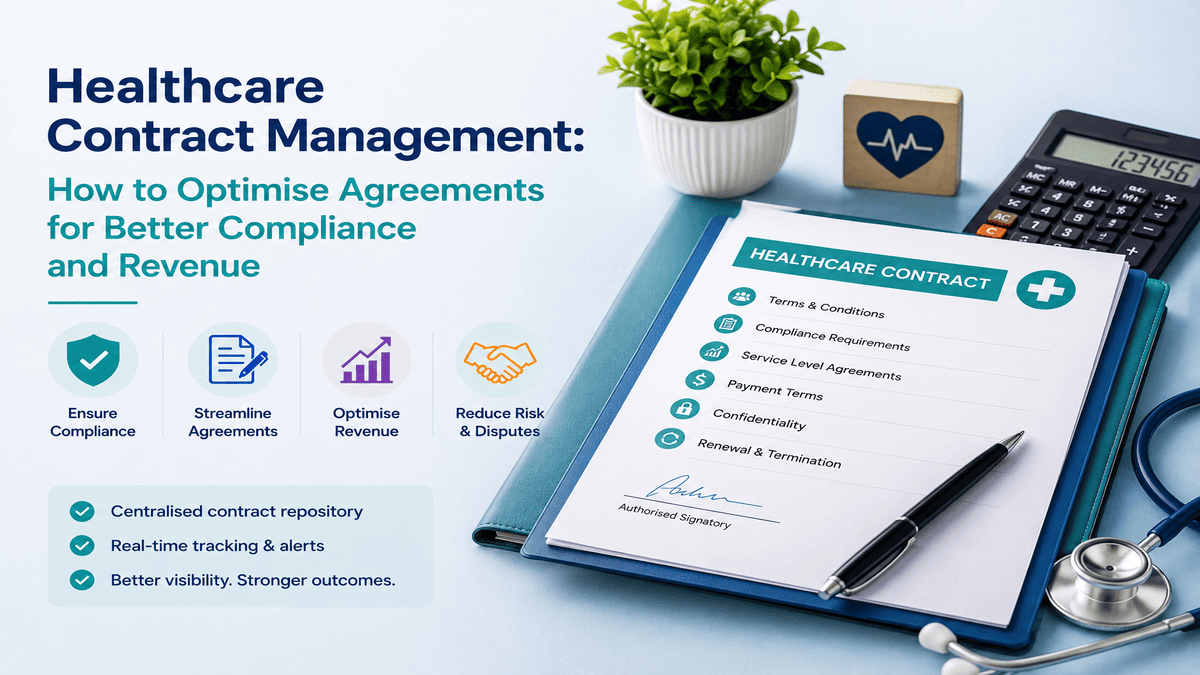
Healthcare Contract Management: How to
Optimise Agreements for Better Compliance and Revenue
Healthcare
runs on contracts. Every relationship between a hospital and a payer, between a
health system and a vendor, between an organisation and a physician — it is
built on a legal agreement. And yet, in most healthcare organisations, those
agreements are scattered across shared drives, email threads, and paper files,
managed reactively rather than strategically.
The
result is predictable: missed renewal deadlines, compliance gaps, disputed
reimbursements, and revenue that quietly leaks away because nobody had full
visibility into what was agreed, when it expires, or whether performance terms
are being met.
Table of Contents
1. What is Healthcare Contract Management?
2. Why Do Healthcare Contracts Fail Without a System?
3. What Are the Most Common Types of Healthcare Contracts?
4. How Do You Optimise Payer Contracts for Maximum Revenue?
5. Conclusion
6. Frequently Asked Questions (FAQs)
What is Healthcare Contract Management?
Healthcare contract management is the systematic process of creating, executing, tracking, and renewing the agreements that govern how a healthcare organisation interacts with its payers, vendors, physicians, and partners. It covers the full contract lifecycle — from initial request and drafting through approval, execution, obligation monitoring, and eventual renewal or termination.
In practice, healthcare contract management involves:
• Negotiating and documenting reimbursement rates and terms with insurance payers
• Onboarding and managing suppliers and service vendors through structured agreements
• Maintaining compliant employment and services contracts with physicians and clinical staff
• Tracking performance obligations, milestones, and renewal dates across all active contracts
• Maintaining audit-ready records that satisfy regulatory bodies and internal compliance teams
Without a structured approach, each of these activities becomes a manual, fragmented exercise that consumes legal and administrative resources while leaving the organisation exposed to risk.
Why Do Healthcare Contracts Fail Without a System?
The failure mode of unmanaged healthcare contracts is not usually dramatic — it is slow and cumulative. Contracts that are not actively tracked create compounding problems across finance, compliance, and operations.
Missed Renewal Deadlines
Healthcare contracts — particularly payer agreements — often renew automatically at existing rates unless renegotiated within specific notice windows. Without automated tracking, organisations consistently miss these windows, locking themselves into sub-optimal rates for another contract term.
Underpayment and Revenue Leakage
When contracted reimbursement rates are not systematically tracked against actual payments received, underpayments go undetected. The gap between what was contracted and what was paid can be significant — and is almost impossible to identify without contract-level visibility.
Compliance Exposure
Healthcare contracts with vendors and partners must comply with a range of regulatory requirements including data protection obligations, anti-kickback provisions, and Stark Law requirements (for physician compensation). Without visibility into contract terms and compliance status, organisations face meaningful regulatory risk.
Operational Fragmentation
When contracts are held by different departments — finance, legal, procurement, HR, and operations — there is no single source of truth. Decision-making is slowed, disputes take longer to resolve, and audit preparation becomes a crisis exercise rather than a routine operation.
What Are the Most Common Types of Healthcare Contracts?
Healthcare organisations manage a wider variety of contract types than almost any other sector. Understanding the distinct requirements of each category is the foundation of effective healthcare contract management.
Payer Contracts
Agreements with insurance companies, government programmes, and managed care organisations that define reimbursement rates, billing codes, payment timelines, and dispute resolution processes. Payer contracts are typically the highest-value agreements in a healthcare organisation’s portfolio and have the most direct impact on revenue.
Vendor and Supplier Contracts
Agreements with medical equipment suppliers, pharmaceutical companies, IT vendors, facility management providers, and other third-party suppliers. These contracts govern pricing, delivery terms, SLAs, and liability, and must be actively managed to ensure both cost control and supply continuity.
Physician and Clinical Staff Contracts
Employment agreements, independent contractor arrangements, and professional services agreements with physicians, nurses, and allied health professionals. These contracts must be carefully structured to comply with Fair Market Value (FMV) requirements and relevant compensation regulations.
How Do You Optimise Payer Contracts for Maximum Revenue?
Payer contract optimisation is one of the highest-return activities available to healthcare finance and revenue cycle teams. The gap between poorly managed and well-managed payer contracts can represent millions of rupees in annual revenue for mid-to-large healthcare organisations.
Centralise Contract Data
The first step is ensuring all payer contracts — including amendments, fee schedules, and correspondence — are stored in a single, searchable repository. Without a centralised view, it is impossible to compare rates across payers, identify inconsistencies, or prepare effectively for renegotiation.
Track Performance Against Contracted Rates
Effective payer contract management requires systematic comparison of contracted rates against actual payments received. This is how underpayments and payment pattern discrepancies are identified and addressed before they accumulate into significant revenue losses.
Automate Renewal Tracking and Alerts
Every payer contract has a renewal window — the period during which renegotiation must be initiated. Missing this window means accepting existing rates by default. Automated renewal alerts, triggered well in advance of the deadline, give negotiating teams the time they need to prepare a data-backed position.
Use Data to Strengthen Negotiating Position
Entering payer renegotiations with detailed performance data — claim volumes, service mix, quality outcomes, and payment history — produces materially better results than negotiating from a purely qualitative position. Contract management platforms that integrate performance data give negotiators a measurable advantage.
SprintContractX features ensure that payer contract milestones, renewal windows, and performance triggers are automatically monitored and surfaced to the right owners — so nothing falls through the gaps.
Conclusion
Healthcare contract management is not a back-office function — it is a strategic one. The agreements that govern payer relationships, vendor arrangements, and physician compensation directly determine financial performance, regulatory standing, and operational efficiency. Organisations that manage these contracts with discipline and visibility consistently outperform those that do not.
The barriers to better healthcare contract management are not technical complexity or cost — they are fragmentation and manual process. When contracts are centralised, approval workflows are automated, and obligations are tracked in real time, the improvement in compliance and revenue outcomes is immediate and measurable.
SprintContractX gives healthcare organisations the platform to make this shift — from reactive document management to proactive contract intelligence. From the first contract request to the final renewal alert, every stage of the healthcare contract lifecycle is managed in a single, compliant, auditable system.
Frequently Asked Questions (FAQs)
Q: What is healthcare contract management?
Healthcare contract management is the end-to-end process of creating, approving, executing, tracking, and renewing agreements with payers, vendors, physicians, and partners. It ensures that contracts comply with regulatory requirements, that performance obligations are met, and that renewal opportunities are actively managed to protect financial outcomes.
Q: Why is contract management important in healthcare?
Healthcare contracts directly govern revenue (through payer reimbursement rates), costs (through vendor pricing and SLAs), compliance (through data protection and compensation standards), and workforce (through physician and staff agreements). Poor contract management results in revenue leakage, compliance exposure, and operational inefficiency across all of these areas simultaneously.
Q: What types of contracts do healthcare organisations manage?
Healthcare organisations typically manage payer contracts, vendor and supplier agreements, physician and clinical staff contracts, Business Associate Agreements (BAAs) covering data protection, and partnership or collaboration agreements with other providers and research institutions.
Q: How do you optimise payer contracts in healthcare?
Payer contract optimisation requires centralised storage of all contract terms and fee schedules, systematic tracking of actual payments against contracted rates, automated renewal alerts to protect negotiation windows, and data-backed negotiating positions built from performance and payment history.
Related Posts
What is E-Banking? Meaning, Types, Benefits & How It Works in India.
E-banking is the digital way of accessing banking services through mobile apps, websites, ATMs, and biometric systems. It enables secure, fast, and branchless financial transactions anytime and anywhere in India.
Read More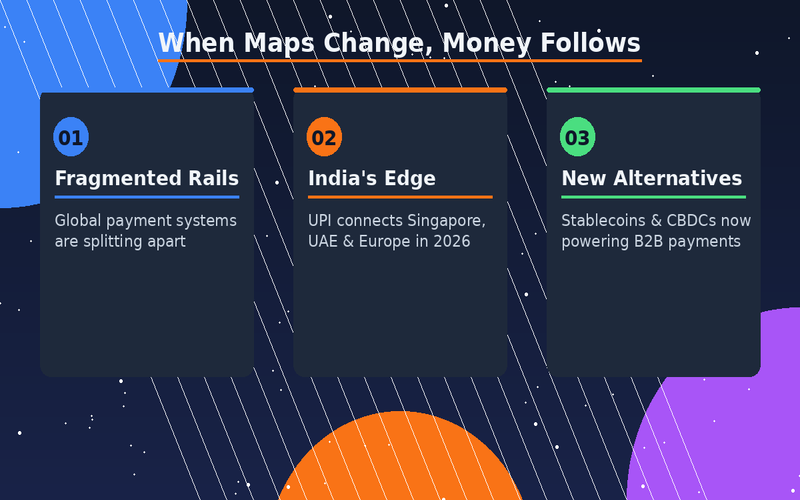
When Maps Change, Money Follows: How Geopolitics Is Rewiring B2B Payments in 2026
Payments are no longer just a plumbing problem — they're a geopolitical one. Explore how Indian B2B businesses can navigate a fragmented, fast-changing global payment landscape
Read More
What Happens Inside an Escrow Release Event? A Step-by-Step Breakdown for Businesses
A complete breakdown of escrow release events—covering triggers, validation, vendor response, and access to source code—helping businesses ensure continuity and minimize vendor risk.
Read MoreReady to Protect Your Core Systems?
Join enterprises that trust SprintEX-Code to safeguard their mission-critical software. Get started with a consultation to discuss your specific escrow requirements.