
How Government Procurement Can Eliminate Payment Disputes with Escrow-Backed Contracts
Jun 02, 2026
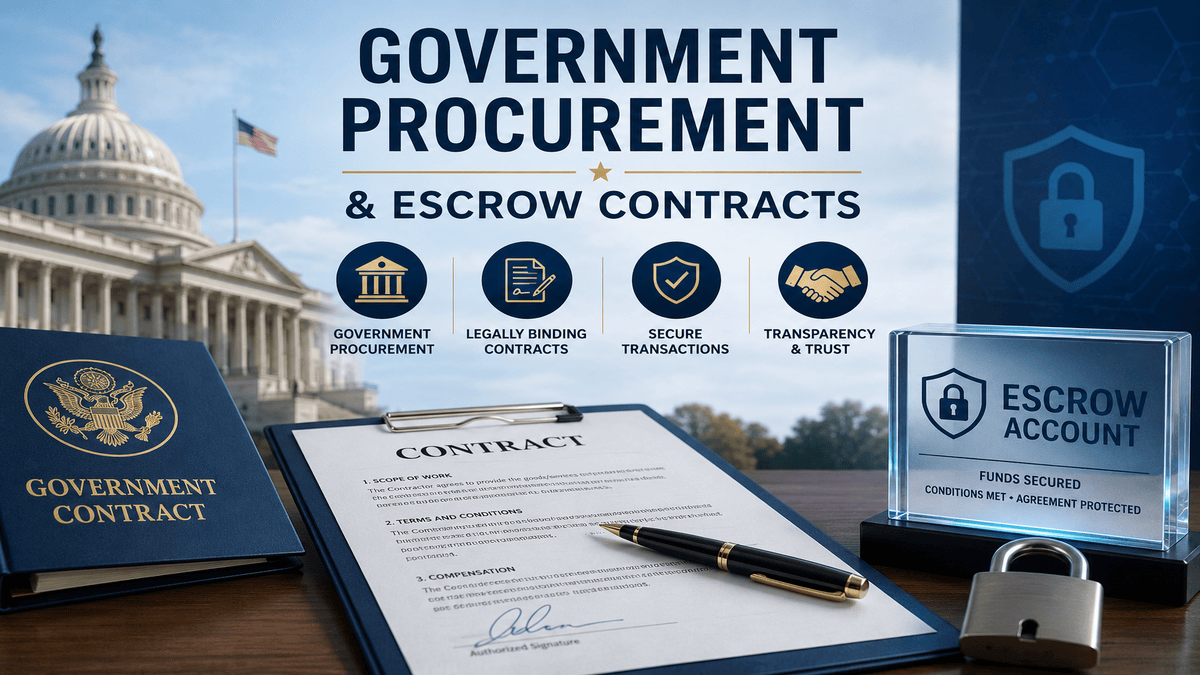
How Government Procurement Can Eliminate Payment Disputes with Escrow-Backed Contracts
Government procurement is one of the largest engines of economic activity in India. From infrastructure contracts worth thousands of crores to technology deployments across ministries and public sector undertakings, public spending drives industries, employs vendors, and delivers services to citizens. Yet beneath the scale and ambition of government procurement lies a persistent and costly problem: payment disputes.
The solution is not more paperwork or stricter contract clauses. It is a structural mechanism that brings neutrality, transparency, and enforceability into the payment process from the beginning. Escrow-backed contracts — powered by PaySprint — offer exactly that: a way for government procurement to function with the trust, accountability, and dispute-prevention architecture it has always needed.
Table of Contents
1. Why Payment Disputes Are Structural in Government Procurement
2. What Escrow-Backed Contracts Mean for the Public Sector
3. The Specific Disputes Escrow Prevents
4. Why Government Procurement Specifically Needs Escrow
5. Who Benefits — Beyond the Procuring Department
6. What Types of Government Contracts Need Escrow Protection Most
7. Conclusion
8. Frequently Asked Questions (FAQs)
Why Payment Disputes Are Structural in Government Procurement
Payment disputes in government contracts are not rare edge cases — they are a structural feature of a procurement model designed for a different era. The standard government procurement cycle involves advance payments, milestone-based disbursements, and final settlements, all of which depend on a chain of approvals, verifications, and documentation that introduces delays and disagreements at every step.
For vendors, the core problem is that performance and payment are decoupled. A contractor who completes a road section, delivers a batch of equipment, or builds a software module has no guarantee of when — or whether — they will be paid. Payment depends on the department's internal processes, budget cycles, and approval hierarchies, none of which the vendor can influence or monitor.
For government departments, the mirror problem exists. Advance payments are released to vendors who then fail to deliver on time, deliver substandard work, or disappear from the project entirely. Reclaiming those funds through legal mechanisms is slow, expensive, and rarely fully successful.
What Escrow-Backed Contracts Mean for the Public Sector
An escrow-backed contract introduces a neutral third party — the escrow agent — into the payment structure of a government procurement agreement. Instead of the government department releasing funds directly to the vendor, or the vendor billing and waiting for approval, payments are deposited into a secure escrow account and released only when defined, verifiable conditions are satisfied.
In practice, this transforms how government payments work at every stage:
• Advance payments are held in escrow and released to the vendor incrementally as milestones are verified — not as a lump sum that can be misused before work begins.
• Milestone payments are triggered by objective delivery confirmation, not by bureaucratic approval chains that introduce delays and opportunities for dispute.
• Retention money — typically held back until the defect liability period ends — is managed in escrow, ensuring the vendor knows it exists and the department knows it will be released on a defined schedule.
• Final settlements are processed through a structured, audited escrow release rather than through informal negotiations that often result in contested amounts.
The Specific Disputes Escrow Prevents
Government procurement disputes follow predictable patterns. Escrow-backed contracts address each of them structurally:
Advance Payment Recovery Disputes
Vendors who receive advance payments and fail to perform leave government departments with limited recourse. With escrow, advance payments are released in tranches as milestones are verified — there is no large advance disbursement that can be misused or lost if the vendor defaults.
Milestone Completion Disagreements
Disputes over whether a milestone has been satisfactorily completed are among the most common in government contracts. Escrow defines objective release conditions in the contract agreement — reducing the room for subjective disagreement and giving both parties a clear, pre-agreed standard for completion.
Delayed Payment Grievances
Vendors frequently face payment delays caused by approval bottlenecks within government departments. With escrow, payment release is triggered by milestone verification — not by an internal approval chain. When the condition is met, the payment releases automatically.
Retention and Final Settlement Disputes
Retention money held by government departments is a persistent source of disputes — vendors claim it should be released, departments dispute whether defect liability conditions have been met. Escrow manages retention amounts on a defined schedule with clear release conditions, making the process transparent and enforceable for both parties.
Why Government Procurement Specifically Needs Escrow
Escrow is valuable in any high-value transaction, but government procurement has characteristics that make it especially well suited — and especially in need — of escrow-backed payment structures.
• Scale and complexity: Government contracts involve multiple parties, long timelines, and large sums that are difficult to recover once disbursed without proper controls.
• Public accountability: Government departments are accountable to audit authorities and parliamentary oversight. Escrow provides the documentation and audit trail that demonstrates responsible stewardship of public funds.
• Vendor vulnerability: Many vendors in government supply chains — particularly MSMEs and small contractors — lack the financial resilience to absorb delayed payments or advance payment losses. Escrow protects them without requiring them to fight for what they are owed.
• Technology procurement risk: Government IT contracts carry specific risks around source code ownership, vendor lock-in, and continuity of access. SprintEX-Code's source code escrow addresses these risks directly.
• Regulatory alignment: SprintEX-Code is designed in alignment with ISO 27001, PCI-DSS, and RBI Master Directions on IT Framework — the compliance standards that Indian government procurement increasingly requires.
Who Benefits — Beyond the Procuring Department
While dispute prevention for government departments is the primary value, the benefits of escrow-backed contracts extend to every party in the procurement ecosystem.
Vendors and Contractors
Vendors who operate under escrow-backed contracts have certainty that payment is secured and committed before they begin work. This eliminates cash flow uncertainty, reduces the need for advance payment demands, and allows vendors to plan resources against confirmed payment milestones.
MSMEs in the Government Supply Chain
Small and medium enterprises that supply to government are disproportionately harmed by payment delays. Escrow provides them with a predictable payment timeline tied to delivery milestones — reducing the financial strain that delayed government payments consistently impose on smaller businesses.
Audit and Oversight Authorities
Every escrow-managed transaction produces a complete, timestamped audit record. For CAG audits, parliamentary committee reviews, and RTI inquiries, this documentation provides the clarity and traceability that manual payment processes cannot.
What Types of Government Contracts Need Escrow Protection Most
Not every government contract carries the same level of payment risk. Escrow protection matters most in contracts involving:
• Infrastructure and construction — where large advance payments are standard and milestone verification is complex
• IT and software development — where delivery is non-physical, access can be revoked, and vendor lock-in is a persistent risk
• Equipment and hardware supply — where specification compliance disputes are common and high-value goods can be misrepresented
• Consultancy and professional services — where deliverable quality is subjective and disputes over completion are frequent
• Multi-year maintenance and service contracts — where recurring payments create recurring opportunities for dispute
• Cross-departmental procurement — where multiple government entities are involved in a single contract and payment accountability is diffuse
In all of these cases, the gap between payment commitment and confirmed delivery is where risk is concentrated. Escrow closes that gap.
Conclusion
Government procurement is too important — and too large — to operate without a structural solution to payment disputes. The contracts that build public infrastructure, deploy digital services, supply essential equipment, and enable government functions to work deserve a payment mechanism that is as rigorous as the procurement process itself.
Escrow-backed contracts , provide that mechanism. They make payment conditional on verified performance, protect both the government department and the vendor, create a complete audit record for oversight authorities, and eliminate the most common causes of procurement disputes before they can take root.
Frequently Asked Questions (FAQs)
Q: How does escrow help government departments manage advance payments?
Escrow ensures that advance payments are held securely and released to the vendor only as milestones are verified — not disbursed as a lump sum upfront. This eliminates the risk of a vendor misusing advance funds before delivering on the contract, while still confirming to the vendor that payment is committed and protected.
Q: Can escrow be used for long-term government service and maintenance contracts?
Yes. SprintEX-Code supports recurring and milestone-driven payment structures that can be applied to multi-year service contracts, maintenance agreements, and ongoing supply arrangements. Release conditions can be defined for each delivery cycle, making escrow practical for contracts spanning multiple years and hundreds of individual payment events.
Q: What happens to escrow funds if a vendor defaults on a government contract?
If a vendor fails to meet a milestone condition, the corresponding tranche remains in the escrow account. The government department retains the right to trigger the dispute resolution process under the escrow agreement. Funds are not released until the dispute is resolved — ensuring the department is never in the position of having paid for work that has not been performed.
Q: Is SprintEX-Code compliant with the security and regulatory standards required for government contracts in India?
Yes. SprintEX-Code is designed in alignment with ISO 27001, PCI-DSS, and RBI Master Directions on IT Framework. It is ISO 27001 certified and undergoes VAPT by a CERT-In empaneled auditor — meeting the security and compliance standards applicable to government technology procurement in India.
Related Posts
What is E-Banking? Meaning, Types, Benefits & How It Works in India.
E-banking is the digital way of accessing banking services through mobile apps, websites, ATMs, and biometric systems. It enables secure, fast, and branchless financial transactions anytime and anywhere in India.
Read More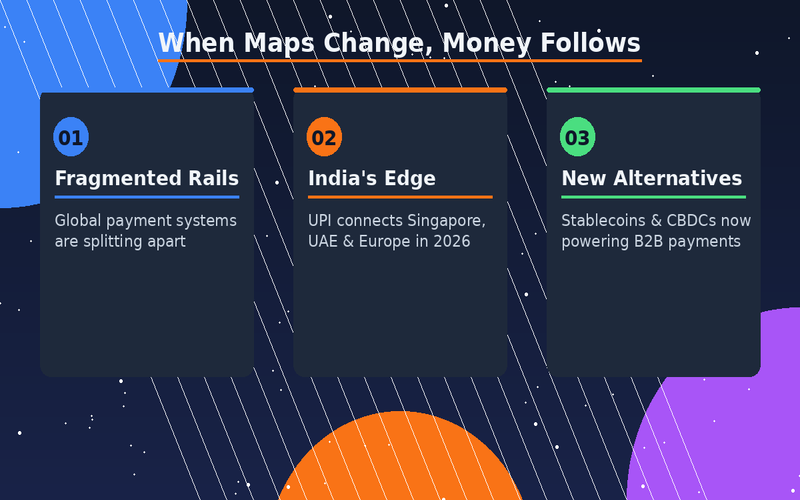
When Maps Change, Money Follows: How Geopolitics Is Rewiring B2B Payments in 2026
Payments are no longer just a plumbing problem — they're a geopolitical one. Explore how Indian B2B businesses can navigate a fragmented, fast-changing global payment landscape
Read More
What Happens Inside an Escrow Release Event? A Step-by-Step Breakdown for Businesses
A complete breakdown of escrow release events—covering triggers, validation, vendor response, and access to source code—helping businesses ensure continuity and minimize vendor risk.
Read MoreReady to Protect Your Core Systems?
Join enterprises that trust SprintEX-Code to safeguard their mission-critical software. Get started with a consultation to discuss your specific escrow requirements.