
Escrow Account in India: Meaning, Types & How to Open
Jul 15, 2026
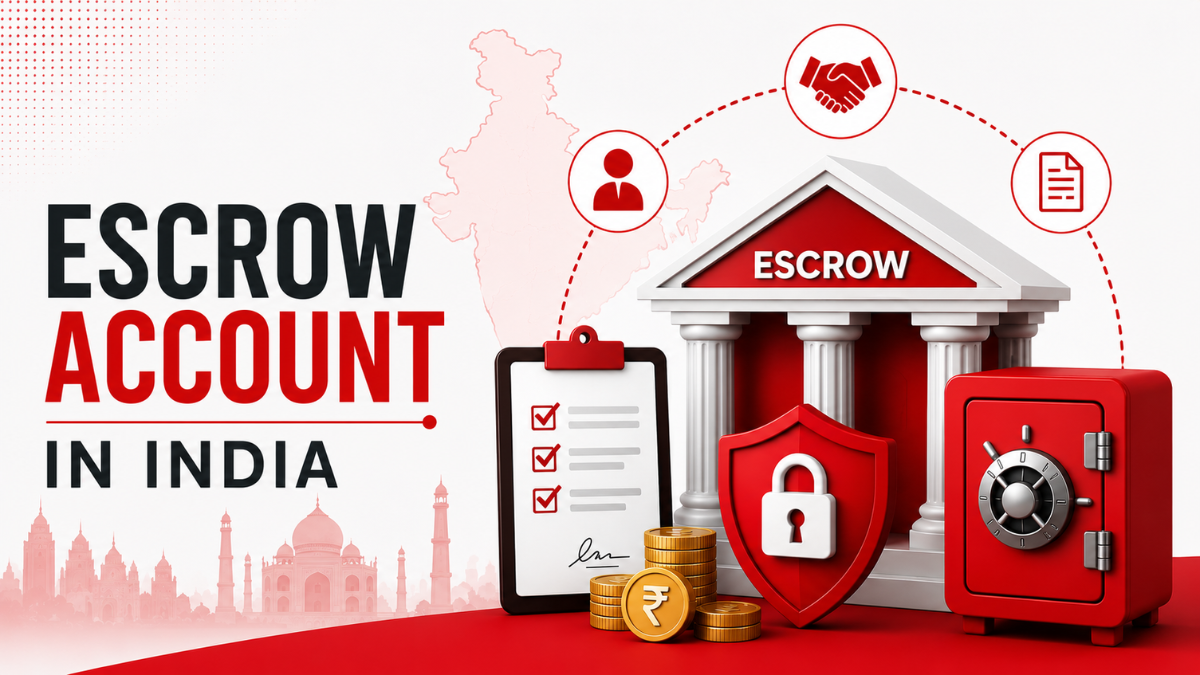
Escrow Account in India: Meaning, Types, Process, Regulations & How to Open One (2026 Guide)
An escrow account is a bank account controlled by a neutral third party — the escrow agent — that holds money or assets on behalf of a buyer and seller until both sides fulfil the conditions of their agreement.
An escrow account is used across real estate, M&A, e-commerce, online gaming, lending, and stock issuances in India, and is regulated primarily by the RBI, SEBI, and RERA depending on the transaction type.
Table of Contents
What Is an Escrow Account in India?
Why You Need an Escrow Account
How an Escrow Account Works
The Escrow Agreement: Format & Key Clauses
Types of Escrow Accounts in India
Escrow Account vs Nodal Account
Laws & Regulators Governing Escrow in India
Benefits of an Escrow Account
Escrow-as-a-Service (EaaS)
How to Open an Escrow Account in India
Escrow Account Charges
Choosing the Right Escrow Provider
FAQs
What Is an Escrow Account in India?
An escrow account in India is a bank account with restricted ownership — the funds or assets inside it don't fully belong to the buyer or the seller until a pre-agreed condition is met. A licensed escrow agent (usually a bank or a regulated financial institution) holds and administers the account.
Escrow isn't limited to cash. It can hold shares, property documents, source code, or any asset that needs to change hands only after specific milestones are verified. The core idea is simple: neither party has to trust the other directly, because a neutral, regulated intermediary controls the release of value.
In India, escrow accounts are non-interest-bearing by default under RBI norms, and they're typically opened for a fixed initial tenure (commonly six months), extendable with RBI approval where required.
Why You Need an Escrow Account
You need an escrow account whenever a transaction involves large sums, legal obligations, or a gap between payment and delivery. Consider a property developer selling under-construction apartments:
The buyer doesn't want to pay the full amount before possession.
There's a real risk of funds being diverted to unrelated projects.
Buyers want assurance that promised conditions (fittings, amenities, timelines) are actually met.
An escrow account removes this friction. Because a regulated third party holds the funds, the seller can't access the money until conditions are verified, and the buyer can't unilaterally cancel or withhold payment without triggering the agreed dispute process.
This is why regulators mandate escrow in high-risk sectors like real estate and public share issuances, and why it's strongly recommended for high-value private deals, crowdfunding, and B2B credit sales.
How an Escrow Account Works
The escrow process follows a consistent sequence regardless of industry:
Agreement — Buyer and seller negotiate and sign an escrow agreement defining the conditions for fund release.
Deposit — The buyer transfers funds (or the depositor transfers assets) into the escrow account.
Verification — The escrow agent confirms receipt and notifies both parties.
Monitoring — The agent tracks whether agreed milestones — delivery, possession, regulatory approval, performance metrics — are being met.
Release — Once both parties confirm the conditions are satisfied, the agent releases funds or assets to the seller/beneficiary.
Dispute resolution — If either party disputes fulfilment, the funds stay locked until the matter is resolved per the agreement's dispute clause; they are never simply frozen indefinitely without process.
The Escrow Agreement: Format & Key Clauses
The escrow agreement is a three-party contract between the buyer (depositor), the seller (beneficiary), and the escrow agent. A well-drafted agreement typically includes:
Names and addresses of all three parties
Description of the money or assets held in escrow
The exact conditions that trigger release of funds
Escrow agent's fee structure
Timeline for completing the transaction
Procedure for notifying the agent of a problem
Dispute resolution mechanism
Procedure for releasing funds if the deal falls through or the timeline lapses
If the agreed terms aren't met within the stipulated period, the agreement can be terminated and funds returned per the exit clause — this is why the release conditions need to be written unambiguously.
Types of Escrow Accounts in India
Escrow shows up in far more industries than most people expect:
- Real estate — RERA mandates that developers keep 70% of funds collected from homebuyers in an escrow account, released only against construction progress. This is the most regulated and widely known use case.
- Mergers & acquisitions — Deal consideration is parked in escrow until asset transfer, employee handover, and documentation are complete, protecting both the acquirer and the target company.
- E-commerce & online marketplaces — Platforms like Amazon collect buyer payments into escrow and release funds to vendors only after delivery is confirmed, since the platform itself doesn't own the inventory.
- Online gaming — Platforms such as Dream11 and MPL hold entry-fee pools in escrow until a winner is determined, preventing manipulation of prize money.
- Stock market issuances — SEBI requires that subscription money for public share issues sit in escrow; if a company doesn't get 90%+ subscription, funds are returned to investors from that same account.
- Lending — Escrow protects both borrower and lender by holding loan-related funds (like property tax or insurance components of a mortgage) until compliance conditions are met.
- Rental deposits — Security deposits sit in escrow so tenants get assurance of a fair refund and landlords get assurance they're dealing with a verified party.
- Freelance marketplaces — Client payments are held until the freelancer delivers satisfactory work.
- Software source code escrow — Protects buyers by guaranteeing access to the source code even if the developer discontinues support.
- Auctions and cryptocurrency trades — Used wherever trust between anonymous or first-time counterparties is a concern.
Escrow Account vs Nodal Account
These two are frequently confused because both involve a third party holding funds — but they serve different regulatory purposes.
Laws & Regulators Governing Escrow in India
Escrow isn't governed by a single law — different regulators mandate it for different sectors:
RBI — Sets the foundational rules for how escrow accounts operate (non-interest-bearing, tenure limits), and separately requires banks/NBFCs to escrow certain home-loan-linked payments like property tax and insurance.
SEBI — Mandates escrow for public share issuances, ensuring subscription money is refunded if the issue undersubscribes.
RERA (2016) — Requires real estate developers to keep 70% of homebuyer funds in escrow, tied to construction milestones.
IT (Intermediary Guidelines) Rules, 2011 — Applies to online platforms offering escrow-linked services, requiring registration with MeitY, transaction record-keeping, and timely dispute resolution.
Because oversight is sector-specific, the right compliance checklist for your escrow account depends entirely on which industry your transaction falls under.
Benefits of an Escrow Account
Fraud protection — Neither party can access funds unilaterally; a neutral agent enforces the agreed terms.
Automated release — Once conditions are digitally verified, fund transfer can happen without manual intervention, cutting settlement time.
Neutral dispute mediation — The escrow agent has no stake in the outcome, so disputes are resolved on facts, not leverage.
Simple setup — Opening an escrow account is typically faster than structuring alternative trust mechanisms.
Confidentiality — Account holder details are not publicly disclosed.
Improved trust and conversion — Buyers are more willing to transact (and pay upfront) when they know funds are protected until delivery.
Escrow-as-a-Service (EaaS)
Escrow-as-a-Service is the modern, API-driven version of traditional escrow — instead of a manual bank process, providers offer instant account opening, automated reconciliation, and programmatic fund release triggered by verified events.
Key advantages over traditional escrow:
Lower cost — No physical paperwork, courier, or administrative overhead.
Faster settlement — Automated triggers replace manual verification cycles.
Better security — Cloud-based infrastructure with audit trails reduces both fraud and human error.
Built-in compliance — Modern EaaS platforms bundle multi-bank routing, auto-reconciliation, and trusteeship services so businesses don't have to build this infrastructure themselves.
This shift is why fintechs and platforms — from gaming apps to marketplaces — increasingly plug escrow in as an API rather than negotiating a bespoke bank arrangement for each deal.
How to Open an Escrow Account in India
Choose a provider — Compare fees, supported transaction types, and turnaround time between a traditional bank and a digital EaaS provider.
Create the account — Submit basic identity/business details.
Complete KYC — Provide documentation such as ID proof, address proof, or business registration certificates.
Deposit funds — Typically via bank transfer, card, or other supported digital rails.
Sign the escrow agreement — This defines the release conditions, fees, and dispute process, and formally activates the account.
Escrow Account Charges
Escrow fees vary by provider and transaction size, and generally fall into a few buckets:
Setup/account opening fee — A one-time charge to establish the account.
Escrow agent's service fee — Usually a percentage of the transaction value or a flat fee, compensating the agent for monitoring and verification.
Transaction/disbursal fees — Charged per fund release, especially relevant for high-frequency use cases like gaming or marketplaces.
Compliance/documentation charges — For agreements requiring legal drafting or regulatory filings.
Because pricing structures differ significantly between traditional banks and digital EaaS providers, it's worth getting a like-for-like quote based on your expected transaction volume before committing.
Choosing the Right Escrow Provider
Match the provider to your use case rather than picking the biggest name:
High-frequency, low-ticket transactions (gaming, marketplaces): Prioritize automated, API-first EaaS platforms with fast disbursal.
Real estate or M&A: Prioritize providers experienced with RERA/SEBI compliance and milestone-based fund release.
Cross-border or crypto-adjacent deals: Prioritize providers with strong dispute-resolution frameworks and regulatory clarity.
Across all cases, check for: transparent fee disclosure, reconciliation tooling, dispute-resolution turnaround time, and integration ease if you need it to plug into an existing payment stack.
Frequently asked questions
Is interest paid on escrow accounts in India?
No. Per RBI guidelines, escrow accounts in India are non-interest-bearing.
Can escrow funds get permanently frozen?
No. Funds aren't simply frozen — if one party fails to meet their obligation, the other can invoke the agreement's exit clause and initiate withdrawal or dispute resolution through the escrow agent.
Can the escrow agent use the funds for themselves?
No. The agent can only move funds according to the agreed conditions and with the depositor's consent; unauthorized use would breach both the agreement and RBI norms.
Is the escrow agent biased toward either party?
No. The agent is a regulated, neutral intermediary with no financial stake in the transaction's outcome.
What's the difference between escrow and nodal accounts in one line?
Escrow is transaction-specific and closes when that deal resolves; a nodal account is an ongoing account intermediaries use to route recurring merchant payments.
Who regulates escrow accounts in India?
Depending on the sector: RBI (general banking norms and lending-linked escrow), SEBI (share issuances), RERA (real estate), and the IT Intermediary Guidelines Rules (online escrow platforms).
How long does an escrow account stay open?
It's typically tied to the transaction's lifecycle — often opened for an initial term (commonly six months) and extended only where the underlying deal requires more time and regulatory approval permits it.
Related Posts
What is E-Banking? Meaning, Types, Benefits & How It Works in India.
E-banking is the digital way of accessing banking services through mobile apps, websites, ATMs, and biometric systems. It enables secure, fast, and branchless financial transactions anytime and anywhere in India.
Read More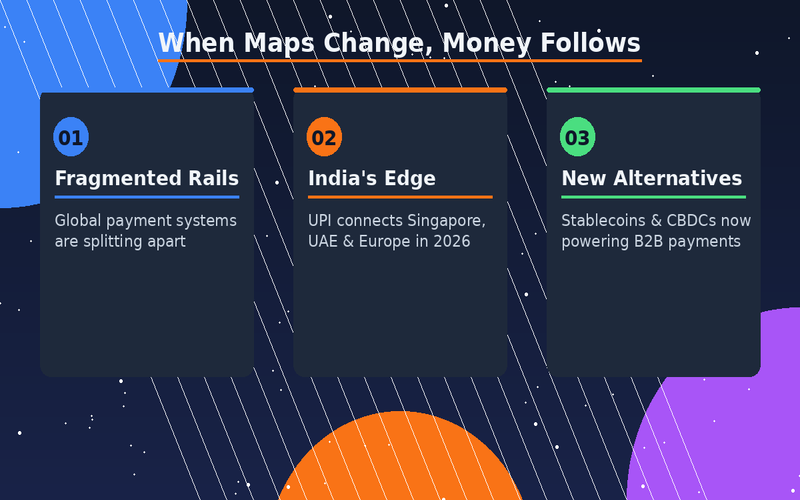
When Maps Change, Money Follows: How Geopolitics Is Rewiring B2B Payments in 2026
Payments are no longer just a plumbing problem — they're a geopolitical one. Explore how Indian B2B businesses can navigate a fragmented, fast-changing global payment landscape
Read More
What Happens Inside an Escrow Release Event? A Step-by-Step Breakdown for Businesses
A complete breakdown of escrow release events—covering triggers, validation, vendor response, and access to source code—helping businesses ensure continuity and minimize vendor risk.
Read MoreReady to Protect Your Core Systems?
Join enterprises that trust SprintEX-Code to safeguard their mission-critical software. Get started with a consultation to discuss your specific escrow requirements.