
Higher Education Contracts Without the Chaos
May 22, 2026
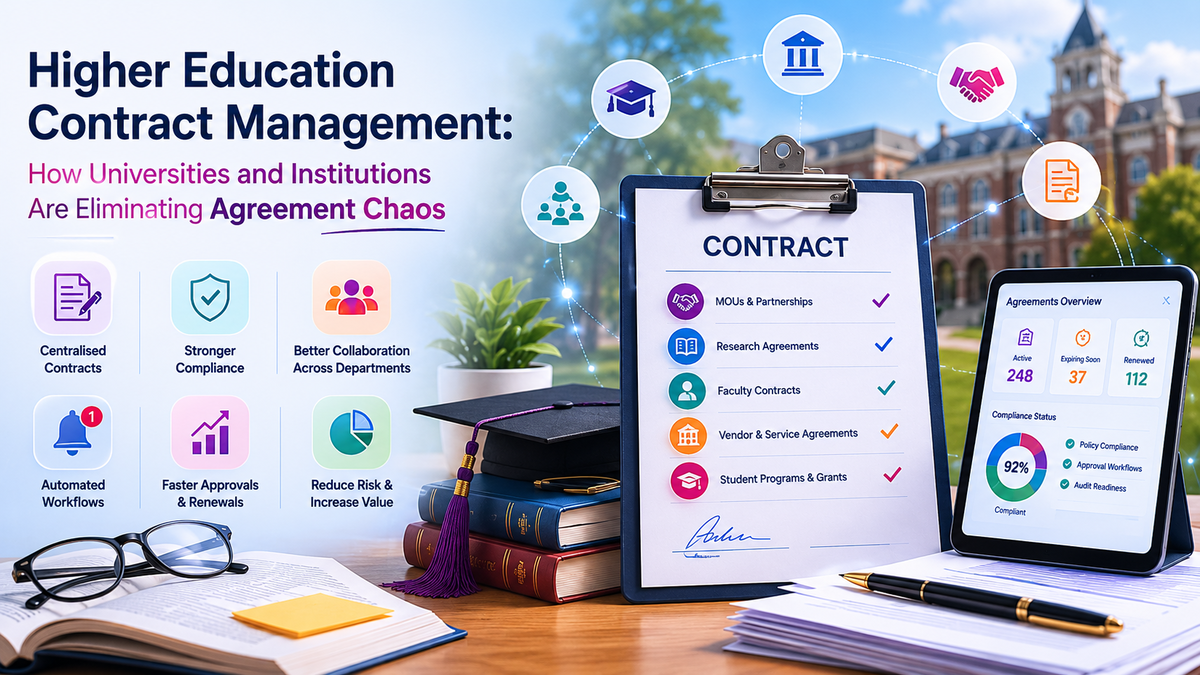
Higher Education Contracts Without the Chaos
Higher education institutions do not manage just a handful of contracts. They manage hundreds — sometimes thousands — at the same time. From faculty appointment letters and vendor agreements to research collaboration MOUs, student enrolment terms, software licences, facility maintenance contracts, scholarship agreements, and accreditation partnerships, every document carries its own obligations, renewal timelines, compliance requirements, and stakeholders.
The cost of this approach is not abstract. Missed renewal windows, undiscovered compliance gaps, disputed vendor terms, and delayed faculty onboarding are the direct, measurable outcomes of managing higher education contracts without a system.
SprintContractX by PaySprint is the contract lifecycle management platform designed for institutions that have outgrown spreadsheets and need a single, structured system to manage every agreement from request to renewal. This guide explains why higher education contract management is uniquely challenging, where it most commonly breaks down, and how SprintContractX solves it end to end.
Table of Contents
1. Why Is Higher Education Contract Management So Complex?
2. What Types of Contracts Do Higher Education Institutions Manage?
3. Where Does Higher Education Contract Management Break Down?
4. What Does Good Contract Management Look Like for Universities?
5. Key Features of SprintContractX for Educational Institutions
6. What Compliance Requirements Apply to Higher Education Contracts?
7. Why Indian Universities and Colleges Need SprintContractX Now
8. Conclusion
9. Frequently Asked Questions (FAQs)
Why Is Higher Education Contract Management So Complex?
Higher education institutions operate at the intersection of academia, government regulation, commercial procurement, and human resources — each with its own contracting requirements. Unlike a single-sector business, a university is simultaneously:
• An employer — managing faculty, staff, and visiting lecturer agreements
• A service provider — signing enrolment agreements with students and MOUs with corporate partners
• A research institution — entering funded research agreements, IP licensing arrangements, and collaboration contracts
• A property manager — maintaining contracts for facility management, construction, and campus services
• A regulated entity — subject to UGC, AICTE, and accreditation body requirements that impose compliance obligations on agreements
This multi-dimensional contracting reality means that no two contracts in a university look alike, no two departments have the same approval requirements, and the stakes of getting it wrong — financial, legal, and reputational — are high.
What Types of Contracts Do Higher Education Institutions Manage?
Understanding the full range of agreement types is the starting point for building an effective contract management system. Higher education institutions typically manage:
Faculty and Staff Contracts
Employment agreements, appointment letters, adjunct faculty contracts, and visiting professor arrangements. These must comply with UGC service conditions, institutional HR policies, and in some cases, AICTE regulations on faculty qualifications and pay scales.
Student Enrolment and Scholarship Agreements
Enrolment terms, fee payment agreements, scholarship disbursement contracts, and student code of conduct acknowledgements. These are high-volume, time-sensitive agreements that must be executed accurately and archived for regulatory inspection.
Vendor and Supplier Contracts
Procurement agreements with campus service providers, IT vendors, library content suppliers, laboratory equipment suppliers, food service operators, and construction contractors. Each carries pricing, SLA, and liability terms that must be actively tracked.
Research and Collaboration Agreements
Funded research agreements with government bodies (DST, DBT, CSIR), corporate-sponsored research contracts, MoUs with peer institutions, and international collaboration agreements that carry grant compliance obligations.
Software and Technology Licences
Campus-wide software licence agreements, LMS platform contracts, cybersecurity tool subscriptions, and cloud infrastructure agreements — each with renewal windows that, if missed, can disrupt academic operations.
Accreditation and Affiliation Agreements
Affiliation agreements with regulatory universities, accreditation body compliance commitments, and twinning arrangements with international institutions. These are among the highest-stakes agreements an institution manages.
Where Does Higher Education Contract Management Break Down?
The failure modes of unmanaged contracts in higher education are consistent across institutions of every size. They are predictable, preventable, and expensive.
Missed Renewal Deadlines
Software licences that auto-renew at outdated rates, vendor contracts that roll over on unfavourable terms, and research agreements that lapse without notice. Without automated renewal tracking, these events happen silently — and are discovered only after the damage is done.
Fragmented Contract Storage
Contracts stored across individual email inboxes, departmental shared drives, and physical files mean that no single stakeholder — legal, finance, or administration — has a complete view of the institution’s contractual obligations at any given time.
Inconsistent Approval Processes
Faculty contracts approved differently across faculties. Vendor contracts signed without finance review. Research agreements executed without legal sign-off. Inconsistent approvals create compliance exposure that surfaces at the worst possible moment — during an audit or a dispute.
No Post-Signature Obligation Tracking
Most contract management processes in higher education stop at signature. But contracts create ongoing obligations — reporting deadlines, milestone payments, data protection requirements, and service review dates — that must be tracked throughout the contract term, not just at execution.
Version Control and Audit Trail Gaps
When contracts are drafted and revised across multiple email threads, it becomes impossible to establish which version was actually agreed and signed. This is a serious problem in dispute resolution and regulatory inspection.
What Does Good Contract Management Look Like for Universities?
Effective higher education contract management is not about adding more legal staff or more process layers. It is about creating a system where every contract — regardless of type, department, or value — follows a consistent, auditable path from initiation to renewal.
The hallmarks of mature contract management in higher education are:
• A single contract repository accessible to all authorised stakeholders with role-based permissions
• Standardised, pre-approved templates for high-volume contract types (faculty, vendor, student)
• Automated approval workflows that route contracts to the right stakeholders based on contract type, value, and risk level
• Systematic renewal and obligation tracking with automated alerts sent well before critical dates
• Full audit trails covering every version, comment, approval, and signature event
• Integrated e-signature that eliminates printing, scanning, and physical filing
Key Features of SprintContractX for Educational Institutions
Easy Contract Requests
Teams across faculties, administration, and operations submit contract requests through a single structured intake form. Eliminates the most common source of delay in institutional contracting — incomplete information at the start.
Template and Clause Library Control
Every agreement is generated from an approved library of templates and fallback clauses. No off-standard language slips through without explicit escalation and approval — critical for institutions where one non-compliant clause in a research agreement can jeopardise funding.
Policy-Based Approval Workflows
Automate multi-level approvals across legal, finance, HR, and academic leadership based on contract value, risk tier, and type. No manual routing. No missed escalations. Maker-checker workflows for high-risk agreements.
Obligation and Renewal Management
Never miss a critical contract date again. SprintContractX automatically tracks milestones, notice periods, and renewal windows across every active agreement — sending timely alerts to the right contract owners.
Integrated E-Signature
Send, sign, and lock final contract versions securely within the platform. Faculty appointment letters, vendor agreements, and student enrolment documents all executed and archived without paper.
Centralised Contract Repository
Every contract — by department, type, date range, or clause keyword — is searchable in seconds. Audit preparation becomes a matter of minutes, not days.
Real-Time Collaboration
Foster transparent, cross-departmental collaboration on complex agreements — legal, finance, academic leadership, and external parties working on the same document with a full comment and version history.
Built to Scale
Whether your institution manages 200 or 20,000 active contracts, SprintContractX scales with your volume, team size, and workflow complexity — without requiring a 6-month implementation cycle.
What Compliance Requirements Apply to Higher Education Contracts?
Compliance in higher education contract management operates at multiple levels, and the consequences of non-compliance are more visible than in most sectors — accreditation reviews, government audits, and public accountability mechanisms all scrutinise how institutions manage their legal obligations.
UGC and AICTE Regulations
Faculty employment contracts must comply with UGC service condition norms and, for technical institutions, AICTE pay scale and qualification requirements. Non-compliant faculty contracts are a direct accreditation risk.
Research Funding Compliance
Funded research agreements from government agencies (DST, DBT, CSIR, ICMR) carry specific reporting, IP assignment, and financial utilisation obligations that must be tracked and met throughout the grant period. Missed reporting deadlines can result in fund suspension and reputational damage.
Data Protection Obligations
Any contract involving student data, research data, or third-party data processing must include appropriate data protection clauses and must comply with India’s data protection framework. SprintContractX’s controlled clause library ensures these clauses are never omitted.
Procurement and Financial Controls
Institutions receiving government grants or public funding are subject to General Financial Rules (GFR) and internal procurement policies that require documented approval processes and audit trails for contracts above defined thresholds.
Accreditation Body Requirements
NAAC, NBA, and international accreditation bodies examine institutional governance including how agreements are documented, approved, and managed. A centralised, auditable contract repository is a direct contributor to accreditation readiness.
Why Indian Universities and Colleges Need SprintContractX Now
India’s higher education sector is in the middle of a significant transformation. The National Education Policy 2020 (NEP 2020) is driving structural reform — multidisciplinary education, increased institutional autonomy, international collaboration, and research commercialisation. Each of these dimensions creates new contracting requirements that most institutions are not equipped to manage with current systems.
International partnerships require well-structured collaboration agreements with clear IP, revenue sharing, and data protection terms. Research commercialisation requires IP licensing agreements and technology transfer contracts. Institutional autonomy means more procurement decisions being made at the institutional level — and more contracts to manage.
At the same time, accreditation frameworks are becoming more rigorous. NAAC’s revised assessment criteria specifically examine governance and administrative efficiency — areas directly influenced by how well an institution manages its contracts and obligations.
SprintContractX gives Indian higher education institutions the platform to meet these demands — managing every agreement type, across every department, with the speed, compliance, and visibility that modern institutional governance requires.
PaySprint’s full product suite — including SprintContractX, SprintVerify for digital KYC, and SprintEXcrow for escrow transactions. Indian educational institutions can request a free consultation to explore how SprintContractX fits their specific contract management needs.
Conclusion
Higher education institutions are managing more contracts, more stakeholders, and more compliance requirements than ever before — and doing it with systems that were not designed for the task. The result is predictable: missed deadlines, compliance gaps, and legal teams stretched beyond capacity.
SprintContractX gives universities, colleges, and educational institutions the platform to change this — without complex implementation, without disrupting existing workflows, and without requiring a dedicated legal operations team to manage it.
From a faculty appointment letter processed in minutes to a multi-crore research collaboration agreement tracked with full audit visibility, SprintContractX brings the same discipline and control to every agreement across the institution.
The institutions that manage contracts well are the ones that can move faster on partnerships, stay clean through accreditation reviews, and spend less time on administration and more time on education. SprintContractX is how you get there.
Frequently Asked Questions (FAQs)
Q: What is higher education contract management?
Higher education contract management is the systematic process of creating, approving, executing, tracking, and renewing all agreements managed by a university or college — including faculty contracts, vendor agreements, research collaborations, student enrolment terms, and accreditation commitments — in a structured, auditable, and compliant way.
Q: Why do universities and colleges need a contract management system?
Higher education institutions manage hundreds of contracts simultaneously across multiple departments with different approval requirements, compliance obligations, and renewal timelines. Without a system, critical dates are missed, compliance gaps go undetected, and disputes become difficult to resolve due to version control failures.
Q: What types of contracts does SprintContractX handle for higher education?
SprintContractX handles the full range of higher education agreement types including faculty and staff contracts, vendor and supplier agreements, student enrolment terms, research collaboration and funded research agreements, software licence contracts, facility management agreements, and accreditation or affiliation agreements.
Q: How does SprintContractX support compliance with UGC and AICTE requirements?
SprintContractX’s controlled template and clause library ensures that faculty contracts are generated from pre-approved, compliant templates. Policy-based approval workflows ensure the right stakeholders review each contract before execution. Full audit trails provide the documentation needed for regulatory inspections and accreditation reviews.
Yes. SprintContractX is designed for higher education institutions of all types — private deemed universities, autonomous colleges, state and central universities, and technical institutions. The platform’s configurable approval workflows and template libraries adapt to the specific governance and regulatory requirements of each institution type.
Related Posts
What is E-Banking? Meaning, Types, Benefits & How It Works in India.
E-banking is the digital way of accessing banking services through mobile apps, websites, ATMs, and biometric systems. It enables secure, fast, and branchless financial transactions anytime and anywhere in India.
Read More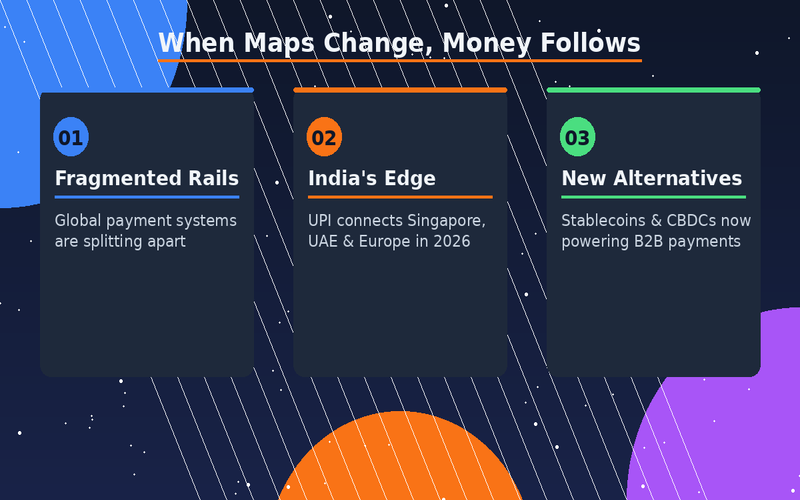
When Maps Change, Money Follows: How Geopolitics Is Rewiring B2B Payments in 2026
Payments are no longer just a plumbing problem — they're a geopolitical one. Explore how Indian B2B businesses can navigate a fragmented, fast-changing global payment landscape
Read More
What Happens Inside an Escrow Release Event? A Step-by-Step Breakdown for Businesses
A complete breakdown of escrow release events—covering triggers, validation, vendor response, and access to source code—helping businesses ensure continuity and minimize vendor risk.
Read MoreReady to Protect Your Core Systems?
Join enterprises that trust SprintEX-Code to safeguard their mission-critical software. Get started with a consultation to discuss your specific escrow requirements.