
The 3 AM Call No CTO Wants: When Your Core System Vendor Goes Dark
May 08, 2026
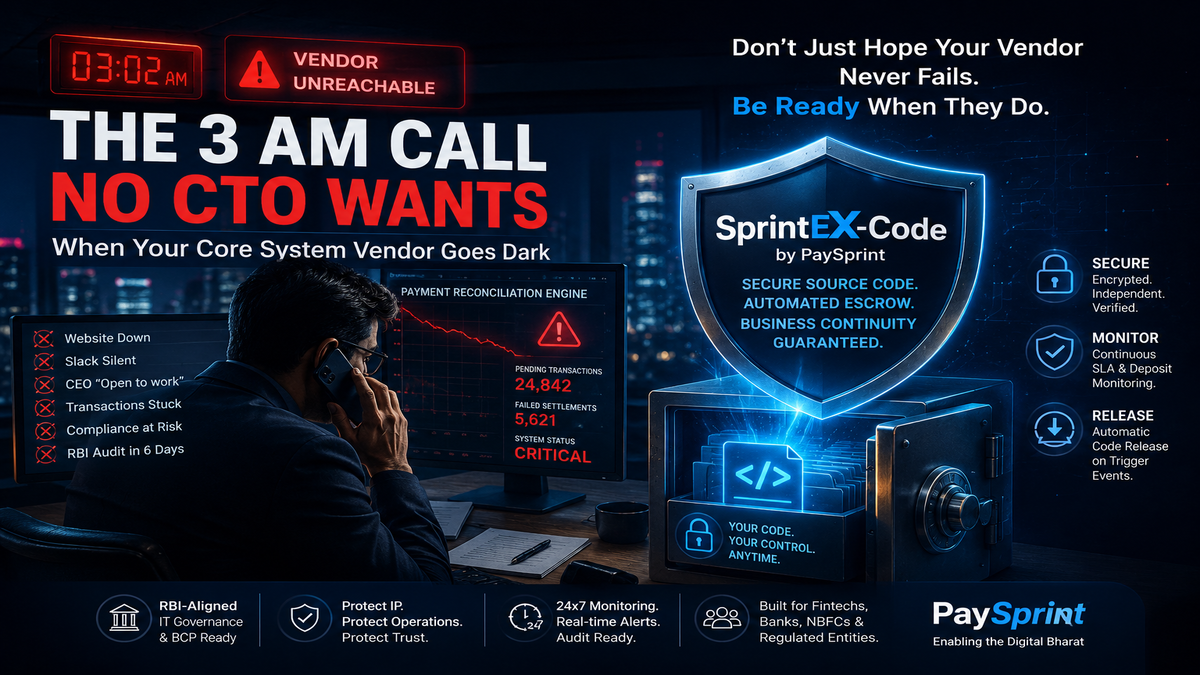
The 3 AM Call No CTO Wants: When Your Core System Vendor Goes Dark
Fintech today runs on vendors. From core banking platforms to payment gateways and compliance engines, nearly every critical function is powered by third-party technology. But what happens when a key vendor suddenly disappears overnight? No warning. No access. No support. For many fintech companies, banks, and NBFCs, this isn’t just an inconvenience- it’s an operational crisis waiting to happen..
Table of Contents
• Why Vendor Dependency Is a Systemic Risk
• What Is Software Escrow - and Why It Matters
• The Platform Built for Regulated Finance: SprintEX-Code
• How It Works: From Deposit to Release
• Who Needs Software Escrow?
• The Real Cost of Going Without
Why Vendor Dependency Is a Systemic Risk
Fintechs, banks, and NBFCs build on layers of third-party software - core banking systems, underwriting engines, KYC platforms, payment gateways, and reconciliation tools. Each vendor represents a single point of failure. And unlike a server outage that is temporary, vendor failure can be permanent.
Common failure modes include:
• Insolvency: The vendor files for bankruptcy or ceases operations entirely.
• Acquisition & sunsetting: A larger company buys the vendor and discontinues the product.
• SLA abandonment: The vendor stops delivering updates, patches, or support.
• Key-person departure: A founding engineer holds all institutional knowledge and leaves.
• Regulatory shutdown: The vendor loses a key licence or faces regulatory action.
In every case, the regulated entity is left holding the liability without holding the key: the source code.
What Is Software Escrow - and Why It Matters
Software escrow is a legal arrangement where a neutral third party - the escrow agent - holds your vendor’s source code and releases it to you when specific trigger events occur, such as insolvency, material SLA breach, or business cessation.
Think of it as a fire extinguisher. You hope you never need it. But when you do, you need it immediately, and you need it to work perfectly.
For regulated financial entities, software escrow is critical because operations run on third-party software, RBI mandates business continuity planning, and vendor contracts rarely grant automatic IP rights in the event of vendor failure. Without escrow, you are dependent on a contract clause that was never designed for a 3 AM crisis.
The Platform Built for Regulated Finance
SprintEX-Code is India’s specialized, digital-first software escrow platform, purpose-built for fintechs, banks, and NBFCs. It is built by one of India’s fastest-growing fintech companies, already powering over 5,100 partners with 200+ APIs.
Where traditional software escrow is slow, paper-heavy, and reactive, SprintEX-Code is automated, cloud-native, and proactive. It won the Gold Award for Data Privacy, Security & Protection at the India Digital Summit 2026 - a recognition of its industry-leading approach to IP protection in India’s digital financial ecosystem.
At its core, the platform does three things:
1. Secures: Stores your vendor’s source code in encrypted, independently verified vaults.
2. Monitors: Continuously validates deposits and tracks SLA compliance.
3. Releases: Automatically delivers source code to you the moment predefined trigger events occur.
How It Works: From Deposit to Release
• Tri-Party Escrow Agreement: A legally binding agreement between the software vendor, your institution, and PaySprint as the neutral escrow agent. Multi-party configurations are supported for complex ecosystems.
• Automated CI/CD Deposits: Source code is deposited automatically via CI/CD pipeline integration with every update, patch, or version change - no manual steps, no outdated code.
• Independent Verification: Every deposit is reviewed and validated by PaySprint’s technical team against regulatory guidelines, ensuring the escrowed code is complete and deployable.
• Dual Storage Options: Choose secure physical FRFC lockers or cloud repositories on AWS, Azure, or GCP - both with enterprise-grade encryption, two-factor authentication, and real-time audit trails.
• Automatic Code Release: When a predefined trigger fires - vendor insolvency, SLA breach, acquisition and discontinuation - the source code is released to you immediately. No legal delays, no disputes.
Who Needs Software Escrow?
SprintEX-Code is built for India’s regulated financial ecosystem. If any of the following applies to your organisation, you need software escrow:
• Your core banking, payment, underwriting, or compliance system is third-party software.
• You are subject to RBI IT Governance, BCP, or third-party risk management requirements.
• Your vendor contracts do not explicitly guarantee IP transfer on vendor failure.
• You operate a SaaS-based application licensed from an external provider.
• A regulatory audit or internal IT risk review has flagged vendor concentration risk.
The Real Cost of Going Without
A payment system outage at a mid-sized fintech can cost anywhere from ?10 lakh to ?10 crore per day in direct revenue loss. That’s before factoring in regulatory fines for SLA and reporting failures, emergency IT consulting to reverse-engineer critical systems, customer attrition and reputational damage, legal costs for contract disputes with the failed vendor, and in extreme cases, risk to your NBFC registration or banking licence.
Compared to these consequences, the cost of SprintEX-Code is not an expense. It is insurance with zero deductible - the moment a trigger fires, the source code is yours.
Conclusion
Go back to 3 AM. The vendor has gone dark. In a world without SprintEX-Code, that call ends your night and possibly your quarter.
In a world with SprintEX-Code, you say: “Activate the escrow release.” Within hours, your team has the source code. Your engineers are in. Operations resume. Your regulator gets their report. Your customers never know anything happened.
India’s fintech ecosystem is growing at speed. The regulatory environment is tightening. Third-party vendor risk is not decreasing. Software escrow is no longer a luxury for large banks with sophisticated risk teams - it is a baseline requirement for every fintech, NBFC, and regulated financial institution that runs critical operations on third-party software.
SprintEX-Code by PaySprint makes that protection automated, audit-ready, and accessible from day one.
Frequently Asked Questions (FAQs)
Q1. What is software escrow and why does my fintech need it?
Software escrow is a legal arrangement where a neutral third party holds your vendor’s source code and releases it to you if the vendor fails, goes insolvent, or materially breaches their service agreement. For fintechs and NBFCs, it is essential because your operations depend on third-party software - and without escrow, a vendor failure can halt everything.
Q2. What events trigger a source code release under SprintEX-Code?
Release triggers are defined in the escrow agreement and typically include vendor insolvency or bankruptcy, cessation of operations, material SLA breach such as failure to provide support or updates, and vendor acquisition followed by product discontinuation.
Q3. Does SprintEX-Code support SaaS-based applications?
Yes. SprintEX-Code fully supports SaaS applications in addition to traditional on-premise software. SaaS-based platforms used by regulated entities are equally vulnerable to vendor failure and should be escrowed.
Q4. How secure is my source code within the platform?
SprintEX-Code uses enterprise-grade encryption for data in transit and at rest, two-factor authentication, real-time audit trails, and 24/7 monitoring. Storage options include secure physical FRFC lockers or cloud repositories on AWS, Azure, or GCP.
Q5. Is SprintEX-Code aligned with RBI regulatory requirements?
Yes. SprintEX-Code is fully aligned with RBI IT Governance guidelines covering business continuity planning, third-party risk management, and IT asset protection, and provides an auditable record ready for regulatory inspection.
Related Posts
What is E-Banking? Meaning, Types, Benefits & How It Works in India.
E-banking is the digital way of accessing banking services through mobile apps, websites, ATMs, and biometric systems. It enables secure, fast, and branchless financial transactions anytime and anywhere in India.
Read More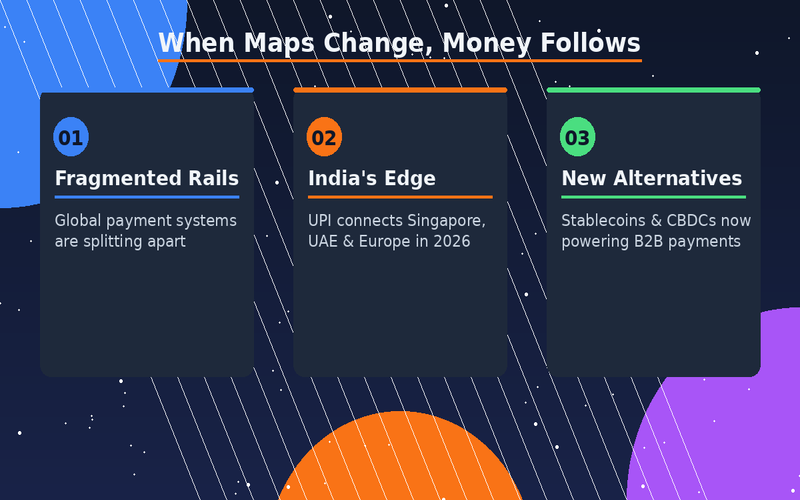
When Maps Change, Money Follows: How Geopolitics Is Rewiring B2B Payments in 2026
Payments are no longer just a plumbing problem — they're a geopolitical one. Explore how Indian B2B businesses can navigate a fragmented, fast-changing global payment landscape
Read More
What Happens Inside an Escrow Release Event? A Step-by-Step Breakdown for Businesses
A complete breakdown of escrow release events—covering triggers, validation, vendor response, and access to source code—helping businesses ensure continuity and minimize vendor risk.
Read MoreReady to Protect Your Core Systems?
Join enterprises that trust SprintEX-Code to safeguard their mission-critical software. Get started with a consultation to discuss your specific escrow requirements.