
Financial Inclusion in India: Meaning, Importance, Challenges & Examples
Feb 27, 2025
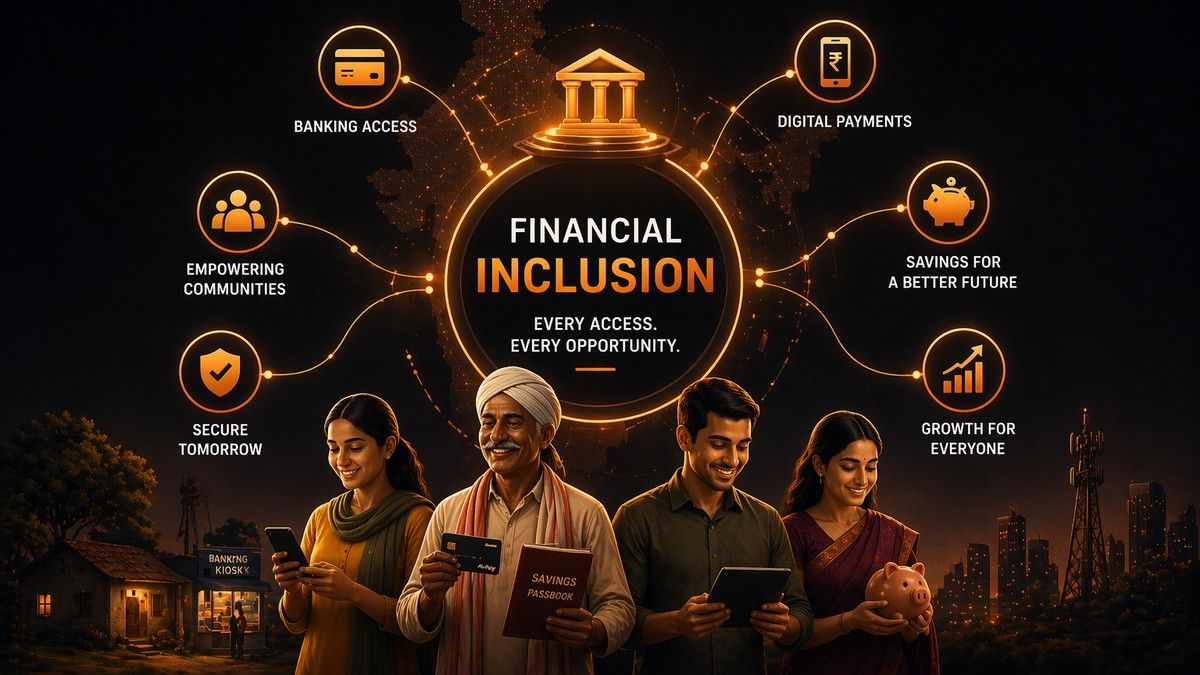
Financial Inclusion in India: Meaning, Importance, Challenges & Future Growth
Financial inclusion is a powerful driver of economic growth and social equality. It ensures that individuals and businesses-regardless of income level-can access essential financial services such as banking, credit, insurance, and digital payments.
In a diverse country like India, where a significant portion of the population lives in rural and semi-urban areas, financial inclusion plays a critical role in reducing economic disparities and empowering communities to participate in the formal economy.
Table of Contents
What is Financial Inclusion?
Financial Inclusion in India
Examples of Financial Inclusion
Types of Financial Inclusion
Importance of Financial Inclusion
How Financial Inclusion Works
Challenges of Financial Inclusion in India
Risks Associated with Financial Inclusion
What is Financial Inclusion?
Financial inclusion refers to the process of making financial products and services accessible, affordable, and usable for all individuals and businesses. The primary objective is to eliminate barriers that prevent people from participating in the formal financial system.
In India, the focus is on extending these services to economically weaker sections and low-income groups at reasonable and sustainable costs.
Financial Inclusion in India
As defined by the Committee on Financial Inclusion (Chairman: Dr. C. Rangarajan), financial inclusion in India aims to provide timely and affordable access to essential financial services, including:
- Savings accounts
- Credit facilities
- Insurance products
- Payment systems
These services are particularly targeted at underserved and vulnerable populations to ensure equitable financial participation.
Examples of Financial Inclusion
Pradhan Mantri Jan Dhan Yojana (PMJDY): Provides zero-balance bank accounts with additional benefits
Digital Payment Systems: UPI, BHIM, Aadhaar Pay, and mobile wallets
Banking Kiosks & Bank on Wheels: Deliver banking services in rural and remote areas
Microcredit: Small loans to support self-employment and entrepreneurship
Alternative Credit Scoring: Uses non-traditional data like utility bills for lending decisions
Types of Financial Inclusion
1. Banking Inclusion
Access to basic banking services such as savings accounts and deposits
2. Credit Inclusion
Availability of loans for individuals with little or no credit history
3. Insurance Inclusion
Affordable life, health, and microinsurance coverage
4. Payment Inclusion
Access to digital and cashless payment systems
5. Savings Inclusion
Encouraging savings habits through accessible financial tools
6. Digital Financial Inclusion
Use of fintech innovations to expand financial access
7. Geographical Inclusion
Extending financial services to remote and underserved areas
Importance of Financial Inclusion
1. Reduces Poverty
Access to financial tools helps improve income stability and economic conditions
2. Enhances Financial Security
Savings, insurance, and pension schemes provide financial safety nets
3. Encourages Entrepreneurship
Access to credit enables small businesses and job creation
4. Promotes Economic Growth
Higher savings and investments contribute to GDP growth
5. Reduces Inequality
Ensures equal access to financial opportunities
6. Empowers Women
Improves financial independence and participation
7. Strengthens Communities
Enables better access to healthcare, education, and essential services
How Financial Inclusion Works
Financial inclusion operates through five key principles:
Access: Availability of financial services
Affordability: Low-cost and inclusive pricing
Transparency: Ethical and clear financial practices
Competition: Encourages innovation and better service delivery
Regulation: Ensures safety, trust, and compliance
Challenges of Financial Inclusion in India
Low Financial Literacy: Limited awareness of financial products and services
Digital Divide: Inadequate internet access and smartphone penetration
Gender Disparity: Cultural and social barriers restricting participation
Infrastructure Gaps: Lack of banks, ATMs, and digital infrastructure in rural areas
High Costs: Fees and interest rates may be unaffordable for low-income users
Risks Associated with Financial Inclusion
1. Consumer Risks
Fraud, misinformation, and poor financial decisions due to a lack of awareness
2. Operational Risks
Issues arising from third-party service providers or intermediaries
3. Strategic Risks
Failure of initiatives due to poor planning or regulatory changes
4. Financial Risks
Loan defaults due to insufficient borrower data
Conclusion
Financial inclusion is more than just a policy initiative—it is the backbone of inclusive economic development. By enabling access to essential financial services, it empowers individuals, supports entrepreneurship, and strengthens the overall economy.
With the rapid growth of fintech and digital infrastructure, India is steadily moving toward a more inclusive and efficient financial ecosystem, ensuring that no one is left behind.
Frequently Asked Questions (FAQs)
Q. What is financial inclusion in simple terms?
Financial inclusion means ensuring that everyone has access to basic financial services like banking, loans, insurance, and digital payments.
Q. Why is financial inclusion important in India?
It helps reduce poverty, promotes economic growth, and ensures equal financial opportunities for all sections of society.
Q. What are some examples of financial inclusion in India?
Examples include PMJDY accounts, UPI payments, microloans, banking kiosks, and mobile wallets.
Q. What are the main challenges of financial inclusion?
Key challenges include low financial literacy, digital divide, lack of infrastructure, and affordability issues.
Q. How does digital technology support financial inclusion?
Digital platforms like UPI, mobile banking, and fintech apps make financial services more accessible and affordable.
Q. Who benefits the most from financial inclusion?
Economically weaker sections, rural populations, women, and small business owners benefit the most.
Related Posts
What is E-Banking? Meaning, Types, Benefits & How It Works in India.
E-banking is the digital way of accessing banking services through mobile apps, websites, ATMs, and biometric systems. It enables secure, fast, and branchless financial transactions anytime and anywhere in India.
Read More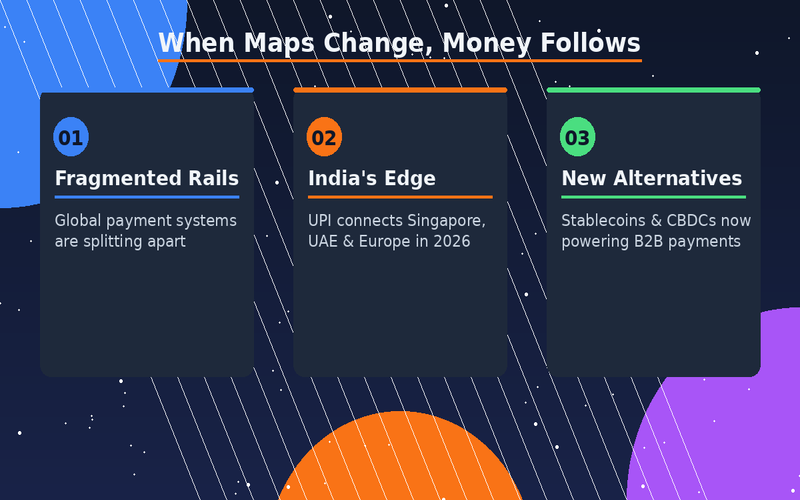
When Maps Change, Money Follows: How Geopolitics Is Rewiring B2B Payments in 2026
Payments are no longer just a plumbing problem — they're a geopolitical one. Explore how Indian B2B businesses can navigate a fragmented, fast-changing global payment landscape
Read More
What Happens Inside an Escrow Release Event? A Step-by-Step Breakdown for Businesses
A complete breakdown of escrow release events—covering triggers, validation, vendor response, and access to source code—helping businesses ensure continuity and minimize vendor risk.
Read MoreReady to Protect Your Core Systems?
Join enterprises that trust SprintEX-Code to safeguard their mission-critical software. Get started with a consultation to discuss your specific escrow requirements.