
Escrow vs Letter of Credit: What's the Difference and When to Use Each?
Apr 29, 2025
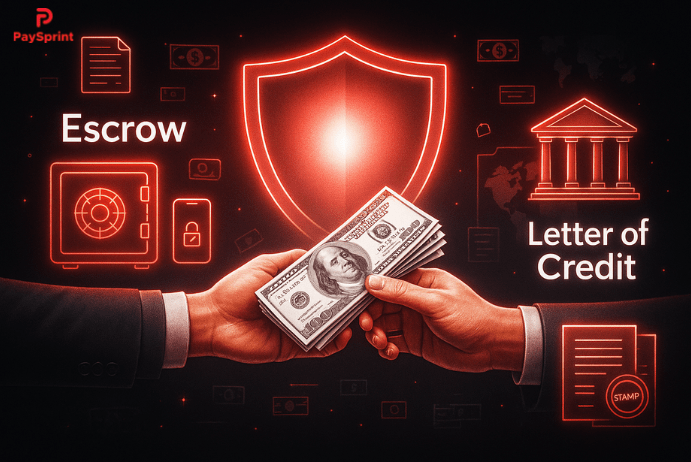
Escrow vs Letter of Credit: What's the Difference and When to Use Each?
Escrow and letters of credit (LCs) are two powerful financial tools designed to build trust and reduce risk in high-value or international transactions. In today’s global economy, where businesses frequently engage with unfamiliar partners across borders, securing payment and ensuring contractual obligations are met is critical. Whether you're closing a real estate deal, importing equipment, or outsourcing software development, these instruments offer structured protection. In this blog, we’ll break down what escrow and LCs are, how they differ, and which one might be the better fit for your specific use case.
Table of Contents
What is Escrow?
What is a Letter of Credit?
Escrow vs. Letter of Credit: A Quick Comparison
When to Use Escrow vs. LC
Real-World Applications and Case Studies
Conclusion
Frequently Asked Questions (FAQs)
Understanding Escrow
Escrow is a financial arrangement in which a neutral third party (usually an escrow agent or trustee) holds funds or assets on behalf of the buyer and seller until all agreed conditions are met.
Key Features:
Funds are held by a trusted third party.
Terms and conditions are defined by both parties.
Release of funds is conditional upon milestone or deliverable confirmation.
Offers flexibility in structuring terms.
Common Use Cases:
Real estate deals (especially under RERA in India)
Mergers & acquisitions
Freelance or service-based transactions
Software licensing and source code protection
Process Overview:
Parties agree on terms and sign an escrow agreement.
The buyer deposits funds into the escrow account.
Upon verification of conditions (e.g., delivery, documentation), funds are released to the seller.
Related: https://sprintexcrow.in/blog-details.html?slug=escrow-in-embedded-finance-secure-transactions
Understanding Letters of Credit
A Letter of Credit (LC) is a guarantee issued by a bank on behalf of a buyer, promising to pay the seller once certain conditions (usually delivery of goods or documents) are fulfilled.
Key Features:
A bank acts as a guarantor for the transaction.
Primarily used in international trade.
Requires strict compliance with documentation.
Various types: Irrevocable, revocable, standby, transferable, confirmed LCs.
Common Use Cases:
Cross-border trading of goods and services
High-value exports/imports
Government or defense procurement deals
Process Overview:
Buyer requests LC from their bank.
Bank issues LC in favor of the seller.
Seller ships goods and submits documents to the bank.
The bank verifies compliance and releases payment.
Escrow vs Letter of Credit: A Detailed Comparative Analysis
Choosing the Right Instrument
When to Use Escrow:
You need flexibility in defining transaction milestones.
You’re transacting domestically or digitally.
You want third-party monitoring and milestone-based payouts.
You're dealing with software, real estate, or services.
When to Use Letter of Credit:
You're engaged in high-value international trade.
Regulatory norms require verified documentation.
The buyer and seller do not have an existing relationship.
Banks and compliance mechanisms are trusted by both sides.
Real-World Applications and Case Studies
Case Study 1: Real Estate Escrow
In India, under RERA regulations, developers must deposit up to 70% of buyer payments into an escrow account. These funds are released only after construction milestones (foundation, structure, finishing) are certified—protecting buyers from project delays or fund misuse.
Case Study 2: Letter of Credit in Trade
An electronics distributor in India imports semiconductor chips from Taiwan. The Taiwanese supplier requests a Letter of Credit to ensure payment. The Indian buyer’s bank issues an LC, guaranteeing that funds will be transferred upon proof of shipment and quality documentation. The seller ships confidently, knowing the LC secures their payment.
Conclusion
While both escrow accounts and letters of credit help build trust between transacting parties, they serve different purposes and are suited to different types of transactions.
Use escrow for milestone-based domestic or service-based deals that need flexibility and neutrality.
Use letters of credit for high-risk, high-value, cross-border trade that requires rigorous documentation and bank-backed guarantees.
Understanding their core differences allows businesses to make informed choices that protect their money and relationships.
Frequently Asked Questions (FAQs)
What is the main difference between an escrow account and a letter of credit?
Escrow involves a neutral third party holding funds until conditions are met, while a letter of credit is a bank guarantee ensuring payment upon fulfillment of conditions.
Can I use both escrow and LC in the same transaction?
Yes, in some complex transactions (like cross-border real estate), both can be used to provide additional layers of protection.
Which is more cost-effective—escrow or letter of credit?
Escrow is generally more cost-effective, especially for domestic or tech-driven deals. LCs can be more expensive due to bank fees.
Is an LC safer than an escrow account?
Not necessarily—both are secure. LCs are backed by banks and ideal for large international deals. Escrow is more flexible and suited for milestone-based or smaller transactions.
Related Posts
What is E-Banking? Meaning, Types, Benefits & How It Works in India.
E-banking is the digital way of accessing banking services through mobile apps, websites, ATMs, and biometric systems. It enables secure, fast, and branchless financial transactions anytime and anywhere in India.
Read More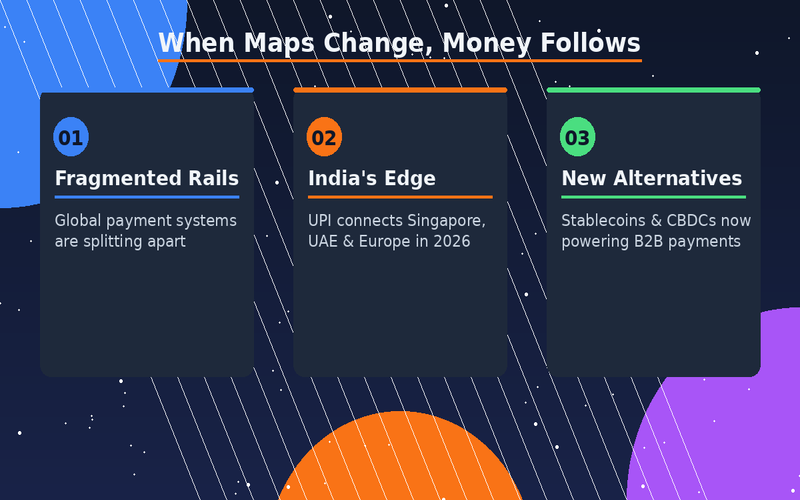
When Maps Change, Money Follows: How Geopolitics Is Rewiring B2B Payments in 2026
Payments are no longer just a plumbing problem — they're a geopolitical one. Explore how Indian B2B businesses can navigate a fragmented, fast-changing global payment landscape
Read More
What Happens Inside an Escrow Release Event? A Step-by-Step Breakdown for Businesses
A complete breakdown of escrow release events—covering triggers, validation, vendor response, and access to source code—helping businesses ensure continuity and minimize vendor risk.
Read MoreReady to Protect Your Core Systems?
Join enterprises that trust SprintEX-Code to safeguard their mission-critical software. Get started with a consultation to discuss your specific escrow requirements.