
Contract Management Software for Logistics Companies | 2026 Guide
Oct 09, 2026
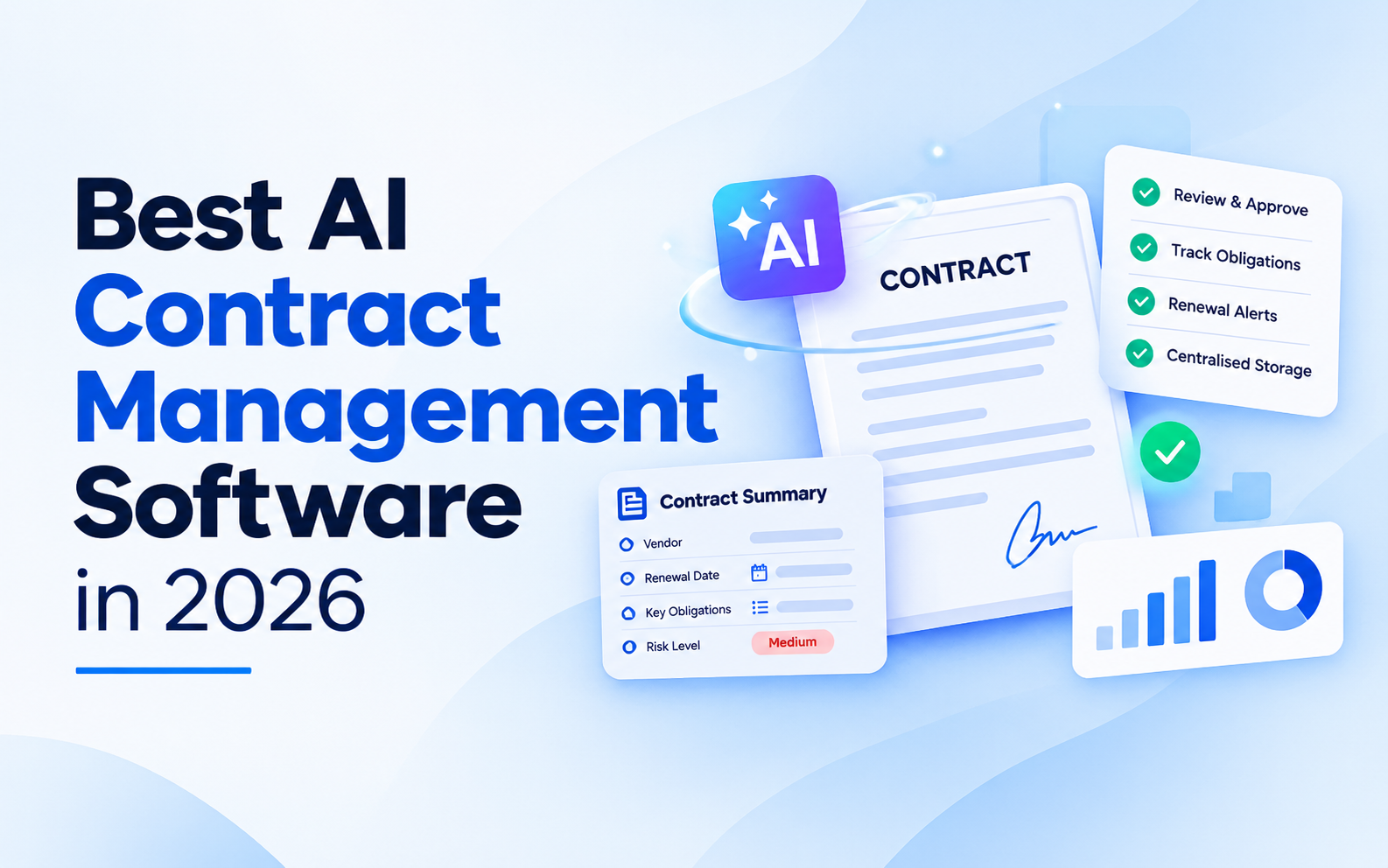
Best Contract Management Software for Logistics Companies in 2026: Features, Use Cases & Buyer’s Guide
The best contract management software for logistics companies is one that centralises vendor and service agreements, automates approvals, tracks SLAs and contractual obligations, sends renewal alerts, and provides visibility across the entire contract lifecycle.
For logistics businesses managing transport partners, warehouses, suppliers, technology vendors and enterprise customers, contract management quickly becomes more complicated than simply storing agreements.
Every contract may contain different rates, service levels, liabilities, notice periods, penalties, renewal dates and operational commitments.
As the number of vendors, customers and locations grows, managing all of this through spreadsheets, emails and shared folders becomes difficult to scale.
This is where contract management software for logistics companies can help.
Platforms such as SprintContractX bring contract creation, approvals, e-signatures, storage, obligation monitoring and renewals into one structured workflow, helping legal, procurement and operations teams maintain better control over agreements throughout their lifecycle. paysprint.in
Table of Contents
What Is Contract Management Software for Logistics?
Why Do Logistics Companies Need Contract Management Software?
Which Contracts Do Logistics Companies Need to Manage?
Common Contract Management Challenges in Logistics
Features to Look for in Logistics Contract Management Software
How AI Is Changing Logistics Contract Management
How SprintContractX Helps Logistics Companies
How to Choose the Right Contract Management Software
Who Should Use Logistics Contract Management Software?
Frequently Asked Questions
Conclusion
What Is Contract Management Software for Logistics?
Contract management software for logistics is a digital platform used to create, review, approve, execute, store, monitor and renew agreements between logistics businesses and their customers, vendors, carriers, warehouses and other partners.
Instead of managing contracts through disconnected email threads, spreadsheets and folders, a contract management platform creates a central system where teams can see:
What agreements are active
Who owns each contract
Which approvals are pending
What obligations must be fulfilled
When contracts or rate agreements expire
Which SLAs require monitoring
Which agreements need renewal or renegotiation
Modern contract lifecycle management platforms go beyond document storage. They can automate workflows and help teams manage contracts from initial request through execution and renewal.
SprintContractX, for example, combines AI-assisted contract drafting, approval workflows, integrated e-signatures, obligation tracking, renewal management, centralised storage and reporting within one platform.
Why Do Logistics Companies Need Contract Management Software?
Logistics is highly dependent on contractual relationships.
A single logistics company may work simultaneously with:
Transporters and fleet operators
Contracts can define freight rates, delivery timelines, liabilities, fuel adjustments and service commitments.Warehouse providers
Agreements can contain storage charges, capacity commitments, security responsibilities and service levels.Third-party logistics providers
Businesses working with multiple 3PL partners need visibility into commercial terms, performance obligations and renewal schedules.
Technology providers
Logistics businesses increasingly rely on transportation management systems, warehouse systems, GPS providers, payment platforms and SaaS products.
Enterprise customers
Customer contracts may contain customised pricing, delivery SLAs, volume commitments, penalties and liability clauses.
Suppliers and service providers
Packaging, maintenance, insurance, staffing and infrastructure providers can introduce additional agreements.
Managing these relationships becomes significantly harder as contract volumes increase.
Contracting quality also affects supplier and vendor performance. McKinsey has noted that weaknesses across contract development, writing, implementation and vendor management can prevent companies from extracting the full value of supplier relationships.
Which Contracts Do Logistics Companies Need to Manage?
A logistics organisation may manage dozens of contract categories.
Common examples include:
A central contract repository allows all these agreements to be organised and searched without relying on individual employees to remember where documents are stored.
SprintContractX supports a range of agreement types including vendor agreements, NDAs, MSAs, SLAs and service contracts.
Common Contract Management Challenges in Logistics
1. Contracts Are Scattered Across Teams
Some agreements may sit with procurement.
Others may be stored with operations, finance, legal or regional teams.
This makes a seemingly simple question difficult to answer:
“Where is the latest transporter agreement?”
A centralised contract repository creates a single source of truth.
2. Renewal Dates Get Missed
A missed notice period can result in:
Automatic renewals
Continued unfavourable pricing
Lost negotiation opportunities
Unnecessary vendor relationships
Structured renewal planning is particularly important in procurement and vendor management because organisations often need sufficient preparation time before negotiations begin. Gartner
Automated alerts can notify contract owners before renewal or termination windows approach.
3. SLAs Are Written Down but Not Actively Tracked
Logistics agreements commonly contain service commitments such as:
Delivery timelines
Pickup schedules
Damage limits
Response times
Availability commitments
Performance targets
Having an SLA written inside a PDF does not automatically mean someone is monitoring it.
Contract management software can make these obligations easier to identify and track.
4. Approval Processes Become Slow
A logistics contract may require input from:
Operations ? Procurement ? Finance ? Legal ? Management
When this process operates through email, teams often spend time asking:
“Has finance approved this?”
“Who has the latest version?”
“Is legal reviewing it?”
Workflow automation can route agreements to predefined stakeholders automatically.
5. Different Teams Use Different Contract Versions
Version confusion is particularly risky when commercial terms are changing.
One department may have an old freight rate.
Another may have the amended version.
A CLM system maintains contract history and gives authorised teams access to the current document.
6. Important Obligations Stay Hidden Inside Documents
An agreement may contain hundreds of clauses, but operations may only need to know a handful of critical obligations.
For example:
Deliver within the agreed time window.
Maintain specified insurance coverage.
Provide performance reports every month.
Give 60 days' notice before termination.
Those obligations can easily be overlooked when contracts are treated purely as static documents.
What Features Should Logistics Contract Management Software Have?
When evaluating contract management software for logistics, companies should prioritise capabilities that support both legal governance and day-to-day operations.
1. Centralised Contract Repository
Every contract should be stored in one searchable system.
Teams should be able to find agreements using information such as:
Vendor
Customer
Contract type
Contract owner
Expiry date
Location
Clause
Status
SprintContractX provides full-text search and smart filtering across its centralised contract repository.
2. Automated Approval Workflows
Different contracts require different approval structures.
For example:
A small vendor agreement might require:
Procurement ? Finance
A high-value logistics contract might require:
Procurement ? Operations ? Finance ? Legal ? Management
The platform should support configurable approval workflows.
SprintContractX can route approvals using factors such as contract value, risk tier, geography and contract type.
3. Contract Drafting and Templates
Teams should not recreate agreements from scratch every time.
Standardised templates help organisations maintain consistency across:
Transporter contracts
Vendor agreements
NDAs
Service agreements
SLAs
Approved clause libraries can further reduce inconsistency.
4. Integrated E-Signatures
Once agreements are approved, teams should be able to move directly into execution.
Integrated e-signatures reduce the need to:
Download ? Email ? Sign ? Scan ? Upload again.
SprintContractX includes integrated e-signature functionality and audit trails within the contract workflow.
5. Obligation Tracking
This is particularly important for logistics businesses.
The system should help teams identify and monitor commitments such as:
Delivery obligations
Payment responsibilities
Reporting requirements
Performance thresholds
Insurance requirements
Notice periods
6. Renewal Alerts
The system should automatically notify contract owners before:
Expiry dates
Renewal deadlines
Notice periods
Commercial review dates
This allows procurement teams to negotiate proactively instead of reacting after an agreement has renewed.
7. SLA Tracking
A logistics contract management platform should make important SLA commitments visible to relevant teams.
For example:
Vendor: ABC Transport
SLA: 98% on-time delivery
Review Frequency: Monthly
Renewal: 30 June 2027
This is far more useful operationally than leaving the information buried on page 18 of a contract.
8. Audit Trails
For every agreement, organisations should know:
Who created it
Who changed it
Who approved it
Which version was signed
When it was executed
SprintContractX maintains contract version history and audit trails to improve governance and audit readiness.
9. Role-Based Access
Not every employee should see every commercial or legal agreement.
Contract management platforms should provide permission controls based on roles and responsibilities.
10. Analytics and Reporting
Leadership should be able to understand the organisation's contract portfolio.
Useful metrics may include:
Contracts expiring this quarter
Contracts awaiting approval
Average contract cycle time
Vendor contracts by category
High-risk agreements
Upcoming renewals
Contract ownership
SprintContractX provides contract analytics and reporting for areas including approval activity, cycle times and portfolio risk visibility.
How Is AI Changing Contract Management for Logistics?
Traditional contract management software helps organisations store and organise contracts.
AI-powered contract management software can also help organisations understand them.
This distinction becomes valuable for logistics companies managing large contract volumes.
Instead of manually reading every agreement, AI can help surface relevant contractual information more quickly.
AI Contract Drafting
Teams can create first drafts using approved templates and clauses.
Clause Intelligence
AI can help identify unusual or non-standard clauses that require review.
Obligation Extraction
The system can identify commitments contained within contracts and turn them into structured information.
Contract Search
Instead of searching folder names, users can ask questions such as:
“Show me transporter contracts expiring next quarter.”
or
“Which agreements have a 60-day termination notice period?”
Risk Identification
AI can help highlight clauses or conditions that differ from approved standards.
SprintContractX uses AI across contract drafting, clause analysis, obligation tracking and contract information retrieval.
How SprintContractX Helps Logistics Companies Manage Contracts
SprintContractX is an AI-powered contract lifecycle management platform designed to manage contracts from creation through renewal in one system.
For logistics businesses, this means contracts do not need to move between separate tools for drafting, approval, signing, storage and tracking.
Centralise Logistics Contracts
Store transporter, vendor, customer, warehouse, SLA and service agreements in one searchable repository.
Standardise Contract Creation
Use approved templates and clauses to create consistent agreements.
Automate Approvals
Configure workflows so agreements automatically reach the relevant procurement, operations, finance and legal stakeholders.
Collaborate and Redline
Teams can review, comment and negotiate agreements while maintaining version history.
Sign Digitally
Execute contracts using integrated e-signatures without moving documents between separate systems.
Track Contractual Obligations
Identify important commitments, milestones and responsibilities.
Monitor Renewals
Receive alerts before renewal dates and notice periods.
Analyse Contract Portfolios
Provide legal and procurement teams with better visibility into agreements, risks and upcoming actions.
SprintContractX's published workflow covers contract request, AI-assisted drafting, collaboration, approval and signing, followed by obligation, renewal and analytics management.
Example: Managing a Transporter Agreement Without vs With Contract Management Software
Without Contract Management Software
A procurement manager receives a transporter agreement through email.
Operations sends pricing changes.
Finance comments in another email thread.
Legal edits a downloaded Word file.
The transporter returns another version.
The signed PDF goes into a shared folder.
Six months later, no one remembers the renewal deadline.
With Contract Management Software
Contract request created
?
Approved transporter template selected
?
Commercial terms added
?
Operations review
?
Finance approval
?
Legal approval
?
E-signature
?
Contract stored centrally
?
Obligations monitored
?
Renewal alert triggered
Instead of managing a document, the organisation manages a contract lifecycle.
How to Choose the Best Contract Management Software for a Logistics Company
Before purchasing a platform, ask these questions.
Can it manage our different logistics contracts?
Confirm whether the system supports transporter, supplier, customer, warehouse and service agreements.
Can approval workflows be customised?
Your procurement process may differ based on geography, contract value or business unit.
The software should adapt to this.
Can it monitor renewals and obligations?
Storage alone is not enough.
Look for active alerts and obligation management.
Can teams search inside contracts?
Legal and procurement users should be able to quickly locate specific clauses and commercial terms.
Does it support AI contract intelligence?
AI capabilities can reduce the amount of manual contract review required.
Does it integrate with existing business systems?
Logistics businesses often operate ERP, CRM and other enterprise applications.
SprintContractX supports integration with systems including CRM, ERP and HRM environments.
Does it provide role-based access and audit trails?
These features are important for contract governance and accountability.
Is the platform easy for business teams to use?
A sophisticated CLM platform provides little benefit if operations and procurement teams avoid using it.
Who Should Use Contract Management Software in a Logistics Company?
Contract management is not exclusively a legal-team responsibility.
Procurement Teams
Manage vendor agreements, commercial terms and renewals.
Legal Teams
Review clauses, risk, compliance and contract language.
Operations Teams
Monitor operational commitments and SLAs.
Finance Teams
Review pricing, payments and financial obligations.
Sales Teams
Manage customer agreements and commercial negotiations.
Management
Gain portfolio-level visibility into contract exposure and upcoming renewals.
A modern CLM platform connects these teams rather than forcing each department to maintain its own contract records.
What Are the Benefits of Contract Management Software for Logistics Companies?
A well-implemented logistics contract management system can help organisations achieve:
Better contract visibility
Teams know where contracts are and what stage they are in.Faster approvals
Automated workflows reduce manual follow-ups.Stronger vendor governance
Important obligations and SLAs become easier to monitor.Fewer missed renewals
Teams receive alerts before key dates.More consistent contracting
Approved templates and clauses reduce unnecessary variation.Improved audit readiness
Approval histories, versions and contract actions remain traceable.Less administrative work
Teams spend less time searching folders and coordinating contract status.Better contract intelligence
AI can help surface risks, obligations and clauses faster.
Frequently Asked Questions
What is the best contract management software for logistics companies?
The best contract management software for logistics companies should centralise agreements, automate approvals, support e-signatures, track SLAs and contractual obligations, send renewal alerts and provide searchable contract intelligence.
SprintContractX provides these capabilities through an end-to-end AI-powered contract lifecycle management platform.
Why do logistics companies need contract management software?
Logistics companies manage agreements across transporters, warehouses, vendors, customers and technology providers. Contract management software helps organise these agreements while automating approvals, tracking obligations and monitoring renewal dates.
What contracts can logistics contract management software manage?
It can manage transporter agreements, carrier contracts, SLAs, vendor agreements, warehouse contracts, customer agreements, technology contracts, NDAs, MSAs and other commercial agreements.
Can contract management software track SLAs?
Yes. Modern contract management platforms can capture contractual obligations and make important service commitments easier for teams to monitor.
Can contract management software prevent missed renewals?
It can significantly reduce the risk by automatically notifying contract owners before renewal and notice-period deadlines.
SprintContractX includes proactive renewal alerts and obligation management capabilities.
How does AI help with logistics contract management?
AI can help draft agreements, analyse clauses, identify potential risks, extract obligations and make contract information easier to search.
Is contract management software only for legal teams?
No. Procurement, finance, operations, sales and management teams can all benefit from contract lifecycle management because each team interacts with different contractual responsibilities.
Can SprintContractX integrate with other enterprise systems?
Yes. SprintContractX is designed to connect with enterprise systems including CRM, ERP and HRM environments.
Conclusion
For logistics companies, contracts are not simply legal documents.
They define pricing, service quality, operational responsibilities, commercial relationships, liabilities and business continuity.
As the number of transporters, suppliers, warehouses, customers and service providers increases, managing those contracts manually becomes increasingly difficult.
The right contract management software for logistics companies creates one structured system for managing the complete lifecycle:
Create ? Review ? Approve ? Sign ? Store ? Monitor ? Renew
SprintContractX by PaySprint brings these stages together with AI-powered drafting, intelligent approval workflows, integrated e-signatures, centralised contract storage, obligation monitoring, renewal alerts and contract analytics.
For logistics businesses looking to move beyond spreadsheets, shared drives and manual renewal tracking, SprintContractX provides a more structured way to manage contracts at scale.
CTA: Simplify Your Logistics Contract Lifecycle with SprintContractX ?
Related Posts

What is E-Banking? Meaning, Types, Benefits & How It Works in India.
E-banking is the digital way of accessing banking services through mobile apps, websites, ATMs, and biometric systems. It enables secure, fast, and branchless financial transactions anytime and anywhere in India.
Read More
When Maps Change, Money Follows: How Geopolitics Is Rewiring B2B Payments in 2026
Payments are no longer just a plumbing problem — they're a geopolitical one. Explore how Indian B2B businesses can navigate a fragmented, fast-changing global payment landscape
Read More
What Happens Inside an Escrow Release Event? A Step-by-Step Breakdown for Businesses
A complete breakdown of escrow release events—covering triggers, validation, vendor response, and access to source code—helping businesses ensure continuity and minimize vendor risk.
Read MoreReady to Protect Your Core Systems?
Join enterprises that trust SprintEX-Code to safeguard their mission-critical software. Get started with a consultation to discuss your specific escrow requirements.