
Contract Lifecycle Management (CLM): The Complete Guide
Aug 19, 2026
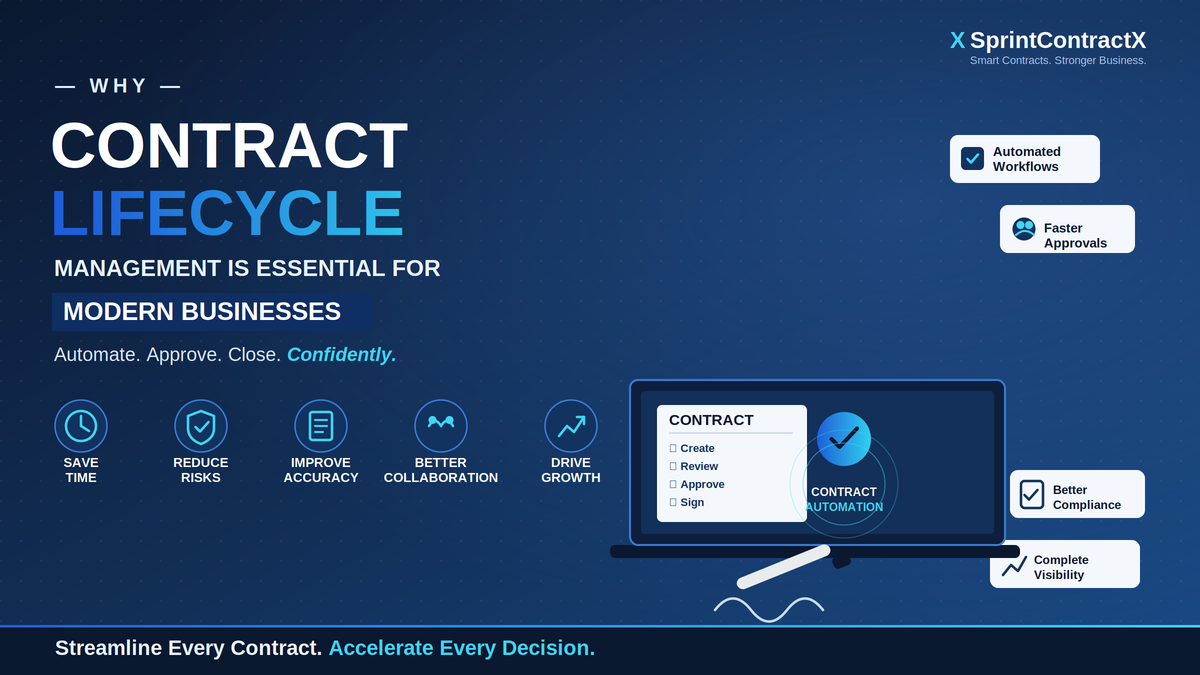
Contract Management Software: AI Contract Drafting
Contracts sit at the center of almost every business relationship — with customers, vendors, employees, and partners. Yet in many organizations, they're still tracked through scattered folders, email threads, and spreadsheets, with no single source of truth for what's signed, what's pending, or what's about to expire.
Contract Lifecycle Management (CLM) fixes that. It gives businesses a structured way to manage a contract from the moment it's requested to the day it's renewed or retired — reducing risk, speeding up deals, and freeing legal and sales teams from manual busywork.
Table of Contents
What is Contract Lifecycle Management (CLM)?
What are the benefits of contract lifecycle management?
What are the stages of the contract lifecycle management process?
How contract lifecycle management supports sales and revenue growth
How to implement contract lifecycle management
Key features of contract lifecycle management software
The next stage of contract lifecycle management
Frequently Asked Questions
What Is Contract Lifecycle Management (CLM)?
Contract Lifecycle Management (CLM) is the process of managing a contract through every stage of its life — from the initial request and drafting, through negotiation and approval, to signing, ongoing obligation tracking, and eventual renewal or termination.
Rather than treating a contract as a one-time event ("get it signed"), CLM treats it as an ongoing asset that needs active management for as long as it's in effect. That includes making sure payment terms are met, deadlines aren't missed, and renewal or cancellation windows are acted on before they close.
CLM can be handled manually, but as contract volume grows, most organizations adopt CLM software to standardize the process, reduce human error, and gain visibility across their entire contract portfolio. Modern platforms increasingly use AI to review contract language, extract key terms, and flag risk automatically.
What Are the Benefits of Contract Lifecycle Management?
A well-run CLM process delivers measurable value across legal, sales, procurement, and finance:
Faster contract turnaround — Standardized templates and automated approval routing cut cycle times from weeks to days.
Reduced legal and compliance risk — Contracts are reviewed against a consistent playbook, catching non-standard or risky clauses before signing.
Lower operational costs — Less manual review time means lower legal spend and fewer hours lost to administrative work.
Fewer missed obligations — Automated tracking of payment terms, SLAs, and deadlines prevents costly oversights.
Proactive renewal management — Alerts before renewal or cancellation windows close prevent unwanted auto-renewals and lost leverage.
Full portfolio visibility — Centralized reporting shows cycle times, risk exposure, and spend across every contract, not just the ones someone remembers to check.
Stronger audit readiness — A single, searchable repository with version history simplifies audits and dispute resolution.
What Are the Stages of the Contract Lifecycle Management Process?
Every contract, regardless of type, moves through the same general stages:
1. Request: A team identifies the need for a contract — a new vendor, a new hire, a customer deal, a partnership. A clear intake process here prevents bottlenecks later on.
2. Drafting (Authoring): The contract is created, ideally from pre-approved templates and clause libraries rather than written from scratch. This keeps language consistent and reduces legal review time.
3. Negotiation: Both parties review terms and propose changes. Historically, this is the slowest stage, often dragged out by email-based redlining. Centralized negotiation tools with version tracking speed this up considerably.
4. Approval: Before signing, the contract routes through internal stakeholders — legal, finance, department heads — for sign-off. Automated workflows ensure the right people approve without unnecessary delays.
5. Execution: The contract is signed, typically via e-signature, and becomes legally binding.
6. Obligation and Performance Management: This is where many organizations lose track. Signed contracts carry ongoing obligations — payment schedules, deliverables, SLAs, renewal windows — that need active monitoring, not a one-time check.
7. Renewal, Amendment, or Termination: As the contract nears expiration, it's reviewed for renewal, renegotiation, or termination. Auto-renewal clauses need especially close attention — missing a cancellation window can lock a company into unwanted terms for another term.
How Contract Lifecycle Management Supports Sales and Revenue Growth
CLM isn't just a legal or compliance function — it directly impacts how quickly a business can close deals and recognize revenue.
Shorter sales cycles — When contracts are generated from pre-approved templates and routed automatically for approval, sales reps can move from verbal agreement to signature in days instead of weeks.
Fewer deal-killing delays — Every round of manual redlining or a stalled approval is a chance for a deal to lose momentum or fall through. Automated workflows keep deals moving.
Faster time-to-revenue — The sooner a contract is signed, the sooner revenue can be recognized, and onboarding can begin.
Better forecasting — Sales and finance teams get real-time visibility into which deals are in negotiation, pending approval, or nearing signature — improving pipeline accuracy.
Stronger customer experience — A slow, clunky contracting process is often a customer's first real interaction with how a company operates internally. A fast, professional process builds confidence before the relationship even starts.
Renewal-driven revenue protection — Proactive renewal tracking prevents revenue leakage from missed renewal windows or accidentally lapsed customer contracts.
How to Implement Contract Lifecycle Management
Map your current contract process. Identify where delays happen today — is it drafting, negotiation, approvals, or tracking?
Standardize templates and clause libraries. Build an approved set of contract language before automating anything on top of it.
Define clear approval workflows. Decide who needs to sign off on what, and in what order, so approvals don't stall on ambiguity.
Choose the right CLM software. Prioritize integration with your existing tools (CRM, ERP, e-signature) and ease of adoption over feature bloat.
Migrate and tag existing contracts. Bring historical agreements into the new system with proper metadata so they're searchable and trackable from day one.
Train the teams who'll use it. Legal, sales, procurement, and finance all touch contracts — adoption fails if only one department is trained.
Monitor and refine. Use analytics to track cycle times and risk exposure, and continuously tighten the process based on what the data shows.
Key Features of Contract Lifecycle Management Software
When evaluating CLM software, look for:
Centralized repository — a single, searchable source of truth for every contract
Template and clause libraries — for consistent, pre-approved contract language
Configurable approval workflows — automatically routing contracts to the right stakeholders
AI-powered review — flagging risky or non-standard clauses and extracting key terms instantly
E-signature integration — with tools like DocuSign or Adobe Sign
Obligation and renewal tracking — automated alerts ahead of key dates
Reporting and analytics — visibility into cycle times, risk, and spend across the full portfolio
System integrations — with CRM, ERP, and procurement platforms (Salesforce, SAP, etc.)
Security and compliance controls — role-based access, encryption, and audit trails
The Next Stage of Contract Lifecycle Management
CLM is evolving quickly, driven largely by advances in AI. Where early CLM platforms mainly digitized storage and automated routing, the next generation is moving toward:
AI-assisted negotiation — suggesting counter-language and flagging deviations from playbook terms in real time, not just after the fact
Predictive analytics — using historical contract data to forecast negotiation outcomes, risk likelihood, and cycle times
Autonomous handling of routine contracts — AI managing low-risk, high-volume agreements (like standard NDAs) with minimal human review
Continuous compliance monitoring — tracking executed contracts against evolving regulations, not just at signing but throughout the contract's life
Deeper system integration — CLM becoming a connected layer across CRM, ERP, and procurement rather than a standalone tool
Organizations that treat CLM as a static, one-time implementation will fall behind those that continue to refine it as these capabilities mature.
Conclusion: Contract Lifecycle Management
Contract Lifecycle Management turns contracts from static paperwork into an actively managed process — one that reduces risk, speeds up deals, and protects revenue as contract volume grows. Whether you're formalizing a manual process for the first time or upgrading to an AI-powered platform, the goal stays the same: manage contracts as an ongoing asset, not a one-time event.
Frequently Asked Questions
What does CLM stand for?
CLM stands for Contract Lifecycle Management — the process of managing a contract from request through renewal or termination.
What are the main stages of CLM?
Request, drafting, negotiation, approval, execution, obligation management, and renewal or termination.
Is CLM software necessary for small businesses?
Not always. Companies with low contract volume can manage manually, but as volume grows, manual tracking becomes error-prone, and CLM software becomes increasingly valuable.
How does CLM help revenue growth?
CLM shortens sales cycles by speeding up drafting, negotiation, and approvals, which accelerates time-to-revenue and reduces the chance of deals stalling or falling through during contracting.
Does CLM require AI?
No — CLM as a concept predates AI. However, most modern CLM platforms now include AI features like automated risk flagging and clause extraction to speed up the process.
What's the difference between CLM and e-signature software?
E-signature software (like DocuSign) only covers the signing step. CLM covers the entire lifecycle — drafting, negotiation, approval, signing, and post-signature obligation tracking.
Related Posts
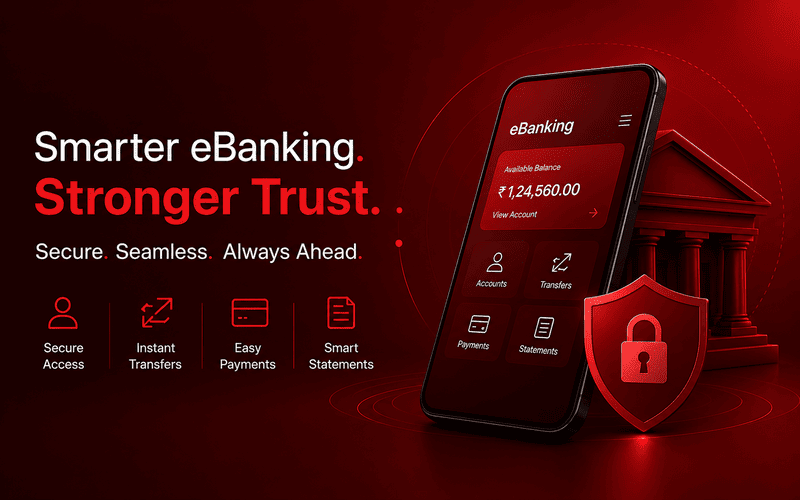
What is E-Banking? Meaning, Types, Benefits & How It Works in India.
E-banking is the digital way of accessing banking services through mobile apps, websites, ATMs, and biometric systems. It enables secure, fast, and branchless financial transactions anytime and anywhere in India.
Read More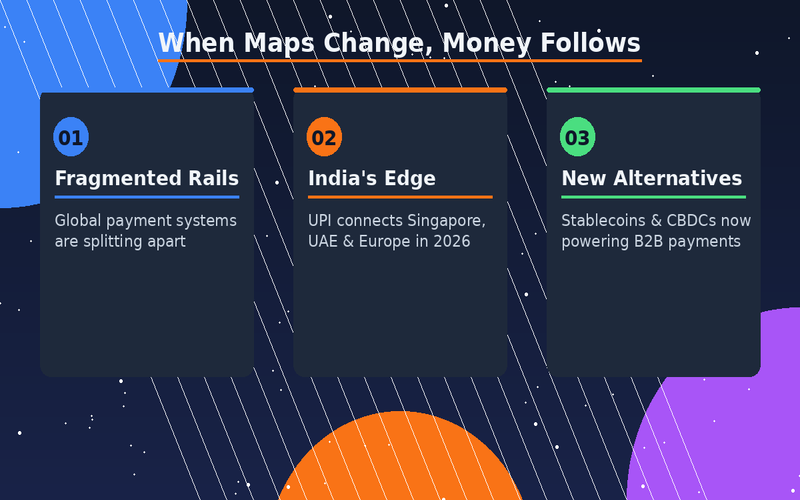
When Maps Change, Money Follows: How Geopolitics Is Rewiring B2B Payments in 2026
Payments are no longer just a plumbing problem — they're a geopolitical one. Explore how Indian B2B businesses can navigate a fragmented, fast-changing global payment landscape
Read More
What Happens Inside an Escrow Release Event? A Step-by-Step Breakdown for Businesses
A complete breakdown of escrow release events—covering triggers, validation, vendor response, and access to source code—helping businesses ensure continuity and minimize vendor risk.
Read MoreReady to Protect Your Core Systems?
Join enterprises that trust SprintEX-Code to safeguard their mission-critical software. Get started with a consultation to discuss your specific escrow requirements.