
Cash Management System (CMS): Meaning, Types, Features & Benefits Explained
Jun 22, 2025
Cash Management System (CMS): Meaning, Types, Features & Benefits Explained
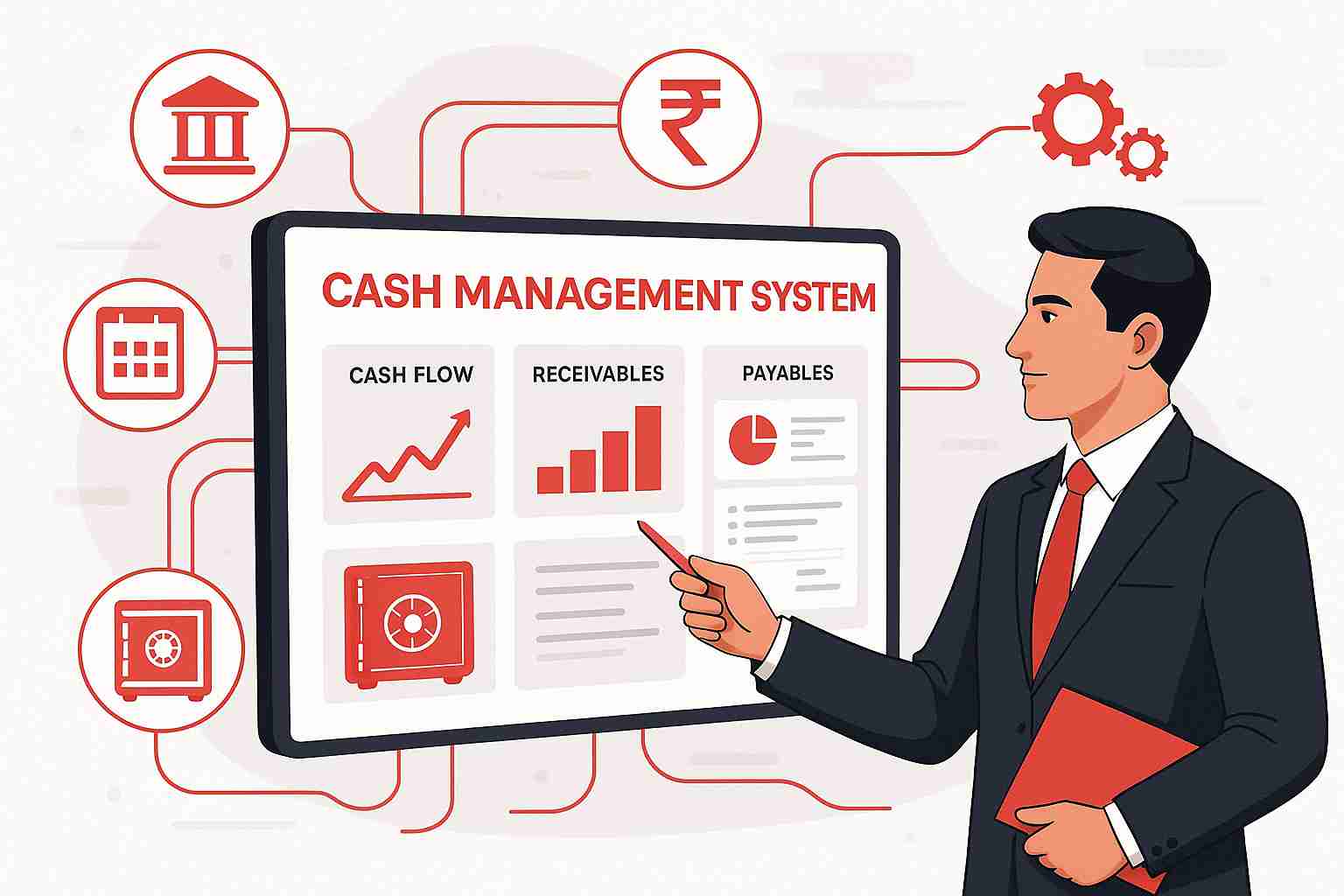
A Cash Management System (CMS) is a digital solution that helps businesses monitor, control, and optimize their cash flow. By automating collections, disbursements, and forecasting, it reduces manual effort and improves overall financial efficiency.
In this guide, we’ll break down what a CMS is, how it works, its different types, and the key benefits it offers to modern businesses.
Table of Contents
What is a Cash Management System (CMS)?
Why Is Cash Management Important?
How Does a Cash Management System Work?
Types of Cash Management Systems
Key Features of a Good CMS
Benefits of Using a Cash Management System
Who Needs a CMS?
What is a Cash Management System (CMS)?
A Cash Management System (CMS) is a software platform that enables businesses to manage, monitor, and optimize their cash flow, collections, disbursements, and liquidity.
It integrates seamlessly with banking systems, payment gateways, and ERP platforms to provide complete visibility and control over financial operations—helping businesses make faster and smarter financial decisions.
Why Is Cash Management Important?
Effective cash management is critical for maintaining financial stability and long-term business growth. Poor cash control can lead to operational disruptions and missed opportunities.
Here’s why it matters:
Prevents delayed payments and payroll issues
Reduces the risk of poor financial decisions
Avoids excess idle cash or unnecessary overdrafts
Lowers borrowing costs through better planning
Improves vendor relationships with timely payments
How Does a Cash Management System Work?
A CMS automates and streamlines the flow of money within a business. Its core functions include:
1. Cash Flow Monitoring
Tracks real-time inflows and outflows across multiple accounts.
2. Collections Management
Automates receivables tracking, reconciliation, and follow-ups.
3. Payments & Disbursements
Enables efficient payouts such as vendor payments, salaries, and bulk transfers.
4. Liquidity Optimization
Analyzes cash positions and suggests fund allocation or investment decisions.
5. Reporting & Forecasting
Generates detailed reports and forecasts future cash flow for better planning.
Types of Cash Management Systems
1. Bank-Based CMS
Offered by commercial banks, these systems are ideal for large enterprises with high transaction volumes. They provide reliability, built-in workflows, and direct access to banking tools.
2. Third-Party CMS Providers
Developed by fintech or SaaS companies, these solutions are flexible, API-driven, and easy to integrate with existing systems. They’re ideal for startups, MSMEs, and mid-sized businesses.
3. In-House Treasury Systems
Built internally by large organizations, these systems offer maximum customization and control. However, they require significant resources, expertise, and maintenance.
Key Features of a Good CMS
A robust Cash Management System typically includes:
Real-time visibility across all bank accounts
Automated collections and payment workflows
Centralized dashboard for account aggregation
Auto-reconciliation of transactions
Role-based access control for security
Alerts, notifications, and custom dashboards
Predictive analytics and cash forecasting
API integrations with ERP, CRM, and accounting tools
Benefits of Using a Cash Management System
Improved Efficiency - Automation reduces manual work and operational delays.
Better Cash Flow Visibility - Real-time insights help businesses stay in control of finances.
Optimized Liquidity - Ensures funds are used efficiently and reduces idle cash.
Enhanced Security - Access controls and monitoring reduce fraud risks.
Smarter Decision Making - Accurate forecasting enables strategic financial planning.
Who Needs a CMS?
A CMS is valuable for businesses of all sizes:
SMEs managing multiple revenue streams
Retail chains & franchises handling large cash volumes
Logistics & courier companies managing COD payments
Fintech companies facilitating transactions
Large enterprises with complex treasury operations
How to Choose the Right CMS for Your Business
With so many options available, selecting the right Cash Management System comes down to a few key factors. Start by evaluating your business size and complexity, SMEs may benefit from a third party SaaS CMS, while large enterprises might need a bank-based or in-house solution. Integration is equally important, so ensure the platform connects seamlessly with your existing ERP, accounting software, and banking partners.
Scalability is another consideration worth prioritizing, as the right CMS should grow alongside your business and handle increasing transaction volumes without friction. Beyond that, pay close attention to security and compliance, look for role based access, audit trails, and adherence to relevant financial regulations. Finally, ease of use matters more than it often gets credit for; a clean dashboard and minimal onboarding time means faster adoption across your finance team. The right CMS should simplify your operations, not complicate them.
Conclusion
In today’s fast-moving business environment, a Cash Management System is no longer optional, it’s essential.
By enabling automation, real-time visibility, and smarter financial planning, a CMS helps businesses reduce costs, improve efficiency, and make confident decisions.
If you’re looking to streamline your financial operations, adopting a scalable, API-driven CMS can be a game-changer for your business.
Frequently Asked Questions (FAQs)
What is the purpose of a Cash Management System?
A CMS helps businesses track, manage, and optimize cash flow while automating collections, payments, and forecasting.
Is a CMS suitable for small businesses?
Yes, CMS platforms are scalable and highly beneficial for SMEs looking to improve cash flow management.
What features should I look for in a CMS?
Key features include real-time tracking, automation, integrations, reconciliation, and forecasting tools.
How is CMS different from accounting software?
Accounting software records financial data, while CMS focuses on real-time cash flow and liquidity management.
Can a CMS integrate with multiple banks and ERPs?
Yes, modern CMS platforms support seamless integration with multiple financial systems.
Related Posts
What is E-Banking? Meaning, Types, Benefits & How It Works in India.
E-banking is the digital way of accessing banking services through mobile apps, websites, ATMs, and biometric systems. It enables secure, fast, and branchless financial transactions anytime and anywhere in India.
Read More
When Maps Change, Money Follows: How Geopolitics Is Rewiring B2B Payments in 2026
Payments are no longer just a plumbing problem — they're a geopolitical one. Explore how Indian B2B businesses can navigate a fragmented, fast-changing global payment landscape
Read More
What Happens Inside an Escrow Release Event? A Step-by-Step Breakdown for Businesses
A complete breakdown of escrow release events—covering triggers, validation, vendor response, and access to source code—helping businesses ensure continuity and minimize vendor risk.
Read MoreReady to Protect Your Core Systems?
Join enterprises that trust SprintEX-Code to safeguard their mission-critical software. Get started with a consultation to discuss your specific escrow requirements.