
The BULK Payment API Revolution: 10 Ways It Transforms Businesses
Sep 18, 2025
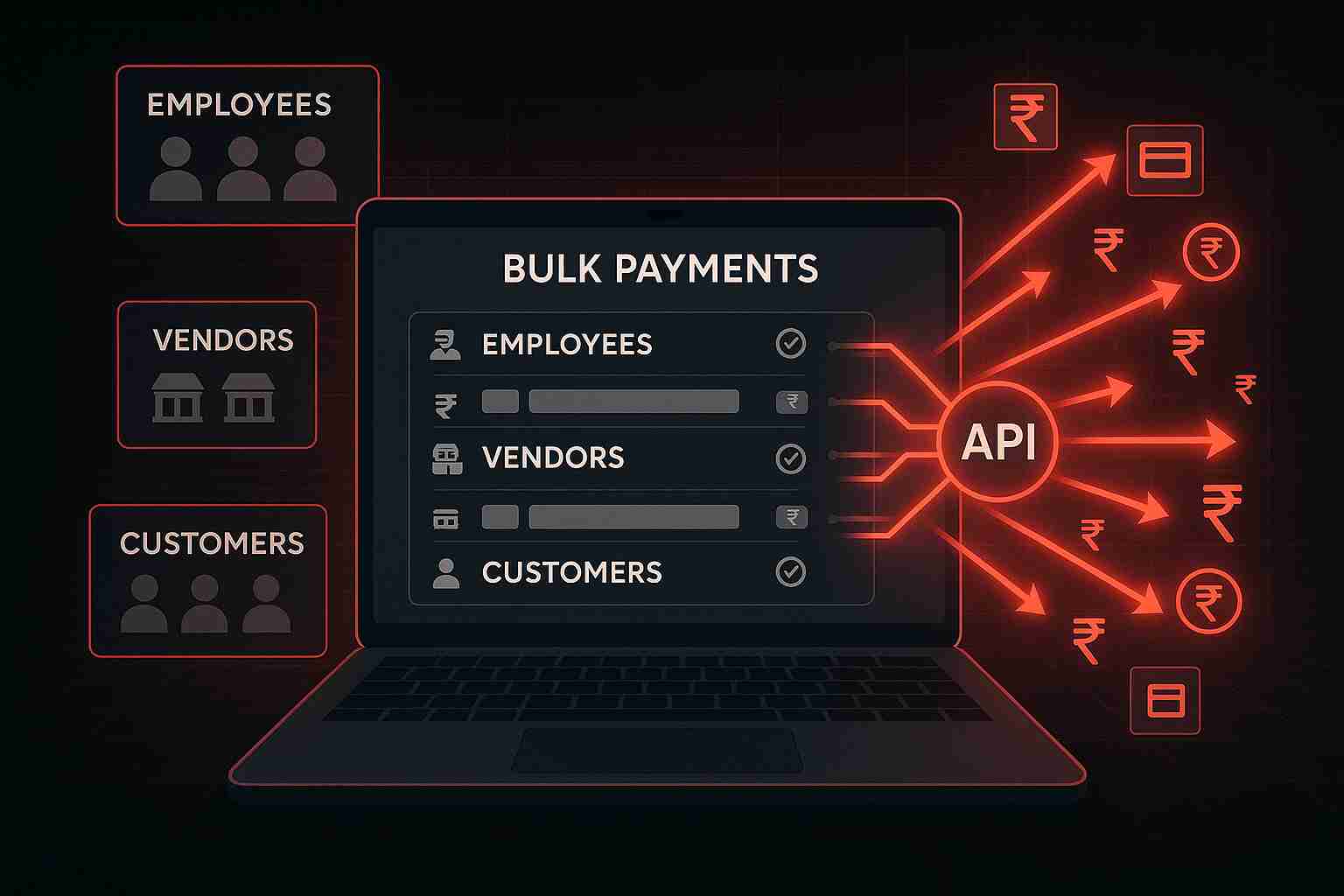
Bulk Payment
APIs are changing the way businesses handle transactions at scale. From payroll
to refunds, to vendor and NGO disbursements, the ability to automate, track,
and secure high-volume payments is now a vital edge. With innovations in API
technology, organizations of any size can deliver funds faster, improve
compliance, and dramatically reduce manual errors. Let’s explore the many ways
Bulk Payment APIs revolutionize enterprise payments and financial management.
Table of Contents
1.
Bulk
Payment API Use Cases
2.
Integrating
Bulk Payment API with Your System
3.
Bulk
Payment API vs. Traditional Banking Solutions
4.
Future
of Bulk Payment APIs
5.
Conclusion
6.
FAQs
About Bulk Payment API
Bulk Payment API Use Cases
Bulk Payment
APIs show their true power in versatility. Businesses across industries—from
fintech startups to multinational corporations—use them to simplify operations.
Let’s explore the most impactful use cases.
Salary Disbursements
1.
Salaries
are credited on the exact date.
2.
Errors
from incorrect account details are minimized.
3.
Payslips
and notifications are generated automatically.
This frees
HR teams from repetitive tasks and allows them to focus on employee engagement.
Vendor and Supplier Payments
1.
Recurring
vendor settlements can be scheduled.
2.
Partial
payments can be automated based on delivery milestones.
3.
Example:
E-commerce platforms auto-release payments once delivery is confirmed, building
trust and strengthening partnerships.
Refunds and Customer Payouts
1.
E-commerce:
Instant order refunds.
2.
Insurance:
Quick claim settlements.
3.
Gaming:
Instant withdrawals of winnings.
Speedy
refunds mean fewer complaints and happier customers.
Government and NGO Disbursements
1.
Transparency:
Real-time reports aid audits.
2.
Efficiency:
Funds reach recipients without delays.
3.
Security:
Account validation reduces fraud.
They are
transforming financial inclusion globally.
Integrating Bulk Payment API with Your System
API Documentation and SDKs
1.
Most
providers offer detailed docs, SDKs, and ERP plugins.
2.
Developers
can easily connect apps to APIs for seamless financial workflows.
Sandbox Testing and Deployment
1.
Companies
test integrations in sandbox mode before going live.
2.
Edge
cases like failed transactions or downtime are handled in advance, ensuring
smooth deployment.
Bulk Payment API vs. Traditional Banking Solutions
Speed and Automation
1.
Traditional
Banking: Manual uploads, 2–3 days settlement.
2.
Bulk
Payment API: Instant or same-day payments, fully automated.
Transparency and Tracking
1.
Traditional
Banking: Limited visibility post-upload.
2.
Bulk
Payment API: Real-time dashboards, transaction IDs, and webhook alerts.
Result: APIs
are faster, smarter, and far more reliable.
Future of Bulk Payment APIs
AI and Predictive Analytics
1.
AI-driven
APIs will predict payment trends.
2.
Detect
fraud in real-time.
3.
Ensure
compliance—minimizing financial risks.
Blockchain-Driven Payments
1.
Blockchain
integration will enable faster, cheaper, and transparent international payouts.
2.
Will
revolutionize cross-border bulk transactions.
Conclusion
The Bulk
Payment API isn’t just a tool—it’s a revolution in financial management. By
automating payouts, reducing errors, and enabling real-time settlements, it
empowers businesses to scale seamlessly.
From
employee salaries to vendor settlements, refunds, and welfare schemes — APIs
deliver efficiency, speed, and transparency.
As digital
adoption accelerates, Bulk Payment APIs will soon shift from being an advantage
to being a necessity. Businesses that embrace them early will enjoy stronger
compliance, better efficiency, and higher customer satisfaction.
FAQs About Bulk Payment API
What is a Bulk Payment API?
A Bulk
Payment API is a tool that automates and executes multiple payments at once,
reducing errors and saving time.
Is Bulk Payment API secure?
Yes. APIs
use encryption, tokenization, and standards like PCI-DSS for safe transactions.
Can small businesses use Bulk Payment APIs?
Absolutely.
They are affordable and help even small firms automate finances.
How does a Bulk Payment API improve customer satisfaction?
By enabling
instant refunds, fast payouts, and error-free transactions.
Do Bulk Payment APIs work internationally?
Yes. Many
providers integrate with global banks and fintechs for cross-border payments.
What industries benefit most from Bulk Payment APIs?
E-commerce,
fintech, insurance, logistics, government, and NGOs benefit the most.
Related Posts
What is E-Banking? Meaning, Types, Benefits & How It Works in India.
E-banking is the digital way of accessing banking services through mobile apps, websites, ATMs, and biometric systems. It enables secure, fast, and branchless financial transactions anytime and anywhere in India.
Read More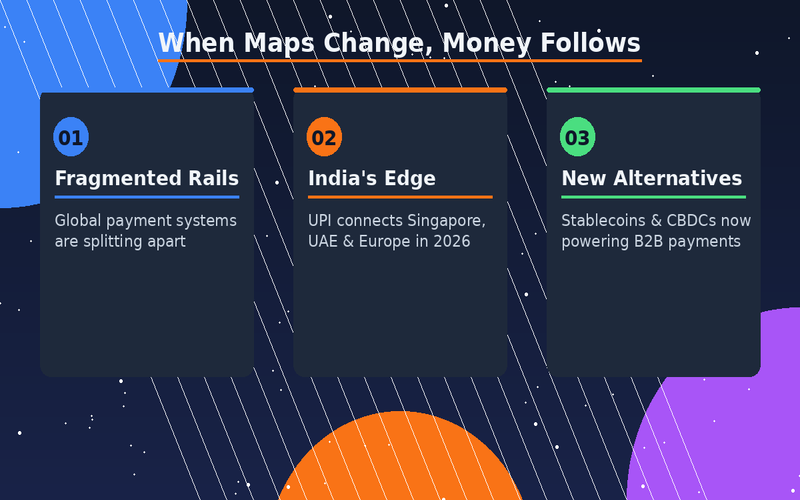
When Maps Change, Money Follows: How Geopolitics Is Rewiring B2B Payments in 2026
Payments are no longer just a plumbing problem — they're a geopolitical one. Explore how Indian B2B businesses can navigate a fragmented, fast-changing global payment landscape
Read More
What Happens Inside an Escrow Release Event? A Step-by-Step Breakdown for Businesses
A complete breakdown of escrow release events—covering triggers, validation, vendor response, and access to source code—helping businesses ensure continuity and minimize vendor risk.
Read MoreReady to Protect Your Core Systems?
Join enterprises that trust SprintEX-Code to safeguard their mission-critical software. Get started with a consultation to discuss your specific escrow requirements.