
API Banking: The Backbone of Modern Financial Integration
Mar 04, 2025
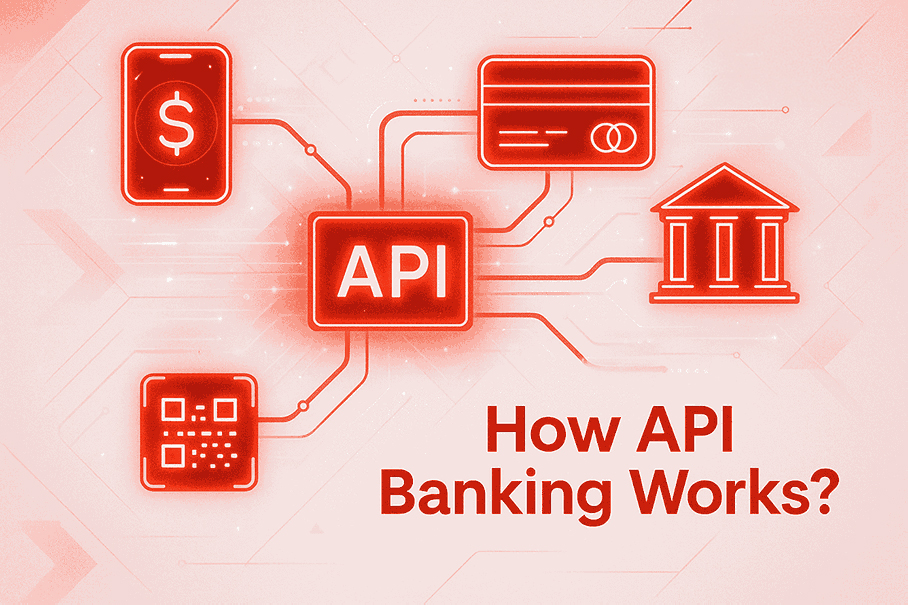
API Banking: The Backbone of Modern Financial Integration
API Banking uses XML/JSON-based Application Programming Interfaces (APIs) to enable seamless communication between a bank’s core systems and client platforms. This technology facilitates secure data exchange and smooth integration, allowing businesses to perform banking operations directly within their own systems.
With API Banking, users no longer need to switch between banking portals and Enterprise Resource Planning (ERP) systems. Instead, financial transactions and data access happen effortlessly within a single interface, improving efficiency and user experience.
Table of Contents
What is API Banking?
Types of Banking APIs
How API Banking Works
Benefits of API Banking
Simplifying Financial Services with APIs
Future Impact and Monetization Potential
Conclusion
What is API Banking?
API Banking enables secure, real-time communication between a bank’s infrastructure and third-party platforms using APIs, typically built with XML or JSON formats. It allows businesses to access services such as payments, account information, and lending without leaving their own platforms, like ERPs or mobile apps.
Types of Banking APIs
1. Open Banking APIs
These APIs allow secure sharing of customer data with authorized third parties, giving users access to a broader range of financial services while maintaining control over their data.
2. Payment APIs
Enable seamless financial transactions such as fund transfers, bill payments, and online purchases within digital platforms.
3. Data APIs
Provide access to financial data like account balances, transaction history, and statements, supporting analytics and informed decision-making.
4. Authentication APIs
Ensure secure user verification through methods like two-factor authentication and biometrics.
5. Lending APIs
Streamline the entire loan lifecycle—from application and approval to disbursement—making credit access faster and more efficient.
6. Core Banking APIs
Connect external applications to a bank’s central system, enabling functions like account management and transaction processing.
7. Banking-as-a-Service (BaaS) APIs
Allow non-banking companies to offer financial services using licensed banking infrastructure.
8. Fraud Detection APIs
Monitor transactions using advanced analytics to identify suspicious activities and reduce risks.
9. Regulatory & Compliance APIs
Help institutions meet legal requirements by automating processes such as KYC and AML.
How API Banking Works
Customer Initiates a Request
A transaction begins through a fintech app or e-commerce platform.Application Sends API Call
The platform connects with the bank using an API.Bank Receives Request
The API securely transmits transaction details to the bank’s system.Verification and Processing
The bank authenticates the user, checks balances, and performs fraud checks.Transaction Execution
The transaction is processed and recorded.Real-Time Response
The customer receives instant confirmation.
Benefits of API Banking
Faster Transactions: Real-time processing with minimal delays.
Enhanced User Experience: Manage finances within a single platform.
High Security & Compliance: Built on modern standards like REST and OpenAPI.
Automation & Efficiency: Reduces manual processes through integration.
Data Accessibility: Unlocks insights by eliminating data silos.
Scalability: Easily integrates new features without overhauling systems.
Innovation Enablement: Encourages collaboration between banks and fintechs.
Simplifying Financial Services with APIs
API Banking promotes a modular approach, enabling financial institutions to:
Upgrade individual components without disrupting entire systems
Integrate third-party tools like Plaid or Yodlee seamlessly
Roll out updates incrementally for better testing and reliability
Maintain stability during system enhancements
Future Impact and Monetization Potential
API Banking is a key driver of digital transformation in the financial sector. It opens new revenue streams for banks by allowing them to offer APIs as commercial products. At the same time, fintech companies can build innovative solutions on top of existing banking infrastructure.
Internally, APIs improve operational efficiency, reduce costs, and accelerate innovation. As adoption grows, banks become more agile, competitive, and capable of meeting evolving customer expectations.
Conclusion: Why API Banking Matters
API Banking is reshaping how financial services are delivered. It enables seamless collaboration between banks and fintechs, enhances customer experiences, and supports scalable innovation.
As open banking and embedded finance continue to expand, API Banking will remain a critical component in building a connected and future-ready financial ecosystem.
Frequently Asked Questions (FAQs)
What is API Banking and how is it different from traditional integrations?
API Banking provides real-time, secure, and standardized communication, unlike traditional systems that are slower and more manual.
How can businesses benefit from API Banking?
Businesses can integrate financial services directly into their platforms, automate processes, and improve customer experience.
Are banking APIs secure?
Yes, when built using industry standards and strong authentication protocols, APIs are highly secure and compliant.
Can startups use API Banking?
Absolutely. API Banking is scalable and suitable for both startups and large enterprises.
What role do APIs play in Open Banking?
APIs are the foundation of Open Banking, enabling secure data sharing while giving users control over their information.
Related Posts
What is E-Banking? Meaning, Types, Benefits & How It Works in India.
E-banking is the digital way of accessing banking services through mobile apps, websites, ATMs, and biometric systems. It enables secure, fast, and branchless financial transactions anytime and anywhere in India.
Read More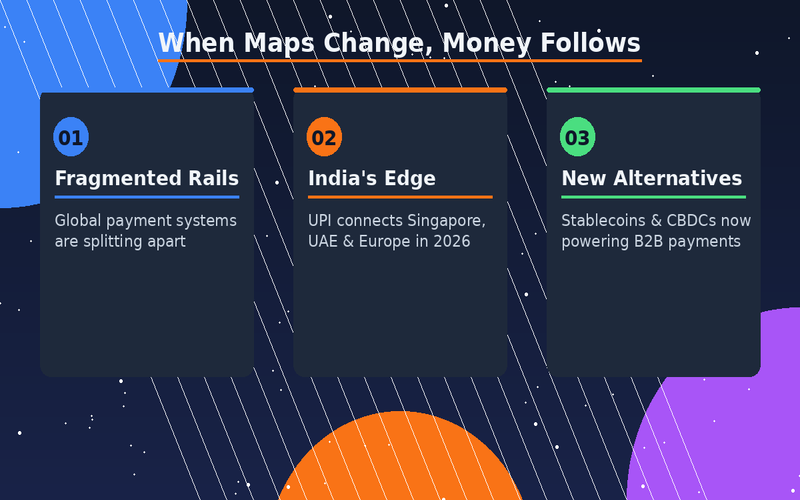
When Maps Change, Money Follows: How Geopolitics Is Rewiring B2B Payments in 2026
Payments are no longer just a plumbing problem — they're a geopolitical one. Explore how Indian B2B businesses can navigate a fragmented, fast-changing global payment landscape
Read More
What Happens Inside an Escrow Release Event? A Step-by-Step Breakdown for Businesses
A complete breakdown of escrow release events—covering triggers, validation, vendor response, and access to source code—helping businesses ensure continuity and minimize vendor risk.
Read MoreReady to Protect Your Core Systems?
Join enterprises that trust SprintEX-Code to safeguard their mission-critical software. Get started with a consultation to discuss your specific escrow requirements.